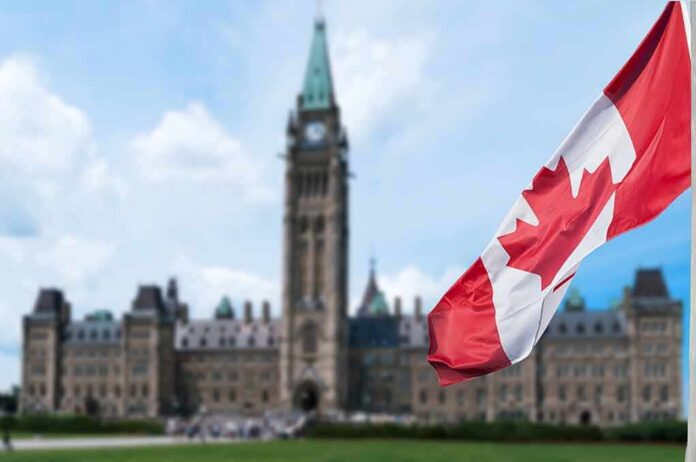
Europe’s top official floated making Canada the EU’s first “associate member,” and President Trump warned he could answer with steep tariffs if it turns into a hostile move.
Story Snapshot
- European Commission chief proposed “opening the door” for Canada as the EU’s first associate member.
- Trump said he could treat such a step as a hostile act and impose strong tariffs on Europe.
- EU treaties have no defined “associate member” status today, leaving details vague.
- Canada’s leaders seek a deeper EU alliance but say it is not full membership.
EU Floats Unprecedented Status For Canada
European Commission President Ursula von der Leyen told lawmakers in Strasbourg on September 16 that she wants to “open the door” for Canada to be the European Union’s first associate member. She framed the idea as building new links among allies in an “openly hostile world,” and as a step to raise ties to the “highest level possible” under a new “Alliance for the Future” concept. Her remarks marked the first public pitch to place a North American country in a new, undefined EU tier.
Reuters explained the proposal sits outside current European Union treaties. There is no formal “associate member” category in EU law today. Any path forward would need negotiation and likely creative legal work or political agreements. That uncertainty matters for Americans watching trade and security. An undefined status can shift into new rules on critical minerals, tech standards, and defense access, which could squeeze U.S. firms if Europe and Canada lock in preferences.
Trump Signals Tariff Response If Move Undercuts U.S.
President Trump responded within hours, warning he could treat the move as a hostile act if it harms American interests. He said his administration would be ready to impose very high tariffs or halt trade on select items with Europe if needed. The message was clear: if Brussels builds a new bloc that sidelines U.S. workers and producers, Washington will defend its market and its leverage with firm, targeted measures to protect American jobs and security.
Trump’s stance aligns with a simple test: does this plan reduce U.S. access or advantage in key sectors like energy, autos, agriculture, tech, or minerals? If so, tariff tools are on the table. That approach reflects lessons from years of global deals that left American factories hollowed out while foreign capitals built tight trade clubs. The White House signaled it will not wait for damage to show up on Main Street before acting to deter it.
Canada’s Pitch And The Legal Fog In Brussels
Canada’s leadership has been exploring a deeper EU link. They described it as a “unique alliance,” not full membership. That suggests sector-by-sector cooperation in areas like critical minerals, batteries, energy, and Arctic security. It also suggests rule-setting that can shape where investment flows. Yet Canada’s incoming envoy reportedly said both sides are “a ways away” from even agreeing on what to call the relationship, which shows how early and fluid this idea remains.
The legal picture in Brussels is murky. Reporters note the European Union has no current treaty basis for a non-European “associate member.” Past “association” models tied nearby states to the single market, but those were formalized over time. Today’s label appears political rather than legal. That gap invites mission creep. Officials can sell ambition while deferring specifics that matter to American workers, like procurement access, standards, and state aid that could tilt supply chains away from the United States.
What It Means For U.S. Readers
Americans should watch three things. First, the scope: does the plan lock in special access for Canadian minerals, energy, or tech into Europe, edging out U.S. suppliers? Second, the rules: do Brussels and Ottawa set new standards on batteries, artificial intelligence, or data that U.S. firms must follow without a seat at the table? Third, the defense angle: could joint projects or procurement favor Canadian and European factories over U.S. industry in practice?
European Commission President Ursula von der Leyen wants Canada to become the European Union’s first associate member.
The proposal would create a closer strategic partnership covering defence, energy, technology, critical minerals and climate policy. It comes as Europe tries to… pic.twitter.com/nJPeipPKza
— IUX24 (@IUX24_Official) September 17, 2026
Conservatives have seen this pattern before. Global planners float friendly language, then write rules that burden U.S. producers while others gain. The European Union’s proposal may read like alliance talk, but it can harden into a trade and standards bloc. President Trump’s warning signals a deterrent. It tells Brussels that the United States will not subsidize a scheme that sidelines our workers, our energy strength, or our tech leadership. The watchwords now are transparency, reciprocity, and America First.
Sources:
menafn.com, biz.chosun.com, europesays.com, globalnews.ca, tribuneindia.com, aljazeera.com