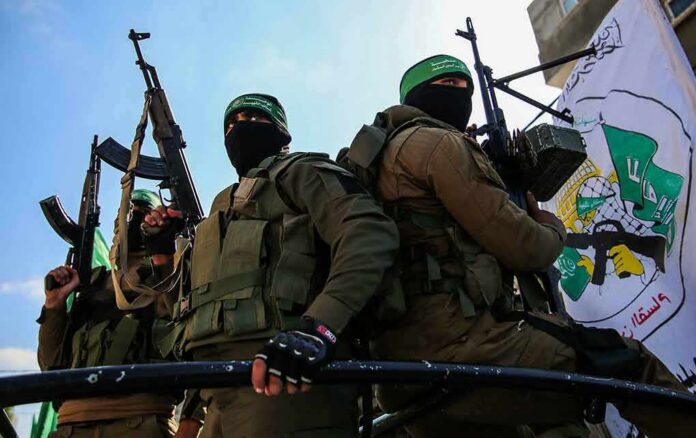
A Turkish charity boss is accused of using “humanitarian aid” to secretly funnel millions to Hamas, and U.S. prosecutors say the trail leads straight through London to New York.
Story Snapshot
- Turkish charity director Mohammad Yousef Hasna is charged with financing Hamas through a so-called sham humanitarian group.
- Justice Department officials say he coordinated directly with senior Hamas leader Ghazi Hamad to move cash and supplies into Gaza.
- The charity claimed tens of millions in income, which prosecutors say helped a U.S.-designated terrorist group instead of real civilians.
- Hasna was arrested in the United Kingdom and now faces extradition to New York, with each charge carrying up to 20 years in prison.
U.S. Complaint: Charity Role Used to Aid Hamas
Federal prosecutors in the Southern District of New York say 45‑year‑old Turkish resident Mohammad Yousef Hasna, also known as Orhan Korkmaz and Abu al‑Baraa, used his job as global director of a United Kingdom‑registered humanitarian charity to help Hamas, which the United States lists as a foreign terrorist organization. A three‑count complaint charges him with conspiring to provide material support to Hamas, conspiring to finance terrorism, and financing terrorism, with each count carrying a maximum sentence of 20 years.
The Justice Department describes the charity itself as a “Sham Charity,” saying it existed on paper as an aid group but in practice helped Hamas receive money, goods, and support in the Gaza Strip. Prosecutors allege Hasna raised funds and purchased commodities under the banner of humanitarian relief, then turned those resources over to Hamas leaders or distributed them at their direction, hiding the true beneficiary from donors and the public. Officials emphasize that Hamas has murdered dozens of Americans and many other innocent civilians, including during the October 7 attacks.
Direct Coordination With Senior Hamas Leadership
According to the complaint, Hasna did not act on the margins of Hamas but worked “extensively” with individuals at the highest levels of the group’s leadership. Reporting on the case notes that U.S. officials specifically link him to senior Hamas figure Ghazi Hamad, a member of Hamas’ governing body and an official in Gaza’s Hamas‑run Ministry of Social Development, with coordination dating back at least to 2023. This alleged relationship is central to prosecutors’ claim that Hasna knew his aid was helping an armed terrorist movement rather than ordinary families.
Court documents and news reports say Hasna and Hamad organized deliveries of cash, supplies, and other materials into Gaza, including truck shipments from Egypt and other locations, then sent those items to warehouses controlled by Hamas and the Sham Charity. The complaint alleges they took steps to conceal this pipeline, including taking photographs and videos for donors that cut out signs or markings showing Hamas or its sites in control of the goods. Prosecutors say this concealment shows intent and awareness, not simple confusion over where aid ended up.
Arrest in the United Kingdom and Cross‑Border Case
Hasna was arrested in the United Kingdom on charges based on the U.S. complaint, and a British court ordered him held while extradition proceedings move forward so he can be brought to New York to face trial. The Federal Bureau of Investigation (FBI) New York office, together with the U.S. Attorney’s Office, announced the arrest publicly and repeated that he is accused of using a supposed global humanitarian organization to coordinate with Hamas’ senior leadership for the delivery of funds and supplies. The case highlights how terrorist finance often crosses borders, with money raised in one country, moved through another, and spent in a conflict zone.
🔴WAR ON TERRORISM: HAMAS – TURKEY🔴/Jerusalem Post/
Turkish national charged by US for funding Hamas using sham humanitarian charity
According to the DOJ, Mohammad Yousef Hasna provided financing and commodities to Hamas and worked closely with Hamas terrorists, including… pic.twitter.com/TXFBpWh7f2
— JAVIER YEARSON 🇮🇱 Journalist. Broadcaster 🌱 (@javieryearson) August 1, 2026
Coverage of the complaint notes that the charity reported large sums of money moving through its hands, including tens of millions in gross income and spending in recent fiscal years, which prosecutors say did not fully reach real civilian aid but instead helped Hamas. The Justice Department’s terrorism‑finance tools allow charges even when some aid does reach civilians, if officials can show that the organization knowingly supports a designated terrorist group alongside or instead of true relief. As of now, the public record centers on the government’s allegations; they have not yet been proven in court, and Hasna will have the chance to contest them once extradited.
Pattern of Terror Groups Hiding Behind “Aid” Labels
This case fits a broader pattern conservatives have watched for years: terror groups and their backers hiding behind charity logos and “humanitarian” language to tap Western compassion and money. U.S. sanctions and past terrorism cases have repeatedly targeted alleged aid groups, exchanges, and non‑profits used as fronts to move cash, goods, and people for Hamas and other designated organizations, with complex networks that make tracing every dollar difficult. For readers worried about national security, this underscores how globalism and weak oversight can turn noble‑sounding causes into cover for enemies of the United States and Israel.
Federal officials say they built this complaint on financial records, communications, and operational details showing deliberate cooperation, but many of those underlying exhibits are not yet public, and some may stay sealed to protect intelligence sources. That means citizens mainly see the charging narrative rather than every data point behind it, though the complaint itself gives a clear picture of what prosecutors believe happened. As the case moves through extradition, hearings, and possible trial, more facts may surface, but for now the story is a stark warning: not every “charity” asking for money in the name of Gaza is what it claims to be.
Sources:
townhall.com, apnews.com, timesofisrael.com, jpost.com, washingtonpost.com, jns.org