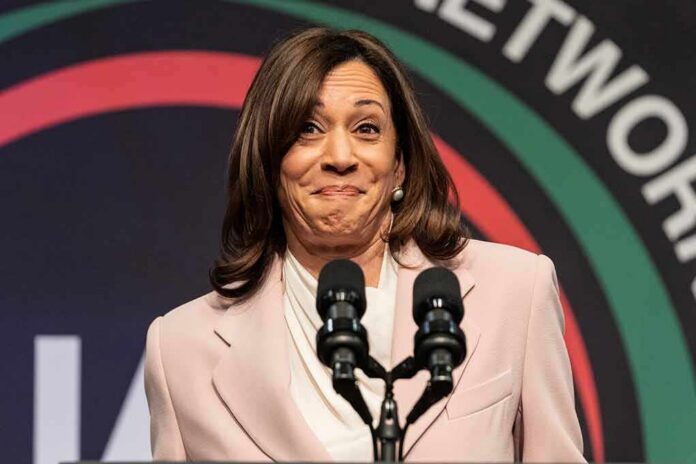
Mary Peltola publicly rejected Kamala Harris’s fundraising push, then reports said her own campaign requested the email.
Story Highlights
- Peltola’s team told Alaska media it did not seek or approve Harris’s fundraising email.
- National reporting said the Peltola campaign requested the Harris email, contradicting the denial.
- The Harris message asked donors to back Peltola, with funds routed through Harris’s group.
- The flap underscores how national Democrats use email blasts to steer money into key races.
Peltola’s Denial Collides With Reporting About The Email Request
On August 14 and 15, Mary Peltola’s campaign said it did not seek or approve a fundraising email signed by Kamala Harris. The statement, shared with Alaska outlets, said Peltola was not seeking endorsements from the Lower 48 and that her focus was Alaska. The New York Times reported the opposite, saying the Peltola campaign requested the email, creating a direct conflict with the public denial. The Times framed the episode as Peltola pushing back while national Democrats pressed fundraising.
Kamala Harris’s message urged supporters to boost Peltola in Alaska’s Senate race. The email promoted donations tied to Harris’s political group and Peltola, highlighting Alaska as a must-win target for Democrats. Coverage described the message as an endorsement-style appeal that placed Harris’s brand atop the request for funds. That structure matched common national party tactics to lift candidates with shared lists and split donations in tight races. Republicans quickly spotlighted the backlash inside Alaska.
Why National Email Blasts Spark Backlash In Local Races
Campaigns use national names to drive donations, but the tradeoff is loss of message control. Alaska is culturally wary of top-down pressure from Washington, D.C. A Harris-branded appeal risks tying Peltola to national figures who struggle in the state. Research on hundreds of thousands of political emails shows that donation requests dominate these messages and often rely on emotional triggers to convert readers into small-dollar donors. That model can raise cash while fueling voter frustration about authenticity.
Federal rules add structure but not much clarity for voters. The Federal Election Commission requires disclaimers on public communications by political committees. Disclaimers tell readers who paid for the message and whether it is authorized. But they do not solve the core problem for local campaigns that never wanted the blast in the first place. The label can be correct while the politics still backfire at home. Donors may only notice the headline name and the big red button.
Competing Narratives And What We Actually Know
Peltola’s team said it did not want Lower 48 endorsements and did not approve the Harris email. That claim aimed to center the race on Alaska issues and local support. The New York Times report that the campaign requested the email pulls in the other direction and suggests coordination with national operatives. The two accounts cannot both be right. The public record, as described in those outlets, leaves a clear contradiction that Alaska voters and donors can weigh for themselves.
This kind of clash is not new. Recent cycles have seen unauthorized or confusing “from” lines, list swaps, and split donation pages that blur who is asking and who benefits. Investigations and legal skirmishes in other states have flagged how campaigns or outside groups use well-known names to juice conversion, often without clean consent or with vague wording. Academic work and recent news examples point to the same engine: email is built to raise money first, and everything else comes second.
What It Means For Alaska Voters And Conservatives Nationwide
Alaska voters prize independence and straight talk. A Harris-branded ask risks looking like national Democrats trying to buy a seat far from home. For conservatives, the moment shows how the left’s machines lean on centralized power and glossy list-building instead of honest local debate. The Trump administration has pressed for cleaner rules, fair elections, and accountability. Voters should look at who writes the emails, who pockets the cash, and who answers to Alaska, not Washington, D.C..
Sources:
redstate.com, nypost.com, juneauindependent.com, nytimes.com, reddit.com