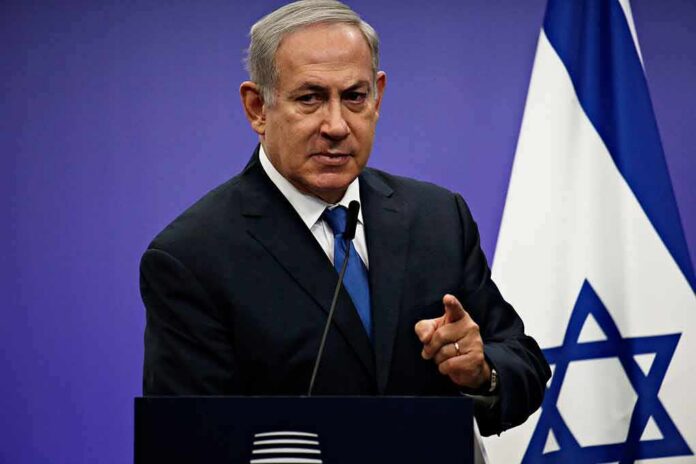
Israel’s prime minister says toppling Iran’s Islamist regime is now a central mission and “within reach,” sharpening a high-stakes push against a longtime U.S. adversary.
Story Snapshot
- Netanyahu says Iran’s regime is weakened and could fall soon.
- He argues strikes shook Tehran’s “regime of terror” and laid groundwork for collapse.
- He also concedes regime change is not guaranteed without internal revolt.
- Analysts caution damage to nukes does not equal regime collapse.
Netanyahu’s Claim: Regime Fall Is Now Within Reach
Israeli Prime Minister Benjamin Netanyahu said toppling Iran’s Islamic Republic is Israel’s “central mission” and that it is “within reach.” He described Iran’s rulers as “teetering” and weaker than ever as pressure mounts. His message frames the objective as achievable if momentum holds. He has repeated that Iran’s regime foundations are shaken and will “ultimately fall,” pointing to the heavy price Tehran has already paid in war damage and lost capability.
Netanyahu also linked Israel’s campaign to a broader strategy of ending Iran’s terror network. He told supporters that joint U.S.-Israeli actions created conditions for the regime’s fall, arguing that sustained pressure can break the system that funds and arms proxies across the region. His remarks match a long-standing view that Iran’s clerical rule drives attacks on Israel and threatens American interests and allies through missiles, drones, and proxy militias.
What He Acknowledges: No Promise Of Immediate Regime Change
Netanyahu later balanced his message. He said regime change depends on Iranians themselves and cannot be promised on a timetable. He stated he cannot say with confidence that the people will overthrow the regime. He added that, even if the regime survives, it will be “significantly diminished” by the blows it has taken. That framing keeps the military aim on crippling capabilities while treating regime collapse as a realistic but not assured result.
Reuters and other outlets reported Israel’s primary military objective has been to dismantle Iran’s nuclear and missile capacity, not to guarantee regime change. Netanyahu has suggested a fall could follow from deep damage, but officials defined the operational goal more narrowly: take down enrichment and missile production so Iran cannot threaten Israel and the West at scale. This distinction matters for U.S. policy, rules of engagement, and coalition support.
Analyst Caution: Damage Is Not Collapse
Independent experts warn that battlefield success and infrastructure hits do not automatically topple a regime. Former inspectors and the United Nations nuclear watchdog have said strikes can set back programs for years but cannot erase knowledge or fully destroy dispersed capabilities. That means a wounded regime can still cling to power and rebuild parts of its arsenal over time if pressure eases. This sober view urges steady, lawful pressure and tight sanctions enforcement.
Western media assessments have also highlighted the resilience of Iran’s security forces. Some reports stress there were no clear signs of splits in the security apparatus during key phases of the conflict. These accounts argue that mass unrest is not guaranteed and that a popular uprising requires triggers that are hard to predict. Skeptics say air campaigns alone rarely force systemic political change without internal fracture. These cautions do not refute Israel’s claims of damage; they narrow expectations about timelines.
Why It Matters To Americans Who Value Strength And Clarity
Iran’s rulers chant “Death to America,” arm terrorists, and target U.S. troops and allies. When Israel says the regime is wobbling, many Americans see a chance to end a source of rockets, drones, and hostage-taking. President Trump’s team backs pressure that limits Tehran’s ability to threaten Americans abroad. If the regime falls or even shrinks, energy routes stabilize, terror money dries up, and families here face fewer sky-high costs from Middle East shocks.
Iran threatens 'powerful response' as Israel downplays risk of escalation over holidays
Iran threatened a 'powerful response' to a full-scale strike on Ali Taher, but Israeli officials said they see no sign of imminent action; Netanyahu said regime change is 'within reach';… pic.twitter.com/Uq4o4hkyr4
— Ares, Information Service (@Aresinfoservice) September 4, 2026
Practical steps now matter most. Stay focused on verifiable goals: keep Iran from rebuilding nuclear and missile plants, cut off cash to proxies, and defend shipping lanes. Keep expectations sober about fast regime collapse while supporting the Iranian people’s rights. Netanyahu’s message sets a clear aim and invites resolve. The United States should continue strong support for Israel’s self-defense, tight sanctions, and real deterrence—without open-ended wars or mission drift.
Sources:
zerohedge.com, pbs.org, aljazeera.com, jns.org, nytimes.com, bbc.com