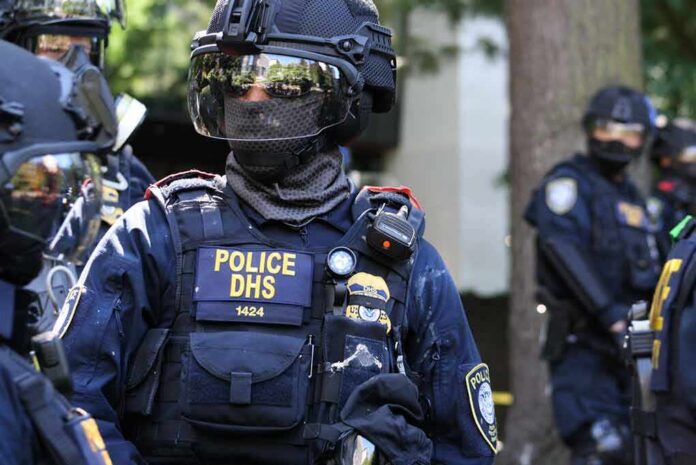
A federal judge halted Homeland Security’s doorstep interviews in nine states through Election Day, reshaping how election integrity work can proceed.
Story Snapshot
- A preliminary injunction blocks certain Department of Homeland Security election sweeps in nine states until after voting ends.
- The court said the government’s data risked flagging lawful citizens, raising voter intimidation concerns under federal law.
- Agents had conducted door-to-door interviews asking about citizenship and recent voting activity.
- The order is temporary, and the administration can appeal while stressing the need to stop illegal voting.
What The Judge Ordered And Where It Applies
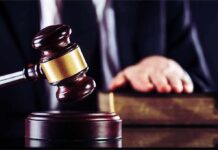
U.S. District Judge Araceli Martínez-Olguín issued a preliminary injunction limiting Department of Homeland Security election-related field operations and interviews in California, Connecticut, Georgia, Missouri, Nevada, New York, Pennsylvania, Washington, and Wisconsin. The order lasts through Election Day and targets operations that could involve questioning people officials know, suspect, or should suspect are citizens. The ruling pauses a part of federal enforcement in key states while the case continues, and the government may seek review.
Reports say the court viewed the department’s data as unreliable for on-the-ground vetting, which could lead to citizens being wrongly swept into investigations. The judge linked that risk to the Voting Rights Act’s ban on intimidating voters and those who help them vote. The ruling focuses on the timing and setting of interviews during active voting, and it says the public interest in elections free from intimidation outweighs the department’s interest during this period.
How The Field Interviews Worked And Why They Drew Scrutiny
Coverage describes agents visiting homes and asking about immigration status and whether residents had voted in recent elections. That method turned a database lead into an in-person visit at the doorstep. The court treated those visits as conduct that could chill voting activity, especially if citizens feared being misidentified by flawed lists. The available record does not show how often the interviews happened, the number of citizens contacted, or the exact scripts agents used — gaps that limit public verification.
The judge’s assessment leaned on the reliability of the lists used to select targets. Reports said the department compiled suspected noncitizen-voter lists from government and other datasets, but those lists could include lawful citizens by mistake. The ruling did not offer a specific error rate, and the sources did not identify the precise matching criteria or databases. That lack of detail leaves open questions on scale and accuracy, which the court still weighed against the risks near an election.
What The Administration Says About Stopping Illegal Voting
The Department of Homeland Security says its teams act professionally and have no quotas. Spokespeople say they check internal records, voter rolls, and citizenship data from United States Citizenship and Immigration Services to find violations. Officials also say noncitizens who vote in federal elections break the law and face criminal penalties, a point reinforced by a presidential directive that affirms federal voting is for citizens only. That stance highlights a core duty to protect citizens’ ballots.
🇺🇸 BREAKING: A federal judge has ordered DHS to stop its door-to-door voter fraud investigations in 9 states, finding that the agency relied on faulty data that could wrongly target American citizens.
The restrictions are set to remain through the Nov. 3 midterms, although the… https://t.co/tbUyj6rl5Q pic.twitter.com/x6LPmzaJUo
— NewsForce (@Newsforce) October 22, 2026
The department says it reviewed tens of millions of records as part of this effort, combining Justice Department data with independently obtained files, and that it will pursue illegal voting cases to the full extent of the law. At the same time, the injunction is preliminary. It runs only through Election Day and can be appealed. That means the legal debate is not over. The next steps will turn on evidence about data quality, field protocols, and any proven impact on lawful voters.
What This Means For Election Integrity And Voter Confidence
The central tension is clear. The country must stop illegal voting to protect every citizen’s voice. But the tools must be precise and fair, so lawful voters are not scared away from the polls. The court found the balance favored pausing these doorstep checks during voting because of data concerns and the risk of intimidation. The administration still argues that careful enforcement is needed to prevent vote dilution and keep faith in results after ballots are counted.
What To Watch Next
Watch for an appeal and any move by the department to adjust how targets are selected. Clearer standards, tighter data matching, and documented safeguards could address the court’s concerns. Transparency on false positives, interview scripts, and the number of closed cases after confirming citizenship would help voters see the difference between smart enforcement and overreach. Until then, the injunction sets the ground rules: protect citizens’ rights while the court tests the facts.
Sources:
cbsnews.com, theepochtimes.com, ground.news, nytimes.com, news8000.com, independent.co.uk