DHS said ICE is not doing worksite arrests in Kansas even as agents appeared near beef plants, stirring backlash and confusion over who is actually being targeted.
Story Snapshot
- DHS said no Kansas worksite raids while confirming Kansas enforcement against serious criminals.
- Beef and livestock groups warned of worker absences and supply-chain delays across southwest Kansas.
- Reuters reported agents “fanned out” in southwest Kansas with immediate industry effects.
- Kansas senators said Secretary Markwayne Mullin assured them warrants were for criminal arrests.
DHS Message: No Worksite Raids, Focus on Dangerous Offenders
The Department of Homeland Security said Immigration and Customs Enforcement is not doing worksite operations in Kansas. Officials said agents are targeting violent criminals and people with final removal orders. The statement came after days of reports about federal officers in southwest Kansas. The agency confirmed activity in the state but rejected claims of broad plant or feedlot raids. That focus aims to protect public safety while avoiding mass disruptions at job sites, according to the department’s message.
Senator Jerry Moran said Secretary Markwayne Mullin told him the warrants were for criminal arrests. Moran also said federal agents were working with local law enforcement. Those assurances suggest a narrow scope. They do not erase local concern, but they set clear guardrails for agents. The administration’s line is simple: go after the worst offenders, not sweep entire workplaces. That stance lines up with the public statement from the department this week.
On-the-Ground Impact: Schools, Shifts, and Cattle Delays
Local reports said federal presence led schools to issue family warnings and plants to delay shifts in beef-processing hubs. Community groups and plant managers told reporters that workers stayed home. Some feared checkpoints or arrests. Those choices hit production schedules and trucking routes. Even without a plant raid, visible federal activity can chill attendance fast. That is the known pattern in agriculture-heavy towns when enforcement ramps up near worksites or transport hubs.
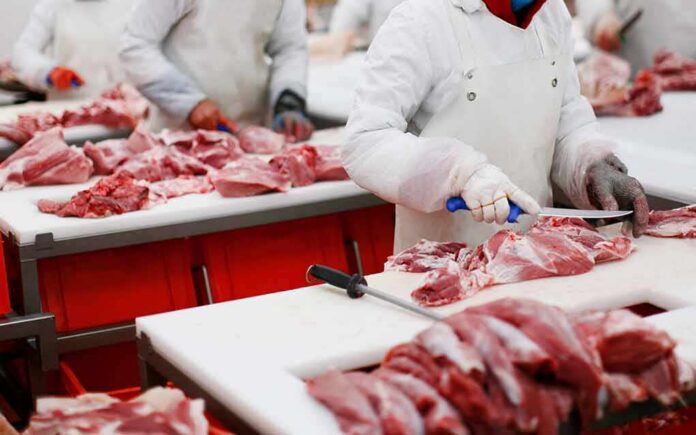
Livestock and meatpacking groups said the ripple effects were real. The Kansas Livestock Association and allied cattle groups described a “massive chilling effect” on legal and documented workers. They warned of delays moving cattle and higher costs if the pattern holds. Their joint statement tied the disruption to feedlots, dairies, processors, and rural businesses across the southwest Kansas region and nearby states. The industry urged better communication from the government to reduce confusion and panic.
Reuters: Agents “Fanned Out” in Southwest Kansas
Reuters reported that immigration agents fanned out across southwest Kansas during the week. The outlet said the operation had an immediate effect on the beef industry, citing community organizers and local officials. That account squares with school alerts and shift changes reported by local media. It also conflicts with the idea that nothing changed on the ground. Presence alone can move behavior, even when arrests target specific criminal suspects rather than entire crews at a plant.
At the same time, the Kansas Livestock Association told reporters it did not receive reports of arrests at worksites. That detail is important. It points to targeted arrests away from factory floors, or arrests focused on named suspects with warrants. It does not prove a carve-out for agriculture. It does show a gap between visible enforcement and what actually happens inside plants. That gap is fueling public worry and political heat across the region.
What Conservatives Should Watch: Clarity, Consistency, and Results
Conservative readers want clear rules, secure borders, and honest talk. The government must say where agents are operating, what the targets are, and how many arrests involve violent crimes. A narrow mission against murderers, rapists, and drug traffickers should come with numbers to back it up. Without data, families and employers fill the void with rumor. That helps no one, and it lets bad actors weaponize fear to hide among law-abiding workers.
NEW: DHS says @ICEgov is not arresting illegal immigrants at worksites in Kansas— @SecMullinDHS saying, “ICE is not conducting worksite operations in Kansas. ICE law enforcement has conducted operations targeting heinous criminals including murderers, rapists, and drug…
— Ali Bradley (@AliBradleyTV) September 25, 2026
Congress should demand weekly arrest tallies and warrant categories from the field office. State leaders should coordinate with local sheriffs so schools and plants get timely, accurate notices. Industry should stop lobbying for blanket exemptions and instead support legal hiring and verification. When the mission is narrow and well-communicated, communities can plan. When it is vague, everything slows down. Order, transparency, and equal enforcement are the conservative path forward here.
Sources:
thegatewaypundit.com, kfor.com, usnews.com, audacy.com, wsau.com, dtnpf.com, ice.gov, agproud.com, kansascity.com, msn.com