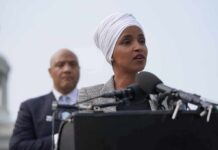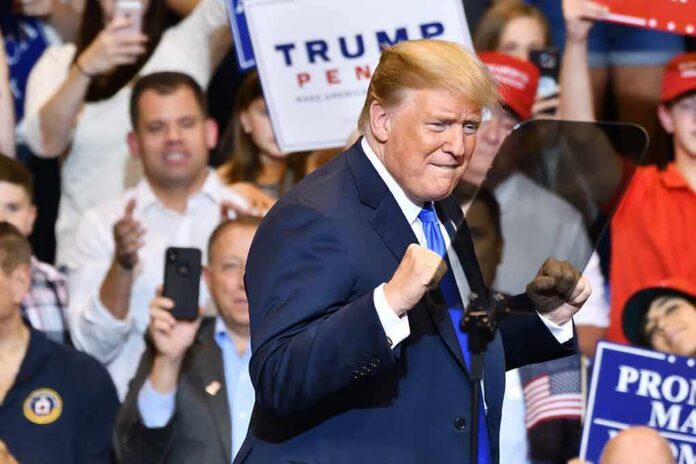
Darline Graham turned South Carolina’s first Senate primary debate into a blunt loyalty test, saying she would eliminate the filibuster and stand “100% behind” President Trump.
Quick Take
- Darline Graham used the debate to tie her campaign tightly to Trump’s agenda.
- She said she would back efforts to kill the Senate filibuster to move Trump priorities.
- Her Trump alignment is a major asset, but some Republican voters and activists remain unconvinced.
- The race is now being shaped as much by party loyalty and Senate rules as by local issues.
Trump Loyalty Took Center Stage
Darline Graham made her case to Republican voters by leaning hard into President Trump’s support. At a campaign stop before the debate, she said she was answering Trump’s call to serve and wanted to fight for his agenda. During the debate, she repeated that message and made clear that she saw herself as a dependable Trump vote in the Senate.
That strategy gives her an obvious edge in a state where Trump still shapes Republican politics. Trump publicly urged her to run, promised his complete and total endorsement, and praised her as a patriot who would not let voters down. But the debate also showed the limits of that approach. Reporting after the event noted that Trump’s endorsement was powerful, yet not every GOP voter treated it as decisive.
Filibuster Fight Became the Big Policy Split
The sharpest policy moment came when Graham said she would support killing the Senate filibuster to help pass Trump-backed legislation, including voting restrictions. That matters because the filibuster still gives the minority party a way to slow or block major bills, and Republicans have long treated it as a shield against Democratic control of Washington. Graham’s stance puts her squarely with Trump’s push for faster action.
Her position also runs against part of South Carolina’s own recent Senate history. Lindsey Graham defended the filibuster as a tool to stop Democratic bills, even saying he would speak “until I fell over” if the talking filibuster returned. That contrast gives opponents a simple argument: one Graham is promising to tear down a rule the other Graham treated as useful. For conservative voters, the fight is not just procedural. It is about whether the Senate should protect minority rights or clear the way for Washington power.
Primary Race Is Still Open
The debate did not settle the race. Nine Republicans qualified for the ballot, and the state party’s debate rules narrowed the stage to five candidates, including Graham and Ralph Norman. Fox News reporting on an Emerson poll found that more than half of Republican voters said Trump’s endorsement had no impact on their vote, while Norman held an early lead over Graham in that snapshot.
Darline Graham pledges to nuke the filibuster, stand '100% behind’ Trump' in South Carolina Senate primary debate https://t.co/BjsaVj6Gyi
— Insurrection Ken (@hertzel_m) August 4, 2026
That does not erase Graham’s advantages. She has Trump’s backing, support from other prominent Republicans, and the fundraising and media boost that come with national attention. Still, the early polling suggests that a Trump-first strategy is not an automatic winner. For voters who want a Senate seat used to fight for limited government, the real question is whether Graham’s full alignment with Trump is enough to carry the day, or whether local conservatives want a candidate who pairs Trump loyalty with a more independent governing style.
Why This Race Matters Beyond South Carolina
This contest has become a test case for modern Republican politics. One camp says full loyalty to Trump is the clearest path to victory and influence. The other says Senate races still require judgment on rules, procedure, and governing, not just allegiance. Graham’s debate performance put that split on display. She offered voters a simple message: back Trump, break the filibuster, and move fast. Her opponents now have to answer that message on the same stage.
Sources:
nypost.com, govinfo.gov, abcnews.com, youtube.com, facebook.com, the-express.com, pbs.org, bbc.com, dgraham.senate.gov