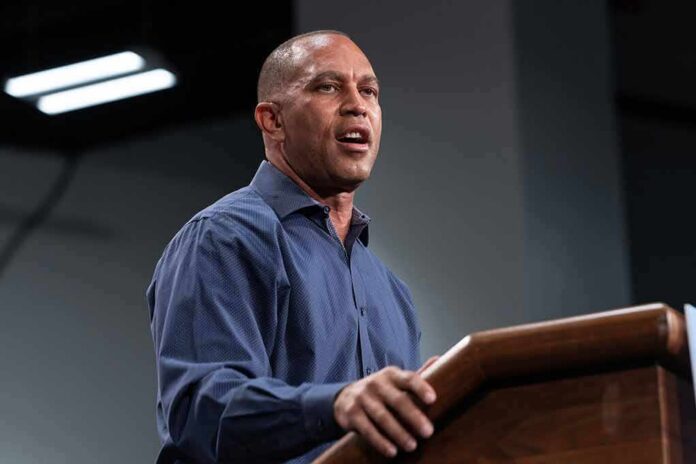
House Democratic Leader Hakeem Jeffries said he supports bringing deported Deferred Action for Childhood Arrivals recipients back to the United States and giving them “remedial assistance.”
Story Highlights
- Jeffries endorsed returning some deported Deferred Action for Childhood Arrivals recipients and offering “remedial assistance.”
- His office published the statement, and the Public Broadcasting Service interview captured it on air.
- Jeffries did not define who qualifies, what “remedial assistance” means, or how it would work.
- The plan details on cost, agency, and timing were not provided.
Jeffries Endorses Return and Assistance on Public Broadcasting Service
On November 10, House Democratic Leader Hakeem Jeffries was asked on Public Broadcasting Service NewsHour if he supports efforts to bring deported Deferred Action for Childhood Arrivals recipients back. Jeffries answered, “Certainly,” and tied the idea to people he says were treated “unfairly and unjustly.” He added that the country should provide “remedial assistance” and “undo the damage that’s been done.” His office posted the exchange in a House.gov release the same day.
The statement drew fast coverage across outlets. Reports highlighted that Jeffries linked return with assistance for those he views as harmed by immigration enforcement. These reports repeated his “remedial assistance” phrase and his support for return of deported Deferred Action for Childhood Arrivals recipients. The House.gov release and the Public Broadcasting Service episode serve as the primary records for what he said. Those sources align on the key lines and the timing of the interview.
Scope, Eligibility, and Missing Implementation Details
Jeffries did not define who counts as “treated unfairly and unjustly.” He did not say how many cases he would review or which years and removals he meant. He did not describe a legal path for return, such as parole, case reopening, visas, or new legislation. He also did not explain what “remedial assistance” would include, whether legal help, travel, payments, or status relief. No agency lead, budget source, dollar figure, or timeline was given.
That lack of detail matters because immigration law has strict gates. Deferred Action for Childhood Arrivals is “deferred action,” not legal status. The United States Citizenship and Immigration Services states that people with removal orders can face serious problems if they depart, and they often need advance parole to leave and return lawfully. That means any return plan would have to fit inside narrow legal tools or new laws, which Jeffries has not yet outlined.
Why This Debate Hits Core Questions on Law and Fairness
The fight here is not only about sympathy. It turns on three separate issues: whether a deportation was legally improper, whether a person can lawfully return, and what remedy is allowed. Jeffries framed his idea around unfair treatment. That signals case-by-case review, not a blanket return for everyone. Still, without clear rules or a process, taxpayers cannot judge costs, agencies cannot plan, and families cannot know if they qualify.
Conservative readers should track two anchors. First, the confirmed record: Jeffries supports bringing back some deported Deferred Action for Childhood Arrivals recipients and offering assistance. Second, the open questions: who decides what was unfair, what law allows return, and who pays. Until leaders answer these, the plan remains a broad promise with no map. The next concrete step would be draft bill text or an agency memo that defines authority, funding, and a clear review path.
Sources:
yournews.com, mediabias.news, meridian.news