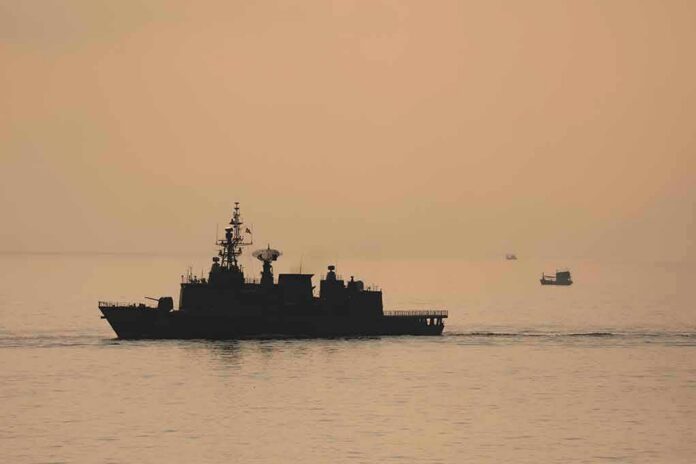
U.S. forces disabled a commercial ship in the Gulf of Oman after repeated warnings, enforcing a presidentially ordered blockade on traffic linked to Iran.
Story Highlights
- CENTCOM says crews issued multiple warnings before disabling the ship.
- The action is part of a presidentially directed blockade begun in April.
- U.S. enforcement has redirected many ships and carved out aid exceptions.
- Forces used targeted strikes to stop the vessel, not sink it.
CENTCOM Describes Repeated Warnings And A Controlled Disable
United States Central Command said U.S. forces fired on a commercial vessel in the Gulf of Oman after the crew ignored repeated orders to stop and comply. Command statements describe a standard sequence used in recent cases: hail the ship, warn it is violating the blockade, and act only after noncompliance. In a closely related case, CENTCOM said crews issued “more than 20 warnings” before disabling a ship’s propulsion with a precision strike.
CENTCOM stated the disabling shots were aimed at the vessel’s engineering or steering systems to halt its movement toward Iranian ports. The method mirrors other recent incidents where U.S. aircraft used targeted munitions to stop, not sink, ships that refused lawful orders, limiting risk to civilian crews and the environment. Officials said compliant ships have been redirected safely, while those supporting humanitarian aid were allowed through checkpoints under set procedures.
Blockade Authority And Scope Under Presidential Direction
CENTCOM reports that U.S. forces began enforcing a maritime blockade in mid-April under a presidential proclamation. The command says the order covers commercial traffic entering and exiting Iranian ports and tasks U.S. assets with redirecting or disabling noncompliant vessels. The command has highlighted milestones of redirected traffic as evidence that enforcement is active and ongoing across the region’s main shipping lanes, including the approaches to the Strait of Hormuz.
In posture material prepared for Congress, CENTCOM links the blockade to broader efforts to curb Iranian oil flows and weapons transfers that threaten partners and global commerce. The materials describe a mix of presence, interdiction, and precise use of force to maintain pressure while limiting harm to civilians at sea. The stated approach relies on clear warnings, steady rules, and measured actions that stop a ship without destroying it.
Enforcement Record: Redirects, Exceptions, And Targeted Actions
Recent releases say U.S. forces have redirected compliant ships away from Iranian ports and disabled vessels that refused to follow lawful orders. One report details the use of a precision strike into an engine room after many ignored hails, stopping the vessel without sinking it. Other updates tally ships turned back and note humanitarian traffic that passed after checks, reflecting a pattern of strict enforcement with defined exceptions.
BREAKING: US forces fired on and disabled a cargo ship in the Gulf of Oman after it tried to break the Iran blockade, CENTCOM said. The St Kitts flagged vessel ignored repeated warnings after leaving an Iranian port. A US aircraft hit its stern with precision munitions. pic.twitter.com/zpRcpAPTKj
— The Strait Letter (@thestraitletter) November 8, 2026
CENTCOM adds that enforcement actions have continued as part of a wider campaign. The command says the blockade has achieved scale, reaching benchmarks in redirections while holding to the same rules of engagement at sea. The picture presented is consistent: warn first, verify intent, and use limited force to prevent a run on the blockade if the crew refuses to obey legal orders to stop and alter course.
What This Means For U.S. Interests And Energy Security
This operation signals that the United States will act to keep Iran from using regional sea lanes to finance aggression. A working blockade, paired with precise enforcement, helps protect allied shipping and holds down risk premiums that drive up fuel and food costs for American families. The approach also matches core conservative goals: strong borders, clear rules, and peace through strength, with U.S. sailors and air crews applying discipline and restraint while defending our interests.