

A high-profile leftist campaign is openly calling to sideline the Declaration of Independence and replace it with a new “Declaration of Interdependence” built on progressive priorities.
Story Snapshot
- Activist Linda Sarsour and the Next250 coalition are promoting a “Declaration of Interdependence” as the guiding document for America’s next 250 years.
- The project was unveiled at a Smithsonian museum and pushed at a march near the White House, signaling elite backing and national ambitions.
- The new declaration centers on a progressive wish list: living wage mandates, climate justice, gun control, reproductive rights, and expanded voting rules.
- Critics say the effort trades American independence and sovereignty for globalist “interdependence” and big-government control over daily life.
Progressive coalition targets the Declaration of Independence
Linda Sarsour, a prominent activist associated with the Democratic Socialists of America, is now helping lead a national push to replace the spirit of the 1776 Declaration of Independence with a modern “Declaration of Interdependence.” This campaign is organized under the banner of Next250, a progressive initiative built around the upcoming 250th anniversary of America’s founding document. The coalition’s stated goal is to “reclaim and reframe” the story of America using left-wing ideas and priorities. Rather than treat the founding as timeless, organizers argue the nation needs a new guiding pledge that reflects their view of equity and collective responsibility.
Next250’s leaders say they spent years preparing this new declaration and policy platform. A press release describes the “Declaration of Interdependence” as shaped by thousands of United States residents through more than 40 listening sessions and polling data. Organizers emphasize that they focused on historically marginalized communities while crafting the document. Sarsour has promoted the effort as a way to retell the last 250 years of American history so that “no community’s story is left out,” and to define how the United States should “move and evolve” for the future. In practice, this means replacing the emphasis on individual liberty and limited government with collective demands and social engineering.
From Smithsonian unveiling to march near the White House
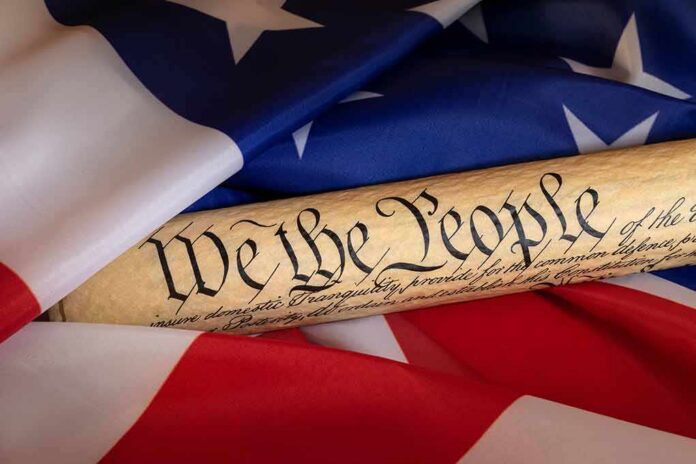
The “Declaration of Interdependence” was formally unveiled on September 3, 2025, at the Smithsonian National Museum of African American History and Culture in Washington, D.C. That choice of venue signaled the campaign’s desire for cultural legitimacy and national reach. The declaration was promoted as charting a “bold course” grounded in values such as equity, justice, safety, health, democracy, and sustainability. In 2026, the initiative moved from museum halls to the streets. Hundreds of activists marched blocks from the White House carrying a large “We the People” constitution banner and a physical version of the new declaration as part of a “people-powered future” rally tied to the 250th anniversary.
Commentary from sympathetic and critical outlets alike confirms the coalition’s intention: this anniversary is not, in their minds, a time to celebrate the founding, but to rewrite it. A report from The Washington Times describes the effort as “counterprogramming” designed to hijack the semiquincentennial narrative and center far-left themes like climate justice, reparations, and expanded government guarantees. Another analysis argues the word swap from “independence” to “interdependence” reveals a deeper goal of trading constitutional self-government and national sovereignty for a globalist, collectivist agenda. For many conservatives, the imagery of protesters marching past the White House with a replacement declaration is a direct challenge to the nation’s founding ideals.
What the “Declaration of Interdependence” demands
The text and promotion of the new declaration lay out five core policy pillars. Organizers call for a guaranteed living wage for all, broad “climate justice,” government-managed health care and reproductive rights, “common sense” gun reform, and expanded voting rights. These priorities are echoed across coverage of Next250’s work, which highlights demands for gun “safety and peace,” abortion access under the label of reproductive justice, and aggressive climate policies. Supporters frame these items as basic needs for dignity, but each would require deep federal intervention into the economy, energy sector, elections, and personal life.
Critics warn that this agenda undermines core principles of the Declaration of Independence, which grounded government in the protection of natural rights and warned against unchecked power. Heritage Foundation scholars have long noted that modern progressives often treat the Constitution and founding documents as “living” texts to be reshaped by current politics rather than fixed anchors of liberty. They argue that constantly chasing new values, especially through centralized control, risks subverting the very freedoms those documents were meant to secure. The push for “interdependence” fits that pattern by elevating collective outcomes and bureaucratic management over individual rights and responsibilities.
Interdependence versus independence: the deeper clash
At its core, the fight over this new declaration is a clash between two views of America. Foundationalist conservatives see the Declaration of Independence as a timeless statement of God-given rights, limited government, and national self-rule. Progressive activists like Sarsour view it as a historical artifact that can be set aside and replaced with a pledge built around their current priorities. By calling the document “living” and pushing to define the next 250 years through organized listening sessions and policy demands, they signal that no founding principle is off limits for revision.
For Trump-supporting conservatives who still feel the pain of past globalist policies, border chaos, and attacks on gun rights, the “Declaration of Interdependence” reads less like a unity statement and more like a blueprint for permanent left-wing control. The focus on climate justice, gun restrictions, and expansive social programs points squarely to bigger government, higher costs, and weaker individual freedoms. As America marks 250 years since 1776, this movement is a reminder that many on the radical left are not content to argue policy; they want to rewrite the very document that first declared Americans to be a free and independent people.
Sources:
thegatewaypundit.com, ctpublic.org, prnewswire.com, bioneers.org, glohbe.de, thefederalist.com, euronewshorn.com, nonprofitquarterly.org, archives.gov, youtube.com