
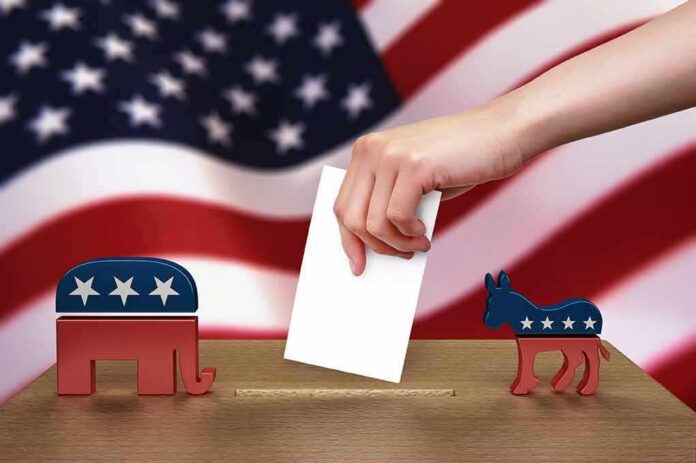
A late software update left Westchester County ballot scanners rejecting Election Day ballots across a key New York district.
Story Highlights
- New York’s election board tied the failure to an incomplete programming update made after testing.
- Scanners rejected ballots rather than miscounting them, according to the state’s explanation.
- Paper ballots were secured in emergency bags under bipartisan oversight for later scanning.
- Officials moved to restore at least one working scanner per polling site the same day.
State Pinpoints Cause: Incomplete Countywide Programming Update
The New York State Board of Elections said a programming change was made after Election Day equipment had been prepared and tested. County officials deployed the update for early voting and for Election Day machines in one municipality, but not for other Election Day machines across Westchester County. Scanners that kept the original programming could not recognize the current ballots and therefore rejected them at the polls. The board said there were no identified problems with ballot paper or physical ballot design.
State officials said the trigger was a change to a contest in one municipality that required new election programming. The county did not deploy that update to other Election Day scanners, which created a mismatch between those machines and the ballots voters used. Syracuse.com reported that technicians worked to get at least one functioning scanner at every polling location while teams distributed corrected election media to restore normal scanning countywide that day.
Ballots Secured; Rejection Did Not Mean Miscount
The state said the affected scanners rejected ballots they could not properly recognize rather than misreading voter choices. Voters still filled out paper ballots, which poll workers placed in designated emergency bags. Officials stated those ballots were kept secure under bipartisan oversight and would be scanned and counted under established procedures. Local reporting described these orange emergency bags as sealed, monitored, and slated for later scanning according to standard chain-of-custody steps.
This clarity matters for trust and for the rule of law. When machines reject ballots, votes are not lost if paper backups and custody rules work as designed. The state’s statement focused on a configuration failure, not a hardware meltdown. That lines up with what experts have seen nationwide: optical-scan systems can fail from human error, printing, or configuration issues without any sign of intentional manipulation. Rigorous procedures exist to protect every lawful vote when that happens.
Early Messaging Shifted From ‘Paper Issue’ To Programming Error
Early in the day, officials described the problem as a ballot paper issue and even cited possible thickness concerns, before shifting to a broader paper explanation. The state board later issued a specific programming account that ruled out a paper defect. That evolution in public messaging created confusion but did not change the central corrective steps: secure completed ballots, deploy updated media, and resume scanning as soon as possible.
🚨🗳️ VOTING MACHINE PROBLEMS IN WESTCHESTER COUNTY — GOV. KATHY HOCHUL SAYS BACKUP PLANS ARE IN PLACE
Reports of voting-machine problems in Westchester County, New York, are raising voter concerns.
Gov. Kathy Hochul says election officials are working to resolve the issues and… pic.twitter.com/93I6fk3d2C
— MKKM (@michekyakeymii) November 4, 2026
County Executive Ken Jenkins called the situation unacceptable and said he would review where accountability lies. His statement confirmed that machines were not accepting ballots and emphasized that voters should stay in line. The county-level review had not yet named the specific person, vendor, or decision point that led to the mismatch when the statements were made, but it committed to an after-action assessment of process and responsibility for the breakdown.
Why This Matters To Election Integrity And Voter Confidence
Westchester includes a closely watched congressional district, so any Election Day disruption draws intense attention. The best available record says this was a preventable programming deployment lapse, not a tally alteration. Conservative voters expect competence, transparency, and local accountability. Publishing the change-control records, deployment logs, and reconciliation totals would strengthen confidence. Clear documentation helps prove that every legal ballot cast was later scanned and counted as the law requires.
What Worked, What Must Improve Before The Next Election
Emergency paper-ballot procedures, bipartisan custody, and rapid field fixes limited damage to voters’ rights. That is the safety net elections are supposed to have. But safety nets are not substitutes for discipline. Counties must test updates against all ballot styles and deploy them to every machine that will see Election Day traffic. Standard operating procedures should require signed checklists that confirm version, media, and site coverage before polls open, with public-facing logs after.
Bottom Line For Readers
New York’s election board traced the countywide scanner rejections to an incomplete software update rollout. Officials said ballots were secured and will be counted, and technicians worked to restore on-site scanning the same day. Messaging should have been clearer sooner, and the county owes voters a full deployment and reconciliation report. Competent, transparent administration—not bigger bureaucracy—is how we protect every legal vote and keep faith with the Constitution and the people.
Sources:
townhall.com, elections.ny.gov, westchester.news12.com