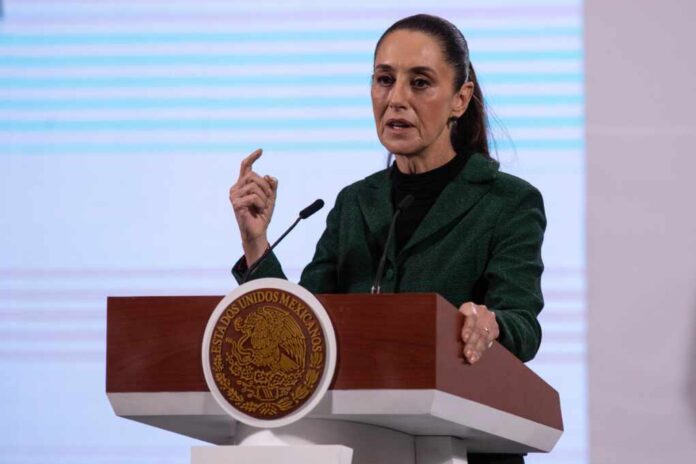
Mexican President Claudia Sheinbaum is mobilizing her diplomatic corps to counter Donald Trump’s promise of military strikes against cartels on Mexican soil. Trump’s escalation—which includes designating major cartels as Foreign Terrorist Organizations and threatening devastating tariffs—has exposed deep concerns in Mexico that the new U.S. administration is serious about dismantling criminal organizations terrorizing both nations. This represents a dramatic shift from traditional diplomatic protocols, signaling a new era of high-stakes confrontation and economic leverage in bilateral relations.
Story Snapshot
- Trump vowed to “start now hitting land” in Mexico against cartels, claiming they “are running Mexico”.
- Sheinbaum rejected any U.S. ground operations, insisting on “cooperation without subordination”.
- Mexico’s government is privately alarmed Trump’s threats could materialize into actual military action.
- Trump designated major Mexican cartels as Foreign Terrorist Organizations, creating legal basis for strikes.
Trump Delivers Ultimatum on Cartel Operations
President Trump escalated his anti-cartel campaign during a January 2026 Fox News interview, declaring the United States would “start now hitting land, with regard to the cartels” in Mexico. Trump’s stark assessment that “the cartels are running Mexico” signals his administration’s willingness to bypass Mexican sovereignty concerns that have hampered previous counter-narcotics efforts. This represents the most direct threat of unilateral military action against cartels from any U.S. president, backed by his February designation of six major Mexican criminal organizations as Foreign Terrorist Organizations.
The Trump administration’s approach marks a dramatic departure from traditional diplomatic protocols. White House spokesperson Anna Kelly emphasized Trump has “many options” to protect Americans while framing the policy as “reasserting and enforcing the Monroe Doctrine” to restore U.S. preeminence in the Western Hemisphere. This revival of 19th-century interventionist doctrine provides ideological justification for potential cross-border operations, something that would have been unthinkable under previous administrations constrained by globalist sensibilities.
Trump has now an even greater appetite.
The US says it is ready to expand military operations against drug cartels, with President Trump claiming the cartels “rule Mexico” and hinting at possible strikes on land after naval operations. pic.twitter.com/AfZpw7BNI6
— REVOLUTIONARY (@STRIKER_4_LIFE) January 9, 2026
Mexican Response Reveals Deep Vulnerabilities
Sheinbaum’s immediate rejection of any U.S. ground operations exposed Mexico’s precarious position between protecting national sovereignty and acknowledging its inability to control cartel violence. Her insistence that bilateral relations are based on “cooperation and collaboration, not subordination” attempts to maintain dignity while privately recognizing Mexico’s dependence on American economic and security partnerships. Mexican officials told Politico they are carefully calibrating responses to avoid escalation, revealing genuine fear that Trump’s threats represent more than political posturing.
The Mexican president’s four guiding principles for U.S.-Mexico relations—respect for sovereignty and territorial integrity, shared but differentiated responsibility, mutual respect and trust, and cooperation without subordination—sound admirable but ignore the reality that Mexican cartels operate with impunity across vast territories. Sheinbaum’s rejection of “narco-state” rhetoric as insulting to Mexican security forces rings hollow when Sinaloa and Jalisco New Generation cartels maintain effective control over major trafficking corridors and local populations.
Economic Leverage Backs Military Threats
Trump’s cartel strategy extends beyond military threats to include devastating economic pressure through proposed 25% tariffs on Mexican imports scheduled for March. This multi-pronged approach recognizes that Mexico’s economy depends heavily on USMCA trade relationships, creating powerful incentives for cooperation that previous administrations failed to exploit effectively. The combination of FTO designations, expanded drone surveillance of fentanyl labs, and tariff threats demonstrates Trump’s commitment to using every available tool against criminal organizations poisoning American communities.
Mexican business leaders and government officials privately express alarm that Trump’s threats could materialize, understanding that any disruption to cross-border commerce would devastate their export-dependent economy. The timing is particularly significant as the U.S., Mexico, and Canada prepare to co-host the 2026 World Cup, adding reputational stakes to security cooperation. This economic interdependence gives Trump substantial leverage while Mexico’s continued tolerance of cartel operations undermines its negotiating position with an administration prioritizing American lives over diplomatic niceties.
Watch the report: Trump Signals Land Strikes Against Mexico Drug Cartels After Maduro’s Capture
Sources:
- Trump Threats and Venezuela Strike Leave Mexico Agonizing Over How to Respond – The New York Times
- Mexican president urges cooperation as US threatens cartel strikes