A Biden-era narrative about “systemic racism” is now colliding with a Trump Justice Department led by a lawyer long criticized for challenging expansive voting-rights enforcement.
Story Snapshot
- Assistant Attorney General Harmeet Dhillon publicly framed a major Louisiana Voting Rights Act redistricting fight as an effort to dismantle longstanding racial discrimination.
- Dhillon’s statement lands amid ongoing scrutiny of her prior legal positions and opposition from civil-rights groups during her confirmation process.
- The legal backdrop includes Supreme Court decisions shaping how Section 2 of the Voting Rights Act is applied and how far federal oversight can go.
- Republicans who prioritize election integrity see a test of fair rules; Democrats and advocacy groups warn the DOJ could narrow enforcement under new leadership.
Dhillon’s message: DOJ says it’s enforcing voting rights in Louisiana
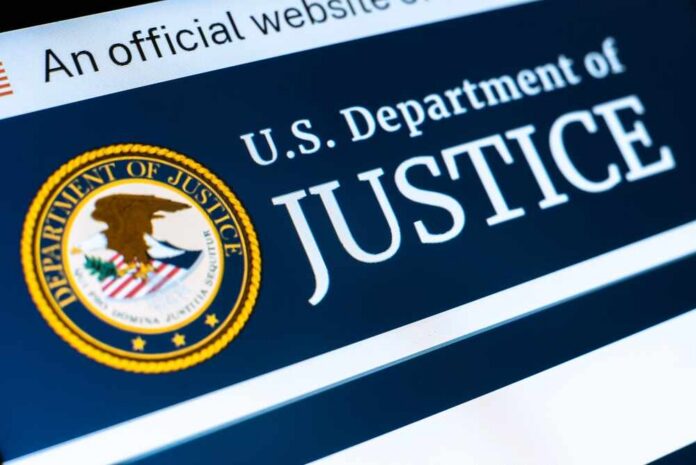
Assistant Attorney General Harmeet Dhillon, now leading the DOJ Civil Rights Division, reacted publicly to a landmark Voting Rights Act dispute tied to Louisiana redistricting. In the remarks highlighted, Dhillon said the government is working to “dismantle longstanding systems of racial discrimination” as the case moves forward. That language matters because it signals how the division wants to describe its mission: not just as technical election litigation, but as a civil-rights enforcement project.
For voters who care about confidence in elections, the key question is less about slogans and more about measurable enforcement choices: what cases the Civil Rights Division brings, what remedies it seeks, and whether its legal theories are consistent with Supreme Court guidance. With Republicans controlling Congress and President Trump in a second term, the administration has more room to shape policy, but the courts still set boundaries on what the federal government can require from states.
Why this Louisiana case sits at the center of the broader VRA debate
Section 2 of the Voting Rights Act prohibits voting rules and maps that discriminate in either intent or effect, and recent Supreme Court rulings have kept Section 2 litigation very much alive even after earlier decisions reduced other federal oversight tools. The Louisiana redistricting dispute is significant because redistricting cases often become proxy wars over representation, partisan power, and whether race is being used as a required factor in map drawing. Those tensions inevitably spill into national politics.
Conservatives often argue that the country needs clear, uniform rules that protect every citizen’s vote without turning elections into never-ending lawsuits run by activists and bureaucrats. Many liberals counter that aggressive federal enforcement is necessary because discrimination can be subtle and structural. The record provided here doesn’t resolve that philosophical clash, but it does show why the rhetoric around “dismantling racism” triggers skepticism: enforcement can be framed as civil rights—or as federal overreach—depending on outcomes.
The confirmation fight: praise from Trump allies, alarms from civil-rights groups
President Trump nominated Dhillon in December 2024 to lead the Civil Rights Division, and the Senate Judiciary Committee considered her nomination in early 2025 before the Senate confirmed her. During that process, multiple civil-rights organizations urged senators to oppose the nomination, arguing her past legal work and public positions conflicted with robust voting-rights protection. Senate questioners also pressed her about prior opposition to major voting-rights proposals and her stance on Section 2 enforcement.
The sharpest takeaway is not simply that Dhillon faced political opposition—most nominees do—but that critics described an unusually direct mismatch between the job and her prior advocacy. That critique, if accurate, would reinforce a broader public concern shared across the spectrum: that Washington institutions often become instruments of partisan objectives rather than neutral guardians of equal treatment. Supporters, meanwhile, point to “election integrity” and civil-liberties framing as a rationale for her leadership.
What to watch next: enforcement signals, not press lines
The Civil Rights Division under Dhillon has continued voting-rights litigation, including a separate action referenced as filed on May 27, 2025. That kind of activity complicates any simplistic claim that the division will categorically abandon voting-rights enforcement. Still, the real test is the pattern: which jurisdictions are targeted, how aggressively the DOJ negotiates settlements, and whether the division prioritizes equal access for eligible voters without drifting into policies that effectively pressure states into race-based line-drawing.
‘Dismantling the edifices of racism’: Harmeet Dhillon reacts to landmark voting rights casehttps://t.co/K0m5U15oFZ
— ConspiracyDailyUpdat (@conspiracydup) April 30, 2026
For Americans exhausted by elite institutions, the broader issue is credibility. If federal officials talk about dismantling discrimination while critics argue their legal record points the other way, trust erodes even further—especially when everyday voters are already convinced the system is rigged toward insiders. With the courts as final referee, the Louisiana case and the DOJ’s posture under Dhillon will be watched closely by both election-integrity advocates and civil-rights groups looking for proof of either genuine enforcement or political spin.
Sources:
Memo: Civil rights are at stake with Harmeet Dhillon’s nomination
“Fox in the henhouse”: Senate confirms anti-voting lawyer Harmeet Dhillon to top voting rights post
2025-07-23 QFR responses (Dhillon)