Trump’s NATO ultimatum over the Iran war is forcing an uncomfortable question many Americans have asked for decades: why does Washington keep footing the bill when allies won’t show up when U.S. interests are on the line?
Quick Take
- President Trump publicly blasted NATO allies for refusing to help secure the Strait of Hormuz after the U.S.-Israel war with Iran, calling the alliance a “paper tiger.”
- The dispute follows February’s strikes on Iran, a shaky ceasefire, and an ongoing Hormuz disruption that has pushed oil prices higher.
- European governments have largely avoided direct involvement, reportedly offering limited measures like patrol discussions rather than a forceful clearance effort.
- Administration signals suggest the U.S. could reduce NATO commitments without a formal withdrawal, reviving long-running burden-sharing fights.
Trump’s message: alliance benefits can’t be one-way
President Donald Trump escalated his pressure campaign on NATO in early April after European allies declined to back operations tied to the U.S.-Israel conflict with Iran, especially steps aimed at reopening the Strait of Hormuz. After meeting with NATO Secretary General Mark Rutte, Trump vented publicly that NATO was not there “when we needed them.” The White House message is simple: if allies demand U.S. protection, they should share real operational risk.
Trump’s criticism lands with Americans who are tired of open-ended commitments overseas while domestic problems pile up—high prices, border pressure, and distrust in federal institutions. It also speaks to a broader, bipartisan frustration: the public often sees “permanent Washington” defending legacy arrangements first, and voters last. Even for Americans who still value alliances, this moment highlights a concrete accountability test—who helps when energy chokepoints and U.S. credibility are at stake?
How the Iran conflict collided with NATO’s limits
The timeline matters. The U.S.-Israel strikes on Iran began February 28, 2026, and the conflict quickly rippled into global shipping and energy markets. Iran’s ability to disrupt Hormuz—through which a major share of global oil moves—helped drive an oil shock that hit consumers and industry. A ceasefire announced in early April was described as shaky, and the Strait’s security remained contested, leaving NATO allies facing the same price pain without agreeing on shared action.
European leaders’ reluctance has been framed in multiple ways across commentary: fear of escalation, domestic political constraints, and skepticism that the war was launched with adequate consultation. However you weigh those concerns, the practical result is what Trump seized on—Europe wants stable energy flows but appears unwilling to take the steps the administration believes are necessary to restore them. That gap between dependence and commitment is the core vulnerability of any alliance built on assumptions rather than enforceable obligations.
What Article 5 really means—and why it’s back in the headlines
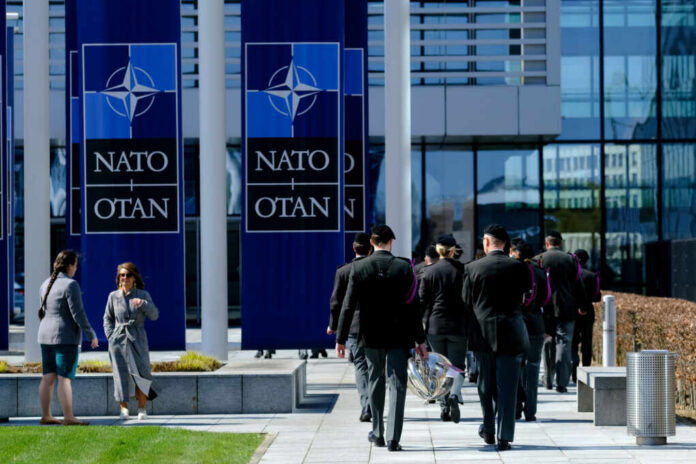
NATO’s credibility rests heavily on how Article 5 is understood. Politically, many Europeans treat it as an automatic U.S. guarantee; legally, the wording leaves flexibility for each member to decide “such action as it deems necessary.” That ambiguity has always existed, but crises expose it. When Trump argues the alliance becomes weak without U.S. participation, he is also reminding allies that American support is a policy choice—not an entitlement detached from reciprocity.
From a conservative lens, that matters because it goes to limited government and constitutional responsibility. If the United States is expected to provide permanent security services for wealthy partners, the incentives skew toward endless spending, sprawling basing, and mission creep. Critics of Trump’s approach argue that threatening NATO is destabilizing, but supporters counter that decades of polite diplomacy produced chronic underinvestment abroad and chronic overextension at home. The sources here are largely analysis and opinion, so definitive judgments on motives should be cautious.
Rubio’s warning and the “de facto” disengagement option
Secretary of State Marco Rubio has also raised the underlying question of reciprocity, reportedly challenging whether NATO remains a good arrangement if it is mainly about the United States defending Europe without equivalent returns. That framing aligns with a broader GOP argument: alliances should serve U.S. national interests clearly, not function as a permanent subsidy. Some commentary suggests the administration could scale back leadership roles, shift forces, or rebalance deployments—steps that reduce obligations without a dramatic, headline-grabbing formal exit.
Those options carry tradeoffs. Pullbacks could push Europe toward serious self-defense investment, which many analysts say is overdue. But rapid changes could also introduce miscalculation risk, especially if adversaries read confusion as weakness. It does not include neutral confirmation of specific troop relocation plans; it does, however, reflect rising rhetorical pressure and mounting uncertainty inside the alliance. For voters watching from home, the bigger issue is oversight: who in Washington is accountable when commitments expand faster than results?
The bigger takeaway: energy chokepoints expose alliance credibility
The Strait of Hormuz episode shows how military alliances, energy security, and household costs intersect. When shipping lanes are threatened, the pain shows up at the pump and in grocery bills, feeding public anger about inflation and mismanagement. Trump’s posture turns that anger outward—toward allies who benefit from U.S. power but, in this case, reportedly refused to share the burden. Even many Americans who dislike brinkmanship can understand why voters question arrangements that feel like “all cost, little control.”
For the long run, the argument is less about a single war and more about whether NATO can adapt to a world where American patience is running out. If Europe won’t coordinate forcefully on a vital energy corridor after a conflict that already shook markets, skeptics will ask what the alliance is for beyond symbolism. If the U.S. keeps paying for commitments while citizens feel squeezed at home, distrust in institutions—left and right—will keep growing, and foreign policy will keep getting harsher.
Sources:
Threatening NATO Over Iran Is Stupid, but Potentially Useful
Trump calls NATO ‘cowards’ over lack of support for US-Israel war on Iran
Will Iran War End NATO Alliance?
Before striking Iran, Trump should answer these six questions