
A sweeping new WHO-backed “One Health” push is moving from talk to action—raising fresh questions about who sets the rules when global institutions say they’re preventing the next pandemic.
Quick Take
- WHO and France used World Health Day (April 7, 2026) to launch a new round of One Health initiatives at a summit in Lyon.
- The One Health framework ties together human health, animal health, and environmental conditions to prevent crises like pandemics and antimicrobial resistance.
- WHO announced a global network for training and tools, extended its expert panel through 2027 with a new phase planned for 2027–2029, and highlighted governance changes through the Quadripartite partnership.
- A Global Forum of WHO Collaborating Centres (April 7–9) brought together ministers and experts, with 800+ collaborating centres participating across 80 countries.
Lyon Summit Signals a Shift From Messaging to Machinery
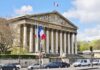
World Health Day 2026 became the stage for a high-level One Health Summit in Lyon, hosted by France and co-hosted with Indonesia. WHO and political leaders framed the meeting as a pivot from broad commitments to specific delivery—new structures, longer timelines, and tighter coordination among major international agencies. The summit ran alongside a Global Forum of WHO Collaborating Centres, a reminder that the “One Health” label is increasingly being built into operational networks, not just speeches.
WHO’s announcement centered on “high-impact initiatives” intended to help countries detect and manage threats earlier, before they become cross-border emergencies. The stated logic is that outbreaks, food-system risks, and environmental shocks interact—and that the institutions handling them should too. For many Americans skeptical of global governance, the key development is not the slogan but the infrastructure: once networks, training pipelines, and expert panels are formalized internationally, domestic agencies often face pressure to align.
What “One Health” Means in Practice—and Why It’s Politically Sensitive
One Health is built on a simple premise: human health, animal health, and environmental conditions are linked, so policy and surveillance should be integrated. WHO and its partners point to lessons from COVID-era siloed responses and to ongoing concerns like zoonotic spillovers and antimicrobial resistance (AMR). Supporters argue this reduces duplication and improves early warning. Critics, including many on the right, tend to focus on accountability—whether democratic governments or international bodies drive decisions that affect farms, industry, and local communities.
The summit emphasized cross-sector coordination through the Quadripartite partnership—WHO, the UN Food and Agriculture Organization (FAO), the UN Environment Programme (UNEP), and the World Organisation for Animal Health (WOAH). WHO also highlighted that it is taking on a chairmanship role within that collaboration. Even without new binding rules announced at Lyon, governance matters: when global bodies create common standards and data practices, those expectations can flow into national policy through funding, procurement rules, and international diplomacy.
The Four WHO Actions: Training Networks, Expert Panels, and Global Coordination
WHO outlined four actions coming out of the Lyon push. The most concrete is a Global Network of One Health Institutions designed to expand training and tools, including links to capacity-building efforts such as the WHO Academy. WHO also extended the One Health High-Level Expert Panel (OHHLEP) through 2027, with a new phase planned for 2027–2029. The other pillars involved WHO’s Quadripartite chairmanship and the Global Forum of Collaborating Centres convening April 7–9.
Those pieces fit together as an ecosystem: expert guidance (OHHLEP), institutional coordination (Quadripartite), workforce development (the network and training), and a research-and-implementation pipeline (collaborating centres). In practical terms, that can mean faster information sharing and common playbooks—useful in a crisis. It can also mean more centralized influence over what counts as “best practice,” particularly when the same institutions that set guidance also help shape funding priorities and evaluation metrics.
Where Support and Skepticism Converge: Trust, Costs, and Who Pays
WHO officials and regional leaders argued the core problem is political will and investment—moving beyond statements to sustained funding and coordination. France positioned itself as a convening power, tying the summit’s momentum to wider international discussions such as G7-linked work. At the same time, some expert commentary around the summit pointed toward stronger “data governance” and collective decision-making that includes governments, scientific institutions, and citizens. That framing is broad enough to attract support—and broad enough to trigger concerns about surveillance and bureaucracy.
For American readers who want competent public health without unelected overreach, the Lyon summit is a case study in how global systems scale. Preventing pandemics and curbing AMR are widely shared goals across party lines. The unresolved question is governance: what authority remains with voters and their elected representatives when international networks set norms on agriculture, environmental monitoring, and disease surveillance. The summit’s announcements show momentum; the real test will be transparency, measurable outcomes, and clear limits.
Sources:
WHO and France shift One Health vision to action with new high-impact initiatives
One Health Summit: a comprehensive approach to meet the health challenges of the 21st century
One Health Summit: From Commitment to Action