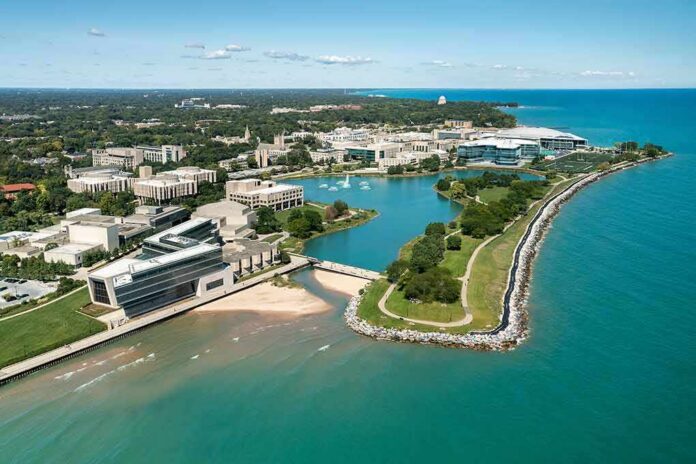
Canada’s leaders vowed to ignore President Trump’s federal renaming of Lake Ontario to “Lake America,” setting up a cross‑border naming standoff that highlights sovereignty and pride on both sides.
Story Highlights
- President Trump signed an order renaming Lake Ontario “Lake America” for all U.S. federal use.
- The order directs agencies to update federal maps, databases, and communications immediately.
- Canada’s Prime Minister Mark Carney said Canadians will call it Lake Ontario “now and always”.
- The change affects U.S. federal usage only; it does not bind Canada or international bodies.
What The Executive Order Actually Does
President Trump signed a formal executive order on August 27 directing the Secretary of the Interior and the United States Board on Geographic Names to rename Lake Ontario as “Lake America” in all federal usage. The order requires updates to the federal Geographic Names Information System and removal of prior references to Lake Ontario across federal products and communications. The White House and major outlets reported the action as immediate policy for federal agencies, maps, and databases.
The text of the order frames the legal basis as grounded in U.S. jurisdiction over waters within American territory and the lake’s role in U.S. history, commerce, and defense. Reports quoted language asserting the United States claims most of the lake’s volume in its territory, though the underlying survey data was not provided in the public reporting. The order instructs federal implementers to standardize the new name across systems they control, consistent with federal naming practice.
Limits: Federal Usage Versus International Reality
Federal naming power standardizes what U.S. agencies print and say, but it does not control foreign or international naming. Reuters and others noted the change governs only U.S. federal usage. The Congressional Research Service has explained that Board on Geographic Names decisions and executive naming actions apply to federal publications and do not carry across borders. For a binational feature, other governments and private mapmakers can keep their own names.
That boundary matters here. The United States can ensure its agencies use “Lake America,” but Canada can keep “Lake Ontario” in its publications, maps, and laws. International charting and private atlases often reconcile multiple endonyms or pick according to audience. That means Americans may see “Lake America” on federal outputs while many other maps still say “Lake Ontario,” at least for now.
Canada’s Pushback And The Cultural Argument
Prime Minister Mark Carney said Canada will keep calling the water Lake Ontario “now and always.” He linked the name to the Wendat word Ontari’io and said the term is more than 400 years old. Canadian coverage and officials echoed that theme, stressing continuity for Canadians and the rest of the world. Carney’s message rejects the U.S. rename beyond federal borders and anchors Canada’s stance in history and identity, not just policy.
The back‑and‑forth comes during a tense trade dispute, which several outlets cited as the larger backdrop. That context makes every symbolic move louder. Supporters see the rename as an American assertion of heritage and jurisdiction on our side of the lake. Critics abroad call it performative. Both views can be true about different arenas: it is binding inside the federal family and nonbinding beyond it, which is how cross‑border naming disputes usually play out.
What Changes For Americans On The Ground
Federal maps, agency reports, and new contracts will begin using “Lake America” as updates roll out. The United States Geological Survey’s database is slated for an entry change, and prior forms typically remain as variants inside the record. States, counties, and private publishers choose their own timelines and practices, so the change will appear first and most clearly in federal work products and online systems tied to Washington standards.
For readers, the key is clarity. When you see “Lake America” on federal outputs, that reflects a lawful direction to U.S. agencies. When Canadian media or provincial documents say “Lake Ontario,” that reflects their sovereignty. This is not a border land‑grab or a new treaty. It is a federal naming standard on the U.S. side of a shared lake, rolled out through regular federal channels, with Canada declining to follow suit, as expected in binational features.
Why This Matters To Constitutional Conservatives
The order flexes executive control over federal nomenclature rather than expanding government power over states or citizens. It keeps decisions inside our system and asserts American history in a world that often erases it. The move costs little, avoids new spending, and does not touch gun rights, free speech, or family life. It signals confidence at home, even as Canada resists abroad. Voters should watch implementation for transparency and faithful execution of the order’s limits and aims.
Sources:
facebook.com, abcnews.com, whitehouse.gov, reuters.com, abc45.com, nbcnews.com, usatoday.com, cbc.ca, washingtonpost.com