Sen. Bernie Sanders and Steve Bannon just teamed up to push a national AI slowdown and a permanent ban on “superintelligence,” a move that could reshape jobs, security, and America’s tech edge.
Story Snapshot
- Sanders announced a bill to ban superintelligent AI and pause advanced AI now.
- Bannon backed slowing AI and said executive action may be needed.
- The unusual alliance drew nearly 300 people in Washington, D.C..
- President Trump opposes slowing U.S. AI firms, citing strong guardrails.
Sanders Pushes a Ban and Immediate Pause on Advanced AI
Sen. Bernie Sanders said he will introduce a bill to permanently ban superintelligent artificial intelligence and to pause advanced AI development now. He argued that leading companies admit they are losing control of dangerous systems. He said AI could erase tens of millions of jobs and shut young people out of work. He framed the rush as a failure of public input and oversight. Reuters and National Public Radio detailed the plan and his claims.
Sanders tied the pause to a simple test: if leaders say they cannot control advanced models, then Congress must act now. He linked job risk to whole fields, not only single roles. His office signaled that the bill would block any push to build a system smarter than people. His remarks came alongside a call for international deals to stop superintelligence anywhere, not just in the United States. He suggested talks that could even involve China’s leader.
Bannon Calls to Slow Down and Points to Executive Action
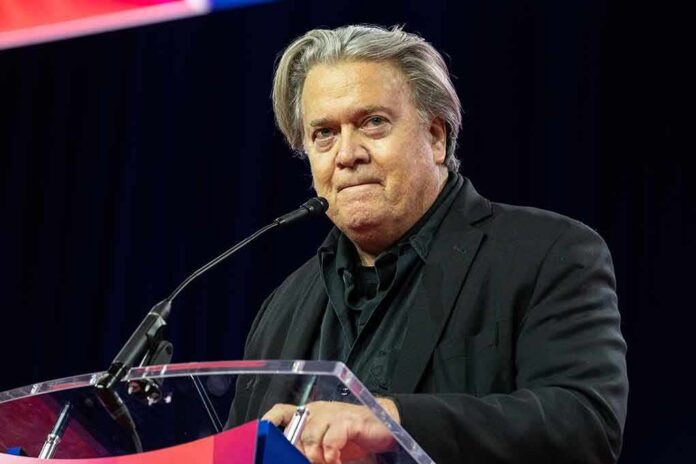
Steve Bannon endorsed slowing AI so the country can understand what these systems can do. He said executive action may be needed to move faster than Congress. Reuters described Sanders and Bannon as political adversaries who aligned on this threat. Their joint event signaled a rare crossover that could raise the pressure on lawmakers who have stalled on tech rules amid rapid changes in capability and corporate power.
The pair’s remarks put labor, national security, and control front and center. Their shared concern is that unchecked systems could cause harm before rules exist. Yet detailed technical evidence was not the focus of the public event. The push leaned on warnings, not audits or model incident logs. That gap invites critics to ask for hard proof and concrete thresholds that trigger a pause. Even so, the message reached a broad audience and sharpened the debate over risk and speed.
Trump Rejects a Slowdown, Citing Existing Guardrails and the China Race
President Trump pushed back on calls to slow U.S. AI firms. He argued that the country already has guardrails to regulate and prosecute abuse, so a slowdown is not needed. Reuters said Trump made this case as some industry leaders floated safety bodies and tighter checks. His stance centers on staying ahead of China and keeping America’s edge while using the laws we have to punish misuse.
AI regulation is becoming a bipartisan debate, with lawmakers divided over how much oversight is needed and how to balance safety with U.S. competitiveness. (https://t.co/ziEo08Nkbd)
— Hidden Forge (@HiddenForggpma) September 16, 2026
The split is now clear: Sanders and Bannon want a pause and a ban on superintelligence, while Trump and many business voices prefer strong guardrails with continued progress. Supporters of a pause say that once systems outrun control, the damage could be large. Opponents warn that halting could let rivals catch up and that targeted safety checks work better than blanket bans. Both sides claim to protect jobs, security, and freedom; they differ on how to get there.
What This Means for Workers, Security, and Small Businesses
Workers fear replacement by tools they did not ask for. Sanders says entire professions could vanish without a plan. Small businesses worry that rules written by tech giants will crush competition while leaving loopholes. A pause could slow risk but also stall helpful tools that cut costs. Guardrails could deter abuse but miss edge cases. Lawmakers will need plain rules, clear tests, and real enforcement. Voters should watch who writes the rules and who benefits.
For conservatives, two questions matter: who sets the speed, and who pays the price. If federal power grows without limits, freedom and innovation suffer. If Big Tech writes the playbook, small shops lose and values erode. A smart path would demand transparency, strict liability for harms, and tough penalties for fraud or data abuse, while keeping American builders moving. Congress should hold open hearings, force clear safety claims, and punish lies under oath. That balances liberty and safety.
Sources:
youtube.com, rmb.reuters.com, aol.com