
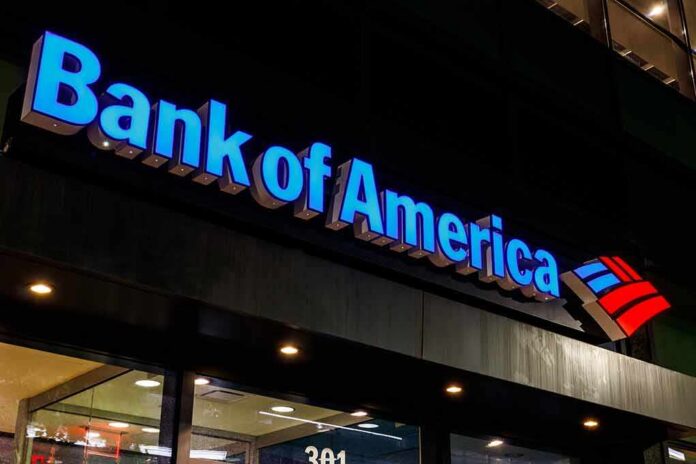
Bank of America’s bond portfolio racked up about $109 billion in paper losses as higher interest rates hammered long-term Treasurys and mortgages.
Story Highlights
- Unrealized losses on Bank of America’s debt securities climbed past $100 billion.
- Rising seven- and ten-year Treasury yields pushed bond prices down, deepening losses.
- Most big banks carried sizable paper losses after 2022 rate hikes, regulators reported.
- Losses matter most if banks must sell, face deposit flight, or show weak capital.
What Bank of America Reported And Why It Matters
Bank of America disclosed heavy unrealized losses on its bond holdings as market interest rates rose. Those losses reflect price declines on low‑yield, long‑dated securities that the bank bought during the pandemic. The figure crossed roughly $109 billion, drawing attention back to a key risk that shook smaller lenders in 2023. While these are paper losses unless sold, they can still weigh on capital, earnings, and lending plans if funding pressure forces sales at a bad time.
Higher Treasury yields drove the damage. Yields on seven‑ and ten‑year notes moved above five percent, making older bonds with lower coupons worth less today. That simple math is not new, but the scale is. When a bank holds hundreds of billions in long bonds, even a small price swing turns into large losses on paper. Reporting from financial outlets tied the jump in losses to this rate move through early October.
How We Got Here: Long Bonds Bought In The Pandemic
During the pandemic, banks bought a large pile of safe but long‑dated securities when yields were near zero. As the Federal Reserve raised rates to fight inflation, those older bonds fell in value. Bank of America’s own filings and earnings materials show the timing and makeup of its securities book and performance across 2023, when rates climbed and losses grew. A 2023 article also noted these low‑yield, long‑term bets became a thorn as rates rose.
This is not only one bank’s story. The Federal Reserve’s 2023 stress test summary said most large banks started the test with big unrealized losses on available‑for‑sale securities after rates surged in 2022. The point is clear: rate risk hit many banks at once. What separates a headline from a crisis is whether a bank must sell those bonds, faces a run of uninsured deposits, or lacks capital to absorb hits—conditions that made failures worse in 2023, according to the Federal Deposit Insurance Corporation.
Why Conservatives Should Care: Risk, Discipline, And Your Money
Savers and retirees took the inflation punch first. Now they see how years of cheap money twisted incentives. Long bonds looked “safe,” but rate risk was real. Paper losses this large can slow lending and hurt local businesses that need credit, as supervisory research found after the tightening cycle. When credit gets tight, families and small firms pay. That is why strong risk management and clear capital plans matter more than glossy talking points.
Regulators warned that mid‑size and large banks can shake the system if they mismanage risk. Policymakers also stressed that selling securities at losses during stress, as seen in 2023, can spark panic withdrawals. The lesson is basic: discipline beats wishful thinking. Banks should hedge rate risk and keep funding stable. Leaders should avoid policies that pump bubbles, hide losses, or push social agendas that distract from core safety and soundness.
What To Watch Next: Rates, Deposits, And Capital Buffers
Investors and customers should track three items. First, watch interest rates. If long‑term yields keep rising, bond prices fall more, and paper losses grow. Second, watch deposits. Stable, insured deposits lower run risk. Third, watch capital and hedges. Solid buffers and interest rate hedging reduce the chance of forced sales. Bank of America’s broader filings and annual report provide detail on the size and mix of its securities and balance sheet strength.
For Main Street, the bottom line is simple. Banks must protect deposits and keep credit flowing without leaning on bailouts. Transparency, strong buffers, and focus on core banking—not political fads—build trust. President Trump’s administration should press regulators to enforce clear, even rules that reward prudence and punish risk games. That approach helps shield families’ savings, keep small businesses open, and restore common sense to a system that has seen too much easy money and too little accountability.
Sources:
theedgemalaysia.com, d1io3yog0oux5.cloudfront.net, cnbc.com, investor.bankofamerica.com, bloomberg.com, news.futunn.com, federalreserve.gov, fdic.gov, frbsf.org