
U.S. and Japanese forces just moved ship-killing and air-defense missiles onto islands near Taiwan in their largest Keen Sword drills to date.
Story Highlights
- U.S.-Japan exercise Keen Sword massed tens of thousands of troops, ships, and aircraft.
- U.S. Marines are deploying mobile anti-ship and air-defense systems to Yonaguni near Taiwan.
- Japan says Keen Sword strengthens combined readiness and interoperability across sea and air.
- A U.S. carrier strike group is joining operations around Japan’s southwestern islands.
Allied Forces Test Island Defense Near Taiwan
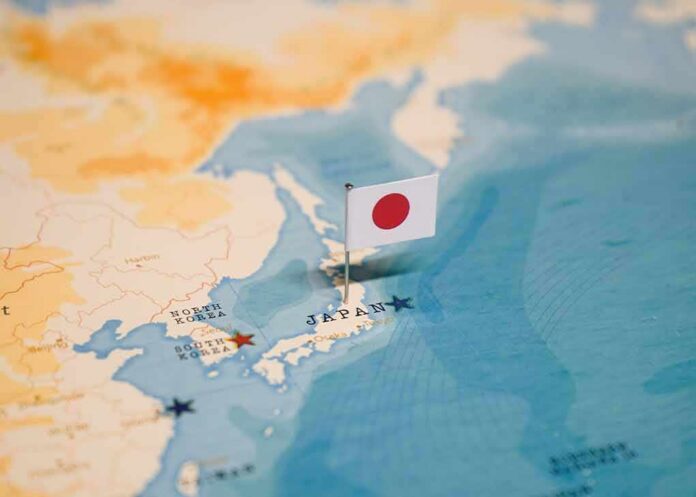
Japan and the United States launched the latest Keen Sword exercise around Japan’s southwest islands, which lie close to Taiwan. Japan’s Joint Operations Command described a force package of about 45,000 Japanese personnel and 12,000 U.S. personnel, with about 45 ships and 380 aircraft taking part. The drill runs across maritime and airspace near the Nansei chain. The goal is clear. The allies are practicing how to defend critical islands, protect sea lanes, and coordinate fast in a crisis.
Japan’s Ministry of Defense has long framed Keen Sword as a readiness and interoperability event that links naval, air, and ground units. The Japan Maritime Self-Defense Force said the exercise builds Japan–U.S. readiness and interoperability and deepens work with like-minded partners. That pairing is essential in the southwest region. These islands sit on key straits between the East China Sea and the Pacific. Control of those chokepoints shapes who can move ships, aircraft, and supplies in a fight.
New U.S. Marine Missiles Move Within View of Taiwan
The U.S. Marine Corps is deploying two new systems to Yonaguni Island during the exercise, according to a Japanese defense planning document and U.S. reporting. The Navy–Marine Expeditionary Ship Interdiction System carries anti-ship missiles on mobile launchers. The Marine Air Defense Integrated System provides short-range air defense against drones and aircraft. Both systems will operate for the first time from Yonaguni, the Japanese island closest to Taiwan. Their placement tests logistics and real-world coordination near a major hotspot.
A U.S. carrier strike group led by USS Theodore Roosevelt is also moving to the exercise area. Carrier aviation, cruisers, and destroyers add long-range sensors, strike options, and air defense depth to the drills. Put together, these forces practice how to find, fix, and hold hostile ships at risk while defending the skies above the islands. The message to any aggressor is straightforward. The allies can move fast, disperse across islands, and close straits to hostile fleets if required.
What Keen Sword Trains: Air, Sea, and Distributed Command
Keen Sword is not a new brand. It began in the 1980s and now runs every two years to prepare for defending Japan. Over time, it has expanded into integrated air and missile defense, amphibious operations, and joint maritime control missions. Japan’s joint planners list real-world locations across military sites, civilian ports, and the surrounding sea and air approaches as part of the training map. That layout trains for contested logistics, rapid dispersal, and civil-military coordination if inbound threats disrupt normal bases.
The exercise builds habits that matter under fire. Commanders rehearse communication paths that link ships, aircraft, and ground units. Air defense teams practice tracking and cueing. Naval crews drill anti-submarine and surface warfare. Marine and Japanese ground teams test how to move and hide launchers, then shoot and shift. These skills let smaller island teams create real sea-denial zones. Even a few mobile launchers can make narrow waters too risky for a hostile navy to push through.
Why It Matters for U.S. Security and Deterrence
This drill lines up with a broader shift toward island defense and deterrence in the first island chain. Japan has been reinforcing the southwest with sensors, anti-ship missiles, and air defenses to close key straits and shield shipping routes. Keen Sword helps prove those pieces can work with U.S. forces under pressure. For American readers, this is about keeping trade lanes open, deterring war, and preventing a hostile power from choking allied economies by sea blockade or intimidation.
For conservatives who value peace through strength, this is what it looks like. President Trump’s team is placing real capability where it counts, not just issuing statements. The Marine missile units on Yonaguni show practical deterrence at low cost compared with a new war. The carrier strike group adds air cover and rapid punch. Japan’s buy-in and leadership on its own territory make the alliance stronger and the burden fairer. That is smart, constitutional defense policy rooted in deterrence and shared responsibility.
Sources:
defencesecurityasia.com, stripes.com, thebostonreport.com, mod.go.jp, note.com, 3g.china.com, aljazeera.com