

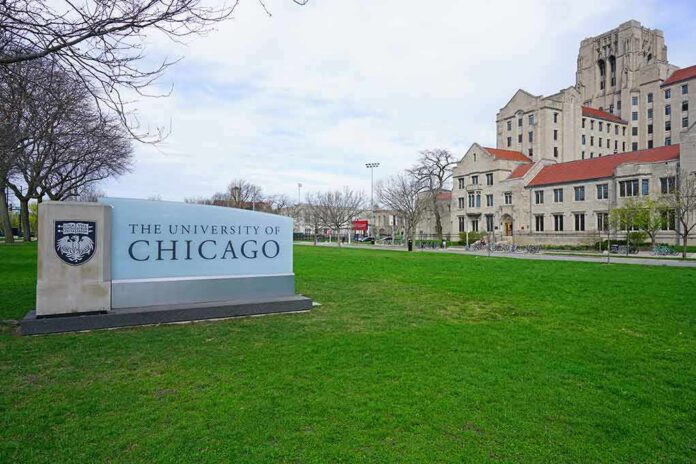
A second lawsuit in one week now targets University of Chicago fraternities after a police-backed report described a bathroom assault during a packed party.
Story Snapshot
- Police report describes a 21-year-old woman found partially undressed in a locked bathroom at an Alpha Epsilon Pi party.
- New lawsuit alleges a separate assault at Alpha Delta Phi and claims past warnings were ignored.
- University says the person of interest in the bathroom case is not affiliated with UChicago and is banned from campus.
- No criminal charges have been filed yet; investigations continue.
Two Cases In One Week Raise Serious Campus-Safety Questions
Chicago police said a 21-year-old woman reported a sexual assault inside a bathroom during an Alpha Epsilon Pi party near the University of Chicago. Friends told police they forced the door and found her and a man partially undressed. Reporting also described several men cheering outside the bathroom. The woman called police about 30 minutes after the incident and went to a hospital for care. No arrests had been made as of the latest reports.
Days later, a separate lawsuit named Alpha Delta Phi’s national group and its local chapter. The complaint says a woman, identified as Jane Doe, was assaulted after being given an alcoholic shot and led upstairs during a February party. The filing claims the fraternity entities had prior assault reports and failed to enforce their own policies. The complaint names a specific fraternity member as the alleged attacker, which may sharpen the liability fight in court.
What Police And The University Say About The Bathroom Case
The University of Chicago issued a community alert stating the person of interest in the bathroom case is not a student and has no affiliation with the university. The alert also said the individual was identified with help from cameras and was banned from campus property. The university stressed the party was off campus, and that fraternities are not recognized student organizations under current policies, drawing a sharp line on control and responsibility.
Alpha Epsilon Pi’s national organization said there is no evidence that its members took part in or knew about the assault while it was happening. The local chapter said, to its knowledge, no affiliated person was involved or complicit, and members ended the party once alerted. Reports also state a fraternity member stayed with the woman until authorities arrived. The chapter said it suspended events and is cooperating with law enforcement during the investigation.
Why These Lawsuits Matter For Families, Students, And Donors
Parents and students want clear answers about who controls off-campus events and what safety rules actually bite. These cases highlight a recurring gap: fraternities often operate in private houses, outside formal university recognition, but still attract students. That distance can weaken oversight and blur accountability when something goes wrong. The public record in Chicago shows a fast police response, hospital care, and campus alerts, but no charges yet, which keeps the core facts under investigation.
The second case adds legal pressure by alleging past warnings and naming a specific actor. If a court finds the fraternity or its national group ignored known risks, that could open the door to damages. If the university had no control over the site or the event, its liability may be limited. Title IX suits often turn on notice, control, and whether a policy failure exposed a student to further harm. Those are fact-heavy questions that judges and juries sort out over time.
What To Watch Next As Investigators Work
Police work will focus on witness statements, party videos, and any forensic records that can place people, confirm timelines, and test accounts. Investigators will look at surveillance, license plate data, and any social media posts tied to the event. Attorneys in the civil suits will ask for party lists, messages, and chapter risk files. Those records can confirm whether leaders had warnings, set rules, or failed to act when risks were clear. The results will shape any charges or settlements.
For now, readers should hold two points at once. First, the woman’s bathroom report has concrete support: a prompt police call, hospital care, and friends who intervened. Second, no one has been charged, and the university says the person of interest is unaffiliated and banned. Both things can be true at this stage. That is why due process, firm campus safety standards, and real accountability must work together, not against each other.
Sources:
nypost.com, nbcnews.com, chicago.suntimes.com