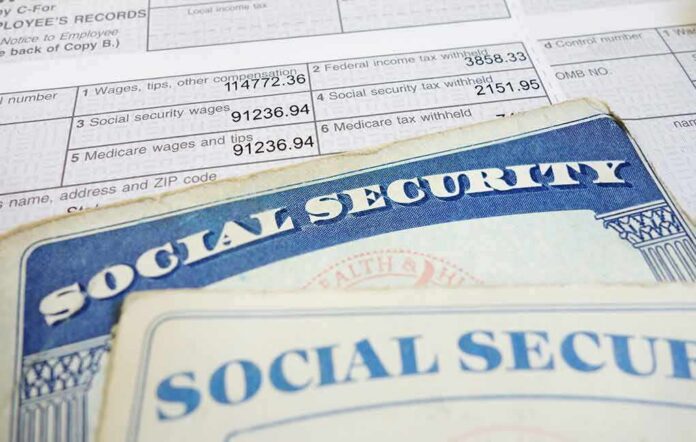
Democrats revived plans to “scrap the cap” on Social Security taxes, putting higher payroll taxes for workers and small businesses on the midterm ballot as the trust fund’s 2033 deadline looms.
Story Snapshot
- Trustees project Old-Age and Survivors Insurance reserves run out in 2033 without new law.
- After depletion, incoming taxes would cover about 77% of scheduled benefits.
- Bills in Congress would tax wages above $400,000 or repeal the wage cap after 2026.
- Fraud-fighting reforms could help but do not by themselves close the gap.
What the Trustees Say About the 2033 Deadline
The Social Security Trustees say the Old-Age and Survivors Insurance trust fund can pay full benefits until 2033. After that year, payroll taxes coming in would only cover about 77 percent of promised checks unless Congress acts. That fact sets the stakes for retirees and workers. It also shapes midterm messages. Candidates now anchor their plans to that clock. Voters deserve plain talk on what changes mean for take-home pay and future benefits.
The Trustees use long-range assumptions on wages, jobs, and demographics. Those projections guide lawmakers but are not perfect. Still, the central point is firm: doing nothing triggers an across-the-board cut when reserves run out. The question is not whether action is needed, but which path protects seniors while keeping work and growth strong. Conservatives want solutions that save benefits, avoid waste, and do not punish work or small employers.
Democratic “Scrap the Cap” Push and What It Means
Democratic sponsors filed Social Security 2100 Act versions that would tax wages above today’s ceiling. One bill would add payroll tax on income above $400,000. A newer House version would repeal the wage cap entirely after 2026. These drafts show real legislative text, not just talking points. But they are not law. Supporters say high earners should pay more. Critics warn this is a steep work tax hike hitting business owners and salaries in high-cost states.
The current system taxes wages up to a set maximum, which is $176,100 in 2025. Earnings above that are not subject to Social Security payroll tax under current law. The cap exists for a reason: benefits are linked to contributions, and the program was designed as insurance, not a pure income tax. Repealing the cap or adding a second threshold would change that balance. The bills differ on whether those extra taxes earn extra benefits, which also affects real savings.
Fraud, Improper Payments, and Realistic Savings
Republican Senate candidate Mike Rogers said fraud reduction should be part of the fix and called for auditors to map the problem first. He argued that dollars now lost could help bridge the gap. The Government Accountability Office backs tougher steps, like permanent death-data sharing and a fraud analytics center. Stronger reporting on anti-fraud controls would add pressure to perform. These are common-sense reforms that should pass regardless of other choices.
Public reporting tied to Social Security audits found that most improper payments were overpayments, and cited about $72 billion over seven years, which is under one percent of total benefits in that span. That shows fraud and errors are real and need fixing, but they do not, by themselves, close the long-term shortfall. Honest math and clear oversight can still save billions and protect taxpayer trust. Congress can pair integrity measures with growth policies to help the bottom line.
The Real Choices Facing Voters This Fall
Congress must choose between higher payroll taxes, benefit changes, pro-growth reforms, or a mix. History shows balanced packages can work. In 1983, leaders combined revenue and benefit adjustments to steady the system under President Reagan. Today, Democrats lean toward cap repeal or a $400,000 threshold. Conservatives prefer cutting waste, boosting work, and protecting earned benefits without punishing job creators. What passes will decide checks and paystubs for years.
President Trump’s team has pressed Congress to protect seniors while guarding growth. That means rejecting blank-check tax hikes that hit family businesses and skilled workers. It means cleaning up payment errors, improving data sharing, and holding agencies to account, as watchdogs urge. It also means telling the truth: the 2033 date is real, and delays make choices harder. Voters can demand a fix that honors work, secures retirements, and respects constitutional limits on runaway government.
Sources:
cbsnews.com, ssa.gov, congress.gov