
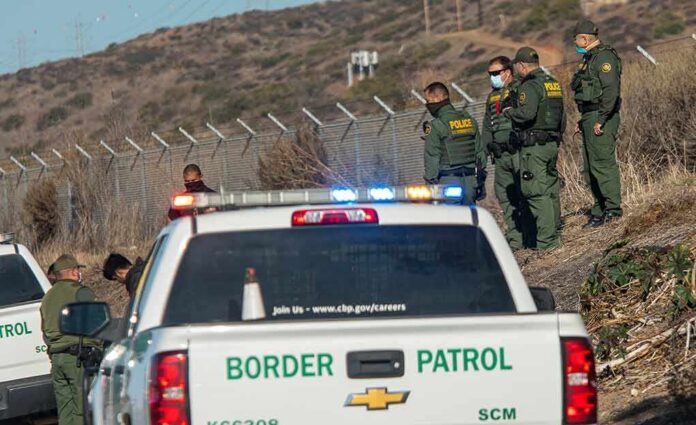
Border Patrol recorded fewer than 99,000 southwest-border arrests in fiscal year 2026, a level officials say is the lowest annual total in agency history and a 95% drop from Biden-era volumes.
Story Highlights
- DHS reports 98,708 southwest-border apprehensions in FY2026, down about 95% from Biden-era annual levels.
- DHS says FY2026 was the first fiscal year with zero Border Patrol releases into the country.
- The FY2026 total is 60% lower than the Biden peak single month of 249,740 in December 2023.
- Multiple outlets reported the same preliminary total and decline, citing DHS and Customs and Border Protection.
Official Figures Show Steep Decline Under Trump Administration
The Department of Homeland Security (DHS) announced that Border Patrol recorded 98,708 apprehensions at the southwest border in fiscal year 2026. DHS described the total as the lowest on record and about a 95% decline compared with more than 1.8 million per year during the Biden administration. The department tied the outcome to enforcement under President Trump and Secretary Markwayne Mullin. The figures are preliminary and subject to routine revision by Customs and Border Protection once final datasets post.
Customs and Border Protection data cited by DHS also compared the fiscal year total to the highest monthly surge under President Biden. December 2023 logged 249,740 apprehensions. DHS said the 2026 total was 60% lower than that single-month peak. That comparison shows the scale of the reset. One Biden-era month eclipsed the whole 2026 year by a large margin. Fox News and other outlets reported the same 98,708 figure and scale of decline based on the DHS release.
Zero Border Patrol Releases Claim Marks Policy Shift
DHS said Border Patrol made no releases into the United States during the entire fiscal year. That breaks with the “catch-and-release” pattern that frustrated many communities during the surge years. The agency credited strict enforcement across the line and expedited processing. The zero-release metric refers specifically to Border Patrol. It does not by itself describe actions later taken by other parts of the system, such as detention, returns, or removals.
DHS framed the results as the outcome of a clear enforcement posture. The department pointed to sustained application of border consequences and tighter control at ports and between ports. Conservative readers will note the contrast with the prior approach that saw record surges, strained towns, and rising costs. The reported drop signals a return to order and a government carrying out its first duty at the border: enforce the law and protect American communities.
How Apprehensions Fit Into The Bigger Picture
Apprehensions count people the Border Patrol detects and processes. They do not, by themselves, measure every attempt to cross unlawfully. That is why analysts often pair them with other indicators, like estimated undetected crossings, repeat attempts, and removal outcomes. Still, a reduction of this size is operationally meaningful. It eases pressure on agents, lowers processing backlogs, and reduces the flow-on costs for local schools, hospitals, and law enforcement.
The Biden-era comparator in the DHS release is broad. It describes “more than 1.8 million per year” without listing exact years or the calculation method. That limits precision in the percentage math, but it does not change the core fact: DHS reports a dramatic year-over-year collapse in southwest apprehensions under President Trump in 2026. The department’s characterization of the data as preliminary is standard practice before final auditing of the fiscal year tables.
What This Means For Security, Communities, And Policy
Border stability matters for safety, sovereignty, and budgets. When agents are not chasing mass flows, they can target the cartels, fentanyl smugglers, and repeat offenders. Local officials avoid shelter crises and school crowding. Taxpayers avoid paying for the fallout of an overwhelmed system. The 2026 numbers suggest a tighter border, which supports the rule of law and the basic promise that the government will defend the line and the communities that live near it.
Conservative voters demanded order after years of chaos, and these numbers show a sharp turn. The administration says it enforced the law, ended Border Patrol releases, and brought crossings down to levels not seen in decades. The data will receive final updates as agencies close the books, but the direction is clear. A secure border protects families, upholds the Constitution, and keeps faith with citizens who expect a nation to control who enters its territory.