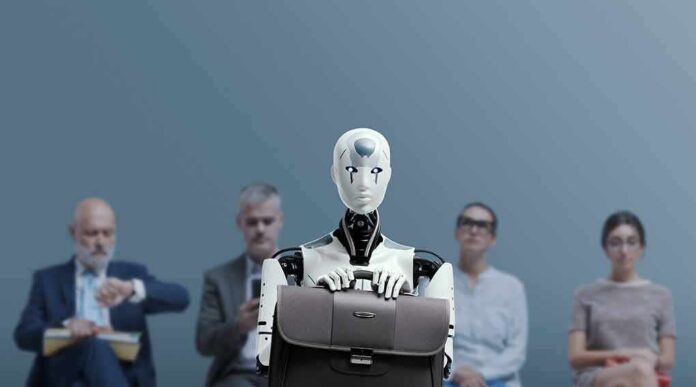
Bill Gates is urging governments to reserve jobs for humans and reshape tax policy as artificial intelligence threatens to erase many entry- and mid-level careers permanently.
Story Highlights
- Gates says many jobs will disappear forever and that governments are not ready.
- Entry- and mid-level roles face the greatest risk in the near term.
- Proposals include “human-reserved” jobs, new institutions, and tax changes.
- Gates warns of cyber and biological misuse alongside job losses.
Gates Warns Of Rapid Job Loss And A Slow Government Response
Bill Gates released an essay warning that artificial intelligence could wipe out many jobs faster than workers can move into new roles. He writes that governments are not prepared for the shift and that many jobs may disappear forever if leaders do not act now. He highlights entry- and mid-level jobs as most at risk, with new roles often needing years of training. Gates frames the moment as a fast break from past tech waves, not a slow, manageable change.
Gates ties the labor threat to other concrete risks. He points to cyberattacks, bioterrorism, and harms to child development as areas where artificial intelligence can be misused if policy lags innovation. He argues the public conversation outside the tech world has not kept pace, which leaves families, schools, and small businesses exposed. He urges leaders to treat this as a near-term policy challenge rather than a distant debate, noting that delay could raise social costs.
Policy Push: “Human-Reserved” Jobs, New Guardrails, And Tax Fixes
Gates calls for a clear line of “human-reserved” jobs to protect essential roles that keep communities strong. He supports building new national and international bodies to guide safety and manage the economic shock. He also backs tax reforms that reduce incentives for firms to replace workers with machines too quickly. The goal, he writes, is to slow the rush to automate core services and to give workers time and support to retrain.
His proposals mirror long-standing conservative priorities around stable families, safe neighborhoods, and dignity of work. Reserving certain jobs for people can help protect vital community care roles and early career ladders. Adjusting tax rules to reward work over pure automation can reduce pressure on small firms and local shops. Building new oversight that is lean, clear, and accountable can also check global bodies that might try to centralize power far from voters.
What This Means For American Workers And Policy Under President Trump
American workers in customer support, basic office tasks, and routine analysis jobs face the highest exposure in the near term, according to Gates’s framing. These roles often provide the first rung on the ladder for young people and career changers. If those rungs break, families could feel it in lost income, delayed home buying, and weaker community ties. Some academic work finds no broad job collapse yet, but warns younger workers in exposed fields are falling behind.
The Trump administration can draw a firm line that protects work and safety while keeping innovation at home. Steps include directing agencies to prioritize human-serving jobs in health, education, and public safety; tying federal incentives to worker upskilling; and aligning tax policy to reward companies that keep and train American workers. Clear penalties for criminal cyber and biological misuse of artificial intelligence can defend the homeland without smothering honest business growth.
Balancing Innovation With Liberty, Work, And Community
Gates’s warning does not call for stopping artificial intelligence. It calls for rules that fit the risks and the speed of change. Conservatives can back targeted steps that protect the right to work, the right to raise a family in safety, and the right to speak and build without a distant bureaucracy picking winners. Human-reserved jobs can anchor community values. Smart tax and training policy can keep paychecks strong while American firms compete and lead the world.
Be very careful…… ‘There is no plan’: Bill Gates sends a 6000-word warning on the dangers of AI. https://t.co/O3zbGMB7GN #AI #techoverload
— Delmarva, USA (@delmarvalocal) September 16, 2026
One caveat remains: Gates’s strongest claims are forecasts, not measured outcomes, and do not rest on a single published model. But his push lines up with common sense and with evidence that early-career workers carry the greatest risk in exposed fields. The task now is to shape policy that guards workers and families while keeping the United States the best place to build the future.
Sources:
zerohedge.com, theguardian.com, cbsnews.com, hcamag.com, gatesnotes.com, gulfnews.com, goldmansachs.com