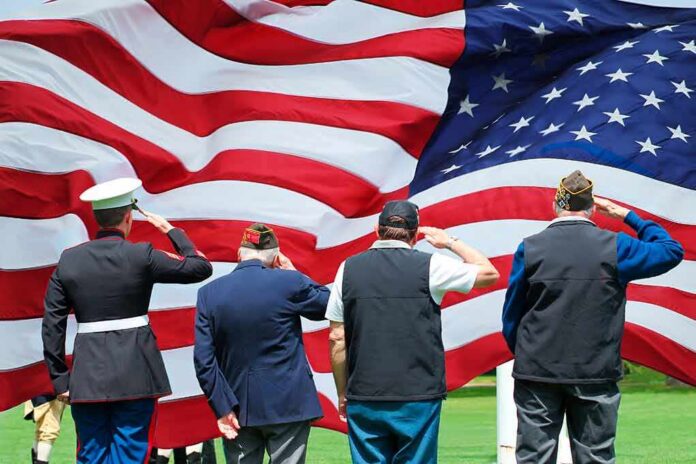
An anti-war veterans group plans to pour tens of millions into electing Democrats this fall, putting swing races squarely in its sights.
Story Snapshot
- VoteVets plans $60 million to boost 331 Democrats across federal and local races.
- The group is actively endorsing Democratic House candidates and funding ads in key districts.
- VoteVets says it has surpassed $100 million in independent spending since its founding.
- Billboards and digital ads target bases with anti-administration messages ahead of November.
VoteVets Scales Up Spending To Shape 2026 Midterms
VoteVets, a veterans-focused political network with an anti-war message, plans to spend $60 million to support 331 Democratic candidates in the 2026 midterms, including 20 federal races and hundreds of down-ballot contests. The group’s plan marks its largest cycle since inception and positions it among the most active single-issue players this year. VoteVets’ own materials say its political arm has already topped $100 million in independent expenditures across past cycles, signaling well-built fundraising and media operations.
Public disclosures and the group’s site show a pattern of aggressive independent spending, endorsements, and targeted media in priority states. Independent spending can include television, digital, and mail that urges votes for or against candidates, without coordinating with campaigns. Outside spending by all groups soared in recent cycles, and 2026 is tracking the same trend, with advocacy networks acting as shadow party helpers when the stakes are high. VoteVets is leaning into that role for Democrats this fall.
Endorsements And Ads Zero In On Key Districts
In late July, VoteVets endorsed a slate of Democratic House hopefuls, including candidates in New York, Ohio, Colorado, and North Carolina, and pledged full support to push them over the top. The group has announced a one-million-dollar ad buy in a New York House primary and flagged other major investments, reflecting a scaling plan that reaches into crowded suburban battlegrounds. These actions show how national networks can move fast to define lesser-known candidates early in the cycle.
In Iowa’s Senate race, national outlets reported VoteVets backing of Democrat Josh Turek with more than $2 million in advertising, while the group publicly celebrated his primary win later in the summer. Other reporting placed VoteVets among the largest Democratic-aligned outside spenders in 2026, with more than $12 million already deployed by midsummer. The consistent pattern is clear: endorsements arrive, ads land, and resources follow to keep momentum through November.
Anti-Administration Messaging Targets Military Communities
Reporting shows VoteVets placed more than 1,000 billboards near major bases this summer, urging veterans and military families to link global conflict with higher costs at home and to vote accordingly. The message line is simple and sharp: war talk means price spikes for your family. That is a direct appeal to kitchen-table voters and a test of whether national-security branding can swing cost-of-living concerns in tight districts. The scale suggests a coordinated, multi-state effort timed for maximum reach.
Anti-War Veterans Group Commits $60M to Supporting Democrats
The anti-war veterans group VoteVets outlined plans for record spending to support hundreds of Democratic candidates in the looming midterm elections.
Read: https://t.co/H2MDWtRSFV pic.twitter.com/AzCOHCPzs8
— Real Truth Media (@RealTruth) September 27, 2026
The group’s posture also includes pushing lawmakers on war powers votes, citing a constitutional duty to check open-ended conflicts. That stance pairs with its campaign push for Democrats who back limits on executive war authority. For conservative voters, this underscores a policy fight that can affect troop deployments, defense posture, and energy prices. It also highlights how outside groups now drive issue narratives while saturating airwaves and billboards in the final stretch.
What Conservative Voters Should Watch
Conservative readers should track where the $60 million lands, which districts get billboards, and how messages frame costs, security, and border priorities. When a single network funds large ad blitzes and endorsements across dozens of races, it can tilt close contests and reshape the House map. Local conservatives can answer by focusing ground efforts on turnout, speaking to pocketbook pain, and making clear contrasts on energy, immigration, and public safety that matter most this year.
Sources:
feedpress.me, nytimes.com, votevets.org, washingtonexaminer.com, nbcnews.com, prospect.org, politico.com