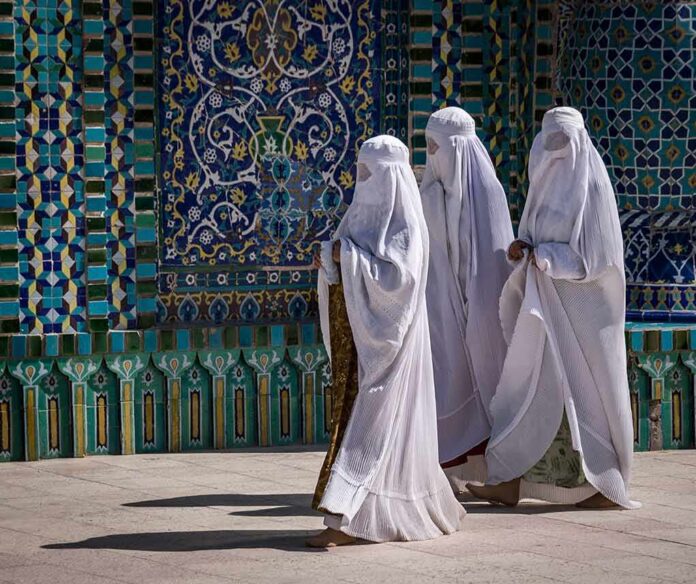
Italy’s government moved to ban burqas and niqabs in schools and cap foreign students per class, saying classrooms must integrate, not segregate.
Story Snapshot
- Prime Minister Giorgia Meloni said a cabinet measure will ban face-covering veils in schools and set class caps for foreign students.
- The plan also requires some parents of foreign students to learn Italian to support integration at home.
- Backers call it a common-sense push for language, order, and safety; critics call it discriminatory.
- Several European nations already restrict face veils in public spaces or schools, giving Italy legal and policy company.
What Rome Announced And Why It Matters
Prime Minister Giorgia Meloni told a party youth event that her government will present a measure to cap foreign students per class and ban burqas and niqabs in schools. She linked the move to language learning and social cohesion, saying large numbers of non-Italian speakers in one room block real integration. Reuters reported the package also adds Italian lessons for parents who struggle to support their children in school life. The plan must go through Italy’s cabinet and then parliament to become law.
Supporters frame the step as simple clarity: teachers must see students’ faces, and kids must learn together in Italian. They argue clear rules prevent parallel cultures and raise standards for every child. Meloni’s language echoed this idea, warning that when most students cannot follow instruction, the school stops integrating them and starts failing them. The class cap, she suggested, would spread needs across campuses and avoid pockets of stagnation that drag down everyone.
How Europe Has Handled Face Veils In Schools
Italy is not alone. A number of European countries have national bans on full-face coverings in public spaces, and many restrict them in schools. A 2022 policy brief lists Austria, Belgium, Bulgaria, Denmark, and France among nations with general face-veil bans. Courts in Europe have often upheld targeted school limits when tied to instruction and safety. That history gives Italy a roadmap if lawmakers craft a narrow rule for classrooms and link it to practical school goals rather than broad cultural fights.
Past cases in Europe typically turn on proportionality and scope. Measures succeed when they are limited to times, places, and roles where faces must be visible to teach, test, or verify identity. Broad rules that sweep beyond those needs face tougher reviews. If Italy focuses on schools, specifies learning tasks, and explains safety checks, it will likely pass the legal smell test seen in other nations. That approach would align the ban with education, not a blanket statement on religion.
Critics Push Back On Religious Freedom And Inclusion
Opponents argue the policy targets a small group and risks alienating Muslim families. A European outlet reported backlash from opposition politicians and some legal experts soon after the speech. The Council on American-Islamic Relations called face-veil bans “authoritarian” and “bigoted,” saying women should be free to choose religious dress and noting other face coverings would remain permitted for nonreligious reasons. Muslim representatives quoted in earlier reporting warned such moves harm coexistence rather than help it.
🔴 “It is NOT negotiable on our streets and NOT negotiable in our schools”
Meloni moves to ban the BURQA in Italian schools and for a requirement to integrate and learn Italian:
“The proposed measure will introduce an obligation for the parents of foreign students with serious…
— Kosher (@koshercockney) September 20, 2026
The government’s answer is that schools are unique spaces. Officials point to clear classroom needs: verify who is in the room, see faces to teach language, and check comprehension. Meloni’s team also ties class caps to inclusion, not exclusion. They argue smaller clusters of foreign students per class help each child hear and use Italian every day, speeding mastery and reducing dropouts. That case rests on a simple test: do the rules help students learn faster and stay safe? If yes, expect support to grow.
Why This Story Resonates For Americans Watching Europe
American readers see a familiar debate: order and integration on one side, identity politics on the other. Italy now faces the same choice many U.S. communities face: Will schools set rules that put learning first, or will they dodge hard calls and accept chaos? Meloni chose clarity. She named the problem, set boundaries, and backed language skills for kids and parents. That is a direct push against the old globalist habit of looking away while standards fall.
For conservatives, the core principles are simple. A nation needs a common language. A classroom needs open faces, known identities, and one standard. Parents share the duty to help their kids learn. When leaders defend those basics, schools get stronger. When they do not, discipline breaks, grades fall, and trust fades. Italy’s step will not end every problem, but it puts the focus back where it belongs: teach the child, protect the teacher, and keep the class together.
Sources:
redstate.com, nypost.com, euronews.com, aljazeera.com, latimes.com, kfgo.com, indiatoday.in