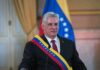
Colombia’s new president asked President Trump for joint U.S.-Colombian military operations to crush drug cartels inside Colombia, and Washington says the request is a go.
Story Highlights
- Defense Secretary Pete Hegseth said Colombia authorized joint operations against cartels.
- Colombia’s new leader requested U.S. collaboration targeting “narco-terrorism”.
- The move aligns with decades of U.S.-Colombia counter-drug cooperation.
- Colombia is joining the Shield of the Americas counter-cartel coalition.
Colombia Formally Opens Door to U.S. Military Support
U.S. Defense Secretary Pete Hegseth said in Panama City that Colombia authorized joint military operations with the United States to target drug traffickers. He said Bogota requested U.S. collaboration to fight “narco-terrorism,” citing the country’s newly inaugurated president as the driver of the request. ABC News, citing the same briefing, reported that the request covers joint operations inside Colombia. This is a direct ask for U.S. help against armed criminal networks that poison American streets with cocaine.
Hegseth framed the effort as part of President Trump’s regional anti-cartel push. He described potential joint strikes on armed groups tied to the drug trade and welcomed Colombia’s government as a new partner in the coalition effort. The Washington Post reported the Colombian president wants the Trump administration’s hardened campaign brought to Colombia, the world’s largest cocaine producer, to hit traffickers where they operate. This signals a sharper, faster posture than past slow, bureaucratic programs.
‘Shield of the Americas’ and What Changes on the Ground
Reports say Colombia is joining the U.S.-led Shield of the Americas alliance, a network focused on intelligence sharing, interdiction, and coordinated pressure on cartels across borders. That matters because cartels shift routes when pressure rises in one country. A coalition reduces those escape valves. Joint operations also speed up target development and extraditions. Faster action means fewer drugs headed north and fewer dollars flowing back to criminal groups that fuel violence from Bogota to the U.S. border.
The Bloomberg report on Hegseth’s remarks underscored that Colombia’s conservative government wants tighter alignment with Washington’s counter-drug push. That alignment can bring air, maritime, and intelligence assets to bear quickly. It can also tighten rules of engagement, with Colombia in the lead on its soil. Clear invites and joint planning reduce legal friction and help avoid the slow-walk that cartels exploit. Speed and unity are the point: hit labs, airstrips, river routes, and leadership nodes before they move.
Why This Matters for American Families and Borders
Cartel cocaine and synthetic drugs fuel addiction, crime, and gang activity in U.S. towns. Joint action in Colombia targets the source. When production drops and routes get cut, U.S. law enforcement faces fewer loads at the border. That helps Border Patrol and local sheriffs who are already stretched thin. It also saves taxpayer dollars by stopping poison before it reaches American neighborhoods, rather than paying the higher cost of arrests, treatment, and community damage later.
This partnership fits a long pattern of U.S.-Colombia work on counternarcotics that has drawn billions in support and training since Plan Colombia. Congress’s nonpartisan research service describes deep cooperation and measurable gains in Colombia’s state capacity and security over the years. The lesson for today is clear: when Washington and Bogota move in sync, cartels lose space, money, and power. Today’s request gives the Trump administration a green light to surge lawful pressure now.
Risks, Guardrails, and the Road Ahead
Joint operations must protect civilians, respect Colombia’s sovereignty, and stay focused on real cartel targets. That is how you win support at home and abroad. Reuters’ account of Hegseth’s comments points to “joint strikes” as a tool, but Colombia will command on its soil, and the mission aims at terrorists and traffickers who profit from misery. Strong oversight, disciplined targeting, and rapid post-strike assessments will help keep the campaign on mission and effective.
COLOMBIA EARTHQUAKE DEATH TOLL EXCEEDS 250 AS RESCUERS SEARCH RUBBLE
while rescuers search the rubble for survivors in Colombia following this week's tragic earthquake… the death toll has exceeded 250
And this… Secretary of War Pete Hegseth says Colombia has offered to serve…— Worldwide News Network (@WorldwideNNX) August 14, 2026
Next steps likely include a joint command framework, shared targeting cells, and timelines for hitting cocaine labs, clandestine airfields, river corridors, and finance hubs. The coalition model widens pressure on supply chains across the region, shrinking the cartels’ maneuver room. With Colombia’s president asking for help and President Trump’s team prepared to act, the hemisphere has a chance to break cartel strongholds. Hitting the source is common sense—and overdue.
Sources:
lemonde.fr, abcnews.com, washingtonpost.com, reuters.com, youtube.com, atlanticcouncil.org