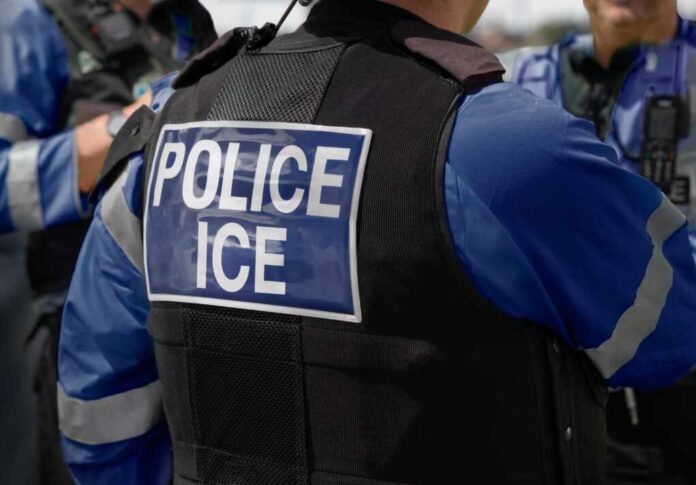
A multi-agency operation involving U.S. Immigration and Customs Enforcement (ICE), U.S. Marshals, and the FBI resulted in a mistaken raid on a U.S. citizen family’s home in Oklahoma City. The incident has drawn public attention and raised questions regarding enforcement tactics.
Story Highlights
- ICE, U.S. Marshals, and FBI agents raided an Oklahoma City home, mistakenly targeting a U.S. citizen family.
- The family, who had recently moved from Maryland, was reportedly forced outside during the search.
- Agents seized personal belongings, and the family reported experiencing distress following the event.
- ICE officials have stated that the raid was conducted with a valid warrant.
- The incident has led to discussions about the accuracy of intelligence used in enforcement operations and calls for accountability.
Report on Federal Raid in Oklahoma City
Federal agents from U.S. Immigration and Customs Enforcement (ICE), along with personnel from the U.S. Marshals Service and the FBI, conducted a raid on a residence in Oklahoma City. The operation, intended to apprehend suspected immigrant gang members, mistakenly targeted the home of a U.S. citizen family who had recently relocated from Maryland.
According to reports, the family was directed outside their home during the search, which resulted in the seizure of personal belongings. The family subsequently reported experiencing trauma and a lack of resources following the incident, which has garnered public and media attention.
The raid was reportedly part of a broader federal initiative focused on immigration enforcement. Information used to identify the target address, specifically mail for former residents, was later identified as outdated. This event has prompted scrutiny regarding the precision of intelligence gathering and operational methods employed by federal agencies. Previous instances of mistaken raids have been documented, and this event contributes to ongoing discussions concerning immigration enforcement practices and the protections afforded to U.S. citizens.
Federal Agencies’ Enforcement Tactics Under Scrutiny
Officials from ICE have issued statements defending the raid, citing the possession of a valid warrant. The agency asserted that operational security protocols necessitated their actions. However, this defense has not fully addressed public concerns regarding accountability. Immigrant rights organizations have voiced criticism, suggesting that such errors may indicate systemic issues within ICE’s enforcement framework.
Media outlets, including KFOR and MSNBC, have reported on the family’s account, contributing to national awareness of the raid’s impact. The Oklahoma City incident is not isolated, with similar events having occurred previously, leading to legal actions and increased examination of ICE’s procedures. Advocacy groups, such as the National Immigrant Justice Center, continue to advocate for policy reforms and enhanced oversight to mitigate future errors.
Calls for Policy Reform and Accountability
The aftermath of the Oklahoma City raid has intensified calls for revisions to policies governing how federal agencies conduct raids and verify intelligence. The incident highlights the potential need for improved data sharing mechanisms and community engagement strategies to prevent erroneous actions. Without such reforms, public confidence in federal law enforcement may be affected, and demands for accountability are anticipated to persist.
The affected family is reportedly seeking legal redress, financial compensation, and public acknowledgment of the error. Their experience serves as an illustration of the human impact of enforcement inaccuracies and the broader implications for civil liberties and public trust in governmental institutions.
Watch the report: American mother, daughters terrorized by ICE in botched search for immigrants: Report
Sources:
AOL coverage of the family’s experience and trauma
National Immigrant Justice Center documentation of similar ICE enforcement errors and legal actions