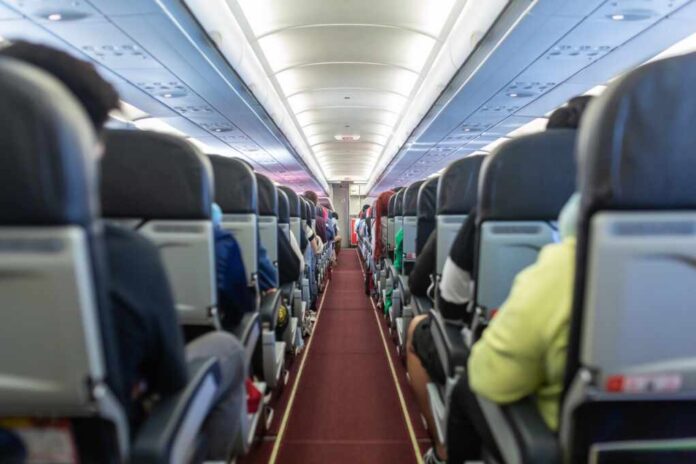
A new, alarming study has brought the safety of airline water systems under intense scrutiny. The 2026 Airline Water Study, which analyzed over 35,000 samples, reveals significant contamination levels, including 32 instances of E. coli across 21 airlines. These findings are prompting public health warnings, urging passengers—especially vulnerable groups—to avoid consuming onboard tap water, coffee, and tea, and shine a spotlight on weak regulatory enforcement of the Aircraft Drinking Water Rule.
Story Highlights
- Over 35,000 airline water samples show significant contamination.
- 32 E. coli violations detected across 21 airlines.
- Passengers advised to avoid consuming airline tap water, coffee, and tea.
- Major carriers outperform regional airlines in water safety.
Airline Water Safety Under Scrutiny
The 2026 Airline Water Study, conducted by the Center for Food as Medicine and Longevity, reveals alarming contamination levels in airline water systems. Over a three-year period, more than 35,000 samples were collected, exposing significant water quality violations. Among these, 32 instances of E. coli contamination were identified across 21 airlines, prompting warnings against consuming onboard tap water, coffee, and tea.
The study utilizes a grading system to rank airlines, with Delta and Frontier Airlines rated the highest. In contrast, Spirit, JetBlue, and American Airlines received lower ratings. Regional airlines showed notably higher contamination rates, with 4.75% of samples testing positive for total coliform bacteria, compared to 1.89% for major carriers.
A recent report highlights concerns around the quality of drinking water used on airplanes, including water for coffee and tea. The findings raise broader questions about how water quality is managed in unique environments.https://t.co/ciSCONtvFz
— WQA (@wqaorg) January 16, 2026
Regulatory Gaps and Industry Responses
Despite the existence of the Aircraft Drinking Water Rule since 2011, which mandates regular testing and maintenance of water systems, the study highlights a gap between compliance and actual safety. Airlines often rely on self-reported data, and the Environmental Protection Agency (EPA) has been criticized for weak enforcement, rarely imposing penalties for violations.
In response to the study, Delta Air Lines emphasized their commitment to water safety, while American Airlines questioned the study’s methodology. JetBlue assured passengers of their adherence to safety standards by serving bottled purified water and following strict preparation processes.
Implications for Passengers and the Industry
The findings have significant implications for passengers, particularly vulnerable groups like children and older adults. Public health specialists stress the importance of passenger precautions, warning that even low-level contamination can disrupt digestion and immune defenses. The study’s revelations may prompt passengers to opt for airlines with better safety records.
In the long term, the study may lead to increased regulatory pressure and calls for stronger enforcement mechanisms. Airlines might need to invest in improved infrastructure to meet higher safety standards, potentially impacting operational costs. The study sets a precedent for independent audits, challenging the industry to prioritize passenger safety over mere compliance.
Sources:
- New Study Flags Water Quality Concerns on Some Major, Regional Airlines
- Airline Water Safety Exposes Gaps in ADWR Compliance – Environment+Energy Leader
- Warning over drinking water on planes following major new study
- Airline Water Quality Study Reveals E. coli Contamination On Major US Carriers – Travel Noire