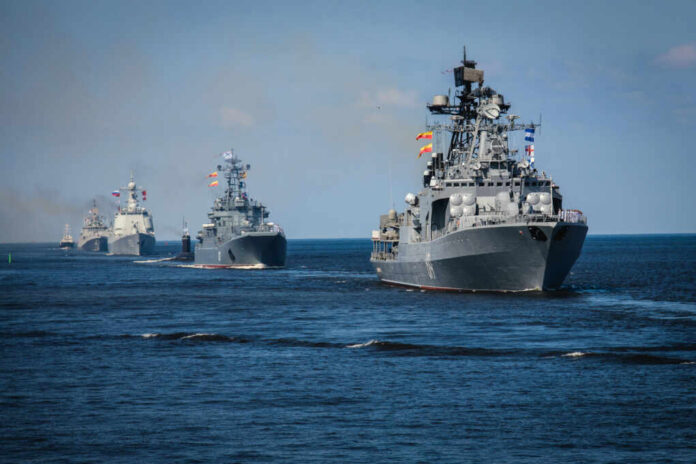
Russia’s military buildup near Finland is a cold reminder that the Arctic—once treated like an afterthought by globalist bureaucrats—is now a frontline for nuclear deterrence.
Story Snapshot
- Finland’s defense minister warns Russia is reinforcing nuclear, submarine, and bomber capabilities in the Kola Peninsula while building new facilities near the Finnish border.
- Arms-control guardrails are weakening as the New START treaty expires in February 2026, raising concerns about rapid “warhead uploads” on existing Russian systems.
- NATO has launched Arctic vigilance efforts, but officials argue the alliance still lacks enough cold-weather capabilities and icebreaking capacity.
- Finland is pushing to expand Arctic deterrence and leverage Finnish know-how, while also seeking major EU-backed funding for land forces and drones.
Finland flags a Cold War-style buildup on NATO’s new Nordic edge
Finland’s Defence Minister Antti Häkkänen said Russia is increasing strategic capabilities in the Kola Peninsula—an area long tied to Moscow’s nuclear posture—and is constructing new military facilities along the Finnish border. Häkkänen described the activity as a return to familiar patterns from the Cold War era, but with modern systems and sharper strategic stakes. The warning landed as Finland and Sweden’s NATO integration shifts the alliance’s northern map and raises the cost of complacency.
Russian activity in the High North matters because geography matters. The Arctic is among the shortest routes for missiles and aircraft between Russia and North America, and it is central to submarine operations in the Barents Sea. Multiple reports describe Russia’s Northern Fleet as the backbone of its Arctic power, built around “bastions” designed to protect ballistic-missile submarines. That posture doesn’t require headline-grabbing theatrics; steady upgrades, new facilities, and improved readiness can change the balance.
Watch:
https://youtu.be/FDBGAvilPr8?si=-GlFgzGcv7vOo-TZ
What New START’s expiration changes—and what it doesn’t
New START’s expiration in February 2026 adds a dangerous uncertainty to an already tense region. Reporting and expert commentary highlight “upload” concerns: if limits and verification fall away, Russia could increase the number of deployed warheads on existing missiles faster than it can build entirely new platforms. Analysts have pointed to Russia’s sea-based deterrent as a key variable, since additional warheads could be added to missiles already carried by submarines, depending on Moscow’s decisions.
That said, the public evidence has limits. Open-source reporting underscores the strategic logic of warhead uploads and the importance of the Kola Peninsula, but it cannot provide a complete, verifiable count of what is stored versus deployed at any moment. This is exactly why arms-control verification historically mattered: it reduced guesswork, slowed miscalculation, and made it harder for adversaries to sprint toward destabilizing changes unnoticed. With fewer guardrails, NATO has to plan for wider uncertainty.
NATO’s Arctic posture faces real capability gaps
NATO has moved toward heightened vigilance in the High North, including efforts described as Arctic Sentry. Häkkänen welcomed increased attention but also suggested that vigilance alone is not a new idea—and that capability building is the real test. Research cited in this coverage points to a practical gap that conservatives instinctively recognize: capacity beats slogans. Russia’s icebreaker fleet size is frequently contrasted with the West’s thinner bench, and Arctic operations demand specialized ships, logistics, training, and survivable communications.
Security concerns also extend below the surface. Analysts have warned that undersea infrastructure—cables, pipelines, and seabed nodes—has become strategically sensitive as submarine activity increases. The research also notes Russia’s interest in controlling the Northern Sea Route and projecting power into the North Atlantic. For Americans, the lesson is straightforward: when an adversary invests in access, denial, and survivability, allies on the front line will demand credible reinforcement, not press releases and conferences.
Finland seeks funding and influence as Europe talks “hard power”
Finland is not only sounding alarms; it is also trying to build. Häkkänen has argued for stronger Arctic capabilities and for sharing Finnish expertise across NATO. Finland is also pursuing major financing to strengthen land forces, including vehicles and drones, with EU approval for a large loan reported in early 2026 and final steps expected soon after. Meanwhile, EU foreign-policy leadership has described the Arctic as a “front line” and urged Europe to catch up to Russia’s buildup.
Russia Flexing Arctic Nuclear Muscle Along Finnish Border, Defense Minister Warns https://t.co/D0M9Hv5K0r
— zerohedge (@zerohedge) February 17, 2026
For a U.S. audience watching President Trump reassert realism, this situation highlights a core principle: deterrence is cheaper than conflict, but only if it is credible. The research presented here supports one clear conclusion—Russia is investing in strategic Arctic posture near NATO territory—while leaving open the unknowable details that only verification regimes can settle. In the meantime, Finland’s warning is a signal to treat the High North as a serious theater, not a climate symposium.
Sources:
Russia reinforcing nuclear and Arctic assets near Finnish border, defence minister warns
Fears grow that Russia will deploy more nukes in the Arctic as New START treaty expires
TAG VC Note: Russia’s Arctic Build Up (12/02/26)
Russia increases its nuclear and Arctic assets near Finnish border — defense minister
Moscow’s Arctic red lines: How Russia could respond to the militarisation of Greenland
Arctic Week “Take Five” – Week 9 (February 2026)