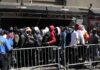
France’s iconic Eiffel Tower stands shuttered as mass protests erupt against government overreach and economic mismanagement, sending shockwaves through Europe and raising alarms about political stability and individual liberty.
Story Snapshot
- Nationwide strikes forced the closure of the Eiffel Tower, symbolizing widespread discontent with French government austerity measures.
- Protests spanned 200+ cities, uniting workers, students, and retirees against spending cuts and tax policies that threaten social services.
- The unrest exposes the risks of bloated government, endless spending, and policies that trample the rights and livelihoods of everyday citizens.
- Tourism, businesses, and public order are directly impacted, highlighting the dangers of unchecked government power and fiscal irresponsibility.
Nationwide Strikes Paralyze France and Shut Down the Eiffel Tower
On October 2-3, 2025, France witnessed one of its largest waves of civil unrest in recent history, as massive nationwide strikes erupted in response to government-imposed austerity measures. The protests, involving workers, students, and retirees, forced the unprecedented closure of the Eiffel Tower—the country’s most visited landmark. Demonstrations swept through over 200 French cities, with participation estimates ranging from 195,000 (government figures) to more than 1 million (union claims). The landmark’s closure sent a powerful message about the depth of public frustration with government overreach and fiscal mismanagement.
The French government’s controversial 44 billion euro austerity plan was the immediate catalyst for these strikes. The plan threatens to eliminate two public holidays and freeze social welfare programs that many French citizens rely on. Prime Minister Sebastian Leorno’s refusal to reintroduce the wealth tax added fuel to the fire, with protesters demanding higher taxes on the wealthy instead of cuts to essential services. The strikes are the latest in a long tradition of French civil resistance to government policies that burden working families and erode economic freedom.
Thousands of protesters prompt world-famous landmark to close its doors on tourists https://t.co/dz5nL1ljHH #FoxNews
— CallieBenson (@CallieforTrump) October 4, 2025
Economic and Political Fallout: Lessons for America
The mass protests and the shutdown of an international landmark have far-reaching implications for France’s economy and political stability. Tourism, a critical sector, took a direct hit as thousands of visitors were turned away from the Eiffel Tower. Businesses across 200 cities faced disruptions, and public services ground to a halt. The unrest highlights the dangers of unchecked government expansion and the fallout from reckless spending—warnings that resonate with Americans who have grown frustrated with similar policies at home.
France’s turmoil is a cautionary tale about the perils of centralized power and chronic overspending. When government grows too large and unaccountable, it inevitably squeezes working citizens, undermines individual liberty, and breeds political instability. The coordinated strikes demonstrate how quickly public confidence can erode when leaders ignore the demands of ordinary people in favor of globalist agendas and top-down mandates.
Power Struggle and Grassroots Resistance
The strikes represent a direct challenge to government authority, with France’s major unions showcasing their ability to mobilize millions and shut down major tourist attractions. Protesters, wielding bright flares and bold banners, united across traditional lines—workers, students, and retirees—reflecting a broad-based rejection of policies that threaten their livelihoods and freedoms. The movement’s scale and coordination serve as a reminder of the power of grassroots resistance when governments cross the line, threaten economic security, and ignore constitutional values.
The French Interior Ministry reported 195,000 protesters nationwide, with 24,000 in Paris alone, though union leaders insist the true numbers were far higher. The government’s efforts to downplay participation only fueled further distrust. As the strikes continued, there was no immediate resolution in sight—underscoring the risks governments run when they pursue austerity or big-government schemes without public support or common-sense reforms.
Broader Implications: A Warning for the West
The spectacle of the Eiffel Tower shuttered by government policy is more than a French crisis—it is a warning to the West about the dangers of runaway government and the assault on individual rights. The strikes disrupted not only tourism but also transportation, public services, and the daily lives of citizens across France. Political legitimacy and labor relations are now at a crossroads, with the government under intense pressure to address public demands while still grappling with fiscal realities.
For American conservatives, the lesson is clear: vigilance is essential whenever government overreach threatens liberty, prosperity, or traditional values. France’s ongoing unrest stands as a stark reminder that freedom is fragile—and that the path back to stability begins with respecting the voice of the people, restoring fiscal discipline, and defending the rights that form the bedrock of a free society.
Sources:
Eiffel Tower closed as nationwide strikes held across France against austerity
Thousands of protesters prompt world-famous landmark to close its doors on tourists