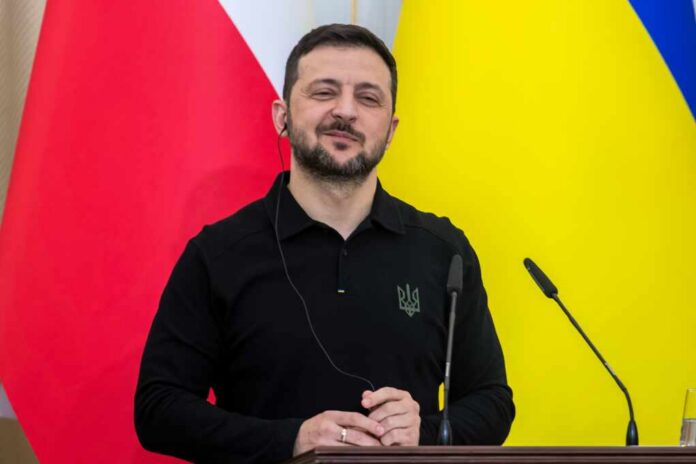
While American troops battle Iran in a conflict that has exposed the broken promises of avoiding new Middle Eastern entanglements, Ukraine’s President Zelensky just secured 10-year defense deals with three Gulf states—raising questions about whether our resources are being stretched thin across conflicts that don’t serve American interests.
Story Snapshot
- Zelensky signed 10-year defense cooperation agreements with Saudi Arabia, Qatar, and UAE in late March 2026, focusing on joint weapons production and air defense expertise
- Ukrainian military specialists are already deployed in Gulf states helping counter Iranian drone and missile attacks amid the U.S.-Israeli war with Iran
- Agreements include co-production facilities in both Ukraine and Gulf nations, plus energy cooperation addressing Ukraine’s damaged infrastructure
- Zelensky expressed concern that U.S. resources are being diverted to the Iran campaign, potentially reducing support for Ukraine’s defense needs
Ukraine Pivots to Middle East Defense Partnerships
President Volodymyr Zelensky completed a diplomatic tour of Saudi Arabia, the United Arab Emirates, and Qatar between March 27-28, 2026, securing 10-year defense cooperation agreements with all three nations. The agreements focus on joint weapons production, air defense expertise sharing, and long-term strategic partnerships. Zelensky emphasized that Ukraine seeks co-production relationships rather than simple arms sales, stating his country will build defense manufacturing facilities in both Ukraine and Gulf nations. These represent Ukraine’s first major defense partnerships with Middle Eastern countries, marking a strategic pivot as Kyiv positions itself as a regional security exporter.
Battle-Tested Air Defense Expertise Drives Gulf Interest
Ukraine’s value proposition centers on four years of combat experience countering Russian aerial attacks since February 2022. Ukrainian forces developed cutting-edge drone interceptors that officials describe as cheap, effective, and battle-tested against sophisticated threats. Zelensky revealed last week that Ukraine was already helping five countries—the UAE, Saudi Arabia, Qatar, Kuwait, and Jordan—counter Iranian drone strikes, with Ukrainian anti-drone specialists deployed on the ground. This existing operational presence laid groundwork for formalizing long-term partnerships. The timing coincides with Iran’s retaliatory missile and drone campaigns against Gulf neighbors following the U.S.-Israeli military strikes on Tehran that began February 28, 2026.
Energy Security and Resource Exchange Framework
The agreements extend beyond military cooperation to include energy partnerships addressing Ukraine’s damaged infrastructure and global fuel price impacts from Iran’s Strait of Hormuz blockade. Zelensky emphasized the mutual benefit structure, noting Ukraine seeks high-end air-defense missiles that Gulf states possess and Kyiv needs to counter Russia’s attacks. In exchange, Ukraine offers combat-proven air defense technologies, electronic warfare systems, and deployment of military personnel for training and operational support. Zelensky stressed that high-level relationships require Ukrainian specialists—active soldiers with operational experience—not just equipment sales. The co-production framework aims to create manufacturing capacity and employment in defense sectors across participating nations over the decade-long partnership timeline.
American Resources Stretched Across Multiple Conflicts
Zelensky’s agreements arrive as the Trump administration’s second-term promise to avoid new wars collapses under the weight of the Iran conflict entering its second month. The Ukrainian president expressed alarm that U.S. resources are being diverted to the aerial campaign against Iran, potentially reducing support for Ukraine’s defense needs against Russia. This development underscores growing concerns among MAGA supporters who backed Trump’s anti-interventionist rhetoric but now watch American military resources committed to another Middle Eastern conflict. The situation raises fundamental questions about strategic priorities: whether U.S. taxpayers should continue funding Ukraine’s defense while simultaneously engaging Iran, and whether Gulf states wealthy enough to purchase advanced defense systems should rely on American protection. Ukraine’s pivot to self-funded Gulf partnerships may reflect recognition that American support cannot be counted on indefinitely when Washington keeps getting pulled into conflicts that don’t directly serve core national interests.
Sources:
Ukraine secures 10-year defense deals with Gulf states amid Iran war – Kyiv Independent
Zelensky visits Gulf Arab states to talk drone defense, seek strategic ties – LA Times
Zelensky agrees air defence cooperation with UAE, Qatar on Gulf tour – NBC Right Now