
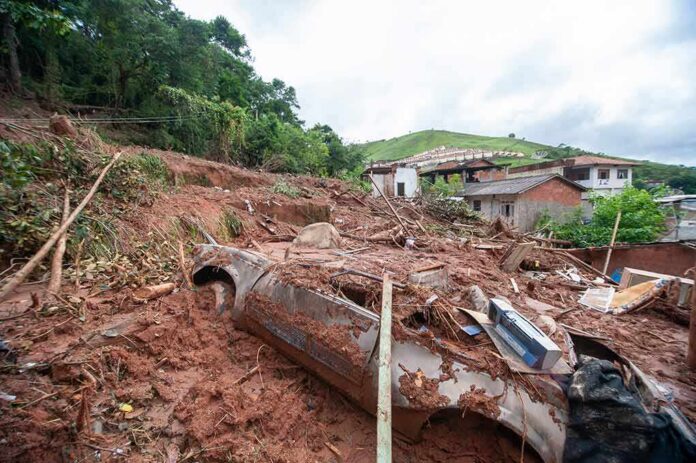
A massive ice avalanche likely triggered the deadly Nepal flash flood, killing more than 150 and leaving hundreds missing, officials and scientists say.
Story Highlights
- Scientists point to an ice avalanche as the likely trigger of the flood.
- Nepal reports more than 150 dead and hundreds missing across border areas.
- Seismic data suggest the “quake” was the glacier collapse itself.
- Experts warn similar Himalayan events have a long, deadly history.
What Officials And Scientists Say Triggered The Disaster
Scientists analyzing satellite images said a huge slab of glacier ice likely broke loose and rushed down a steep valley. That fall likely set off debris, mud, and a violent surge that smashed into towns on the Nepal–Tibet frontier. A University of Dundee glaciologist helped lead the early review and described evidence that points to an ice avalanche as the trigger. Nepalese authorities and field teams reported heavy damage and widespread loss of life across the border corridor.
Seismic monitors first registered what looked like a small earthquake at the time of the flood. Later analysis from the United States Geological Survey said the shaking matched a mass of rock and ice hitting the valley floor, not a tectonic event. That reading supports the avalanche-trigger account from field and satellite teams on the ground. Early assessments can evolve, but the scientific picture points in one direction right now.
Death Toll, Missing Tourists, And Damage Across The Border Zone
Nepalese police and media reports put the confirmed dead above 150, with many more missing. The surge swept away homes, bridges, roads, and hit power projects along the narrow mountain corridor. Reports said hundreds of foreign travelers were unaccounted for after the wall of water and debris rolled through before dawn. Rescue teams worked both sides of the line between Nepal and Tibet as helicopters and ground crews searched cut-off valleys.
Live updates from international outlets described growing lists of victims and the slow pace of contact with remote villages. Chinese state reports cited deaths and hundreds missing on the Tibet side. Tour operators warned families that communications were down and roads were blocked. Nepal’s tourism board and police tried to match names from hotel logs to calls from embassies and families as weather and terrain limited access.
Why These Floods Happen In The High Himalaya
Glacier and lake systems in the Himalaya have a record of sudden outbursts. Experts at the International Centre for Integrated Mountain Development say more than 7,000 people have died in such events across High Mountain Asia over the last 190 years. Many of the worst disasters start with landslides, rockfalls, or ice avalanches that shove water or ice into narrow valleys, creating a fast, deadly surge downstream.
🌍 𝗕𝗥𝗘𝗔𝗞𝗜𝗡𝗚: Flash floods and debris flows on the Nepal-Tibet border killed at least 160 people and left hundreds missing. Officials say about 340 foreign nationals from India, the US, UK, Australia, Malaysia and Ukraine are among the missing. The USGS says the disaster… pic.twitter.com/oJN9fecf42
— XPRESS (@Xpress_24_7) August 27, 2026
Peer-reviewed studies describe a region under pressure as ice retreats and lakes grow. That growth raises the chance of sudden failure. At the same time, roads, villages, and dams have moved deeper into hazard zones where there is little room to escape a burst. Those facts do not assign blame for a single event, but they explain why warnings stress mapping danger corridors and building early alert systems that reach people in time.
What Matters For Americans Watching This Tragedy
American readers care because disaster risk does not stop at borders. United States hikers, missionaries, veterans, and aid teams travel these routes. When rescue calls go out, it is often American gear, volunteers, and airlift assets that help. This tragedy also shows why clear information, not spin, saves lives. Early warning, firm infrastructure standards, and honest reporting help families act fast when every minute counts. These are bedrock, common-sense values conservatives champion.
President Trump’s administration works with allies on targeted relief when it serves American interests and protects our citizens abroad. That does not mean blank checks, globalist pet projects, or mindless spending. It means smart support, tight oversight, and real results. As facts firm up, we should press international groups to focus on mapping risks, sharing data quickly, and hardening key routes. That approach respects taxpayers and puts safety first.
What To Watch Next
Authorities will work to confirm the final trigger and casualty count. Investigators will study satellite tracks, drone video, and field photos to trace the avalanche path and timing. Engineers will assess damaged bridges and power sites to restore access. Rescue teams will shift to recovery as weather allows. For travelers, the lesson is simple: check route alerts, register with embassies, and avoid narrow valleys after fresh snowfall or rapid warming that can load slopes.
Policy teams in Kathmandu and Lhasa will face pressure to expand real-time alerts and strict building rules in hazard corridors. Donors will push for spending that buys speed: sirens, radio repeaters, and training for local volunteers. Those are practical steps that work in any country. They protect families, defend livelihoods, and keep governments honest about risk. That is the kind of accountable, limited, and effective action our readers expect.
Sources:
thestar.com.my, theguardian.com, bbc.com, aljazeera.com, nytimes.com, mhewc.org