The Supreme Court’s latest order leaves key mail-ballot security tools sidelined before the midterms, despite a documented path to implement them in parts of the country.
Story Highlights
- The Supreme Court allowed limited movement on mail-ballot rules in August but later left core restrictions blocked before the midterms.
- The rule would require state voter lists, unique barcodes on ballot envelopes, and allow the Postal Service to refuse noncompliant ballot mailings.
- Lower courts said the Postal Service likely lacks power to police ballot mailings and warned about last-minute disruption.
- Dissenting justices argued the federal interest in mail security justifies tighter screening to deter fraud.
What The Court Did And Why It Matters
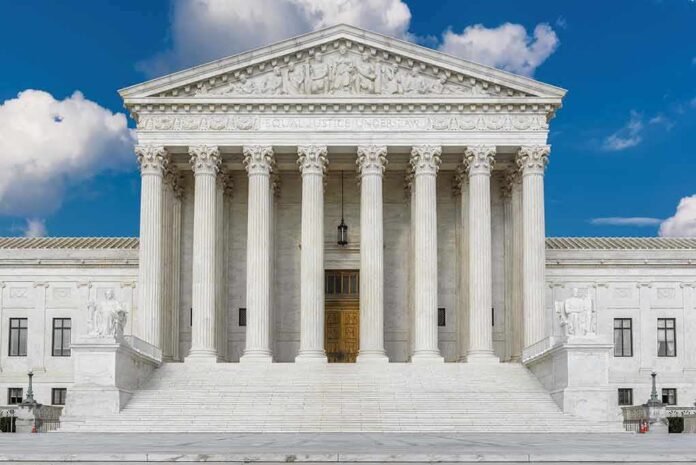
On August 24, the Supreme Court issued an emergency order that let the administration move ahead, for now, with parts of a plan to tighten mail voting in some areas. The order was not a final ruling on the law. It lifted one blocking order while other cases continued. Days later, other courts kept key blocks in place. The net effect leaves most of the rule on hold before the midterms, despite partial room to proceed.
The legal back-and-forth matters because rules must be settled early. Election officials are already printing envelopes and mailing ballots. Sudden changes can cause errors and missed deadlines. Courts weighed those risks heavily. Judges said the timing was too tight to switch systems safely, and they questioned whether the Postal Service has clear power to set nationwide ballot-mail rules.
What The Rule Actually Requires
The Postal Service rule, issued under a presidential order, targets three controls. First, states must send lists of mail voters to a federal portal. Second, ballot envelopes must carry unique, serialized barcodes tied to each voter. Third, the Postal Service could refuse to deliver ballot mailings that did not match the lists or barcode rules. Supporters say this links each ballot to a real voter and blocks duplicates or ineligible mailings.
Backers also linked the system to citizenship checks. The executive plan called for cross-checks using federal citizenship data and state submissions. The goal was to stop ballots from going to noncitizens or to wrong addresses before problems reach local counting rooms. The administration framed this as mail security, not vote counting. Dissenting justices pointed to the Postal Service’s role in securing the mail as a basis to proceed during litigation.
Why Courts Pumped The Brakes
Several judges focused on statutory authority. They said Congress did not give the Postal Service power to impose new election procedures or to refuse delivery of lawful ballot mailings if states do not adopt federal conditions. One judge warned that forcing last-minute envelope redesigns and portal uploads would cause confusion and rejected ballots, rather than prevent fraud this cycle. These rulings kept major parts of the rule frozen as appeals moved forward.
Reporters and courts also noted a thin record on proven, widespread mail-ballot fraud that these exact tools would stop right now. The absence of a detailed, public fraud dataset made the cost-benefit case hard to show in court. Judges saw a nationwide overhaul that could touch lawful ballots even without specific suspicion, which raised constitutional and statutory questions under tight timelines.
Security Stakes For Conservatives
Conservatives see a simple principle: every legal voter gets one ballot, and only citizens vote. Unique barcodes and verified lists are common-sense tools we use in shipping, banking, and benefits. The Supreme Court’s August order showed some recognition that the administration’s position was at least plausible for interim relief, even if not resolved on the merits. But later actions left most of the system paused, keeping status quo gaps in place for this election.
The path forward is clear. The administration can build a stronger record now. Technical proof from the Postal Service on barcode accuracy, error rates, and portal readiness can answer the “chaos” claim. A transparent analysis comparing fraud and duplicate rates in jurisdictions with and without these tools can show real-world gains. Clear statutory hooks, identified and defended in court, can ground federal mail-security rules so they protect ballots without disrupting lawful voting.
Sources:
apnews.com, pbs.org, scotusblog.com, jurist.org, npr.org