A federally reviewed, 250‑foot national arch honoring America’s 250th birthday is moving toward construction near the Arlington Memorial Bridge, despite loud activist pushback and unsettled funding details.
Story Highlights
- Federal design reviewers advanced the arch, confirming it is a real, active monument project.
- Plans call for a 250‑foot arch near Memorial Circle to mark America’s 250th anniversary.
- National Park Service documents outline a three‑year, round‑the‑clock construction window.
- Critics warn about sightline impacts and cite heavy opposition in public comments.
What Advanced And Where It Stands
United States Commission of Fine Arts members approved a revised design for a 250‑foot triumphal arch, moving the concept through a key federal design checkpoint. That vote confirmed the project’s status as a formal, government‑reviewed monument, not a passing idea. Coverage indicates that the National Capital Planning Commission would still handle additional steps before final go‑ahead. Reporters also note that the timeline and total cost remain unresolved. That means construction is not guaranteed, but the process is real and moving.
The White House released official renderings in April, linking the arch to the nation’s 250th anniversary and a classical civic style. The designs, prepared by a named architecture firm, show a freestanding gateway intended to echo historic arches abroad. The structure would rise to 250 feet and sit near Memorial Circle, by the Arlington Memorial Bridge. The administration says the aim is a unifying landmark that honors American independence and national resolve for the next century.
Location, Scale, And Construction Plan
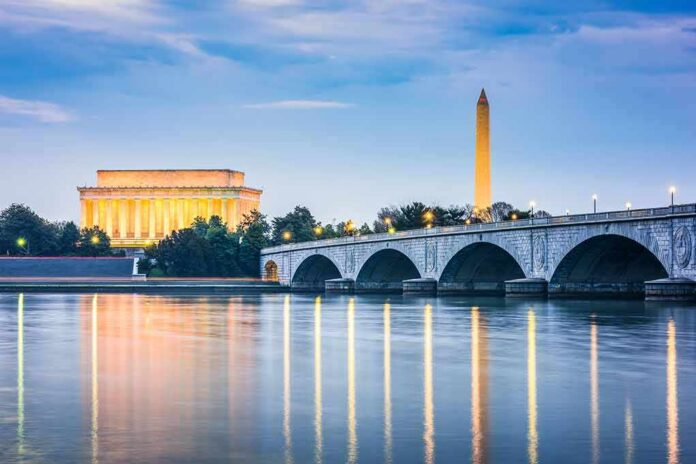
Plans place the arch beside the Potomac River at Memorial Circle, the rotary at the Virginia end of the Arlington Memorial Bridge. That site connects Arlington National Cemetery to the Lincoln Memorial, which makes any new structure there sensitive. Reports describe a maximum height of 250 feet, with heavy cranes up to about 320 feet during assembly. A National Park Service assessment anticipates year‑round work, up to 20 hours per day, for roughly three years to finish the build if final approvals and logistics align.
The size remains the core flashpoint. Opponents argue the arch would be far taller than nearby memorials and would reshape key views across the river. Some say it could alter the experience of entering Washington from Virginia. Planning bodies exist to test such concerns, and debate over scale is a normal step for major monuments. Supporters counter that America’s capital should feature a bold gateway marking 250 years of independence, not an empty traffic circle.
Funding, Law, And Oversight Questions
Funding is not final. Reports say a mix of public and private dollars is expected, but exact figures and donor commitments are not known. That lack of clarity gives critics an easy talking point. It also means the administration must show discipline and transparency as numbers come together. The legal picture includes routine federal reviews plus claims in court filings that Congress must sign off before a shovel hits the ground. Those cases will test process boundaries common to capital projects.
Public comments have been tough. News accounts cite heavy opposition filed during federal review. Critics urge planners to protect long‑planned sightlines between the Lincoln Memorial and Arlington National Cemetery. Even so, commissions have advanced the design while weighing those views, which is how the system works. The review process considers aesthetics, history, traffic, safety, and national meaning together, not by a single poll or petition alone.
Why This Monument Fight Matters
Major projects in Washington often double as fights over who sets the nation’s visual story. This one is no different. The arch’s backers see a patriotic marker that says America endures and stands tall. Detractors see a large new form in a sensitive vista. Federal panels exist to measure both claims, apply law, and decide. Advancing through these steps shows institutions are doing their job, not skirting it. That disciplined path is key to any lasting national work.
Conservatives should watch two things now. First, cost and funding. Fiscal discipline matters, and a clear plan will blunt attacks about waste. Second, schedule integrity. The National Park Service laid out a tight, three‑year window, with long shifts and major equipment. Careful staging can limit traffic headaches and keep the project on time. If leaders keep the books clean and the work tight, the arch can become a unifying statement for the 250th anniversary, not a partisan flashpoint.
Sources:
cbsnews.com, bbc.com, npr.org, aljazeera.com