

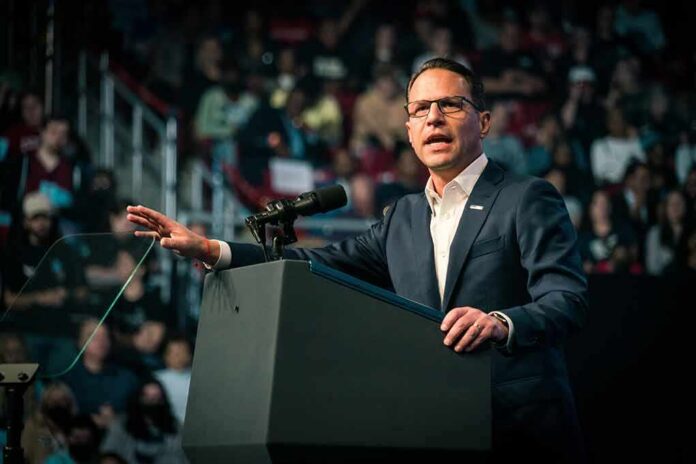
Pennsylvania Governor Josh Shapiro says he is ready to amend the Constitution to push his agenda and “stop the arsonists and opportunists.”
Story Snapshot
- Shapiro said changing laws, spending more, and amending the Constitution are all on the table.
- He tied amendments to goals like a higher minimum wage, more housing, and abortion rights.
- Critics warn this invites power grabs and bypasses normal lawmaking.
- Amending the United States Constitution is extremely difficult and rarely succeeds.
Shapiro’s Remarks Put Constitutional Change on the Table
Governor Josh Shapiro told supporters that normal laws and new spending may not be enough. He said that if needed, “we have to amend the Constitution” to get results and to take on “arsonists and opportunists”. He linked that approach to a policy list. He called for a higher minimum wage, more housing, and protecting abortion in Pennsylvania’s Constitution. A Pennsylvania outlet reported he repeated the amendment line the next day, tying it to national political fights.
Shapiro did not say which Constitution he meant in each case. He did not share draft text. He did not name the exact legal barriers that block ordinary laws. He did not say whether one amendment or several would be needed. His language was general and conditional. That leaves voters with big questions. Which powers would expand? Which rights might shrink? How would courts enforce any new rules? The public record so far does not answer those points.
Policy Targets Range From Wages to Abortion
Shapiro’s policy list mixes economic and social issues. Minimum wage increases and housing programs can pass through normal lawmaking. Abortion rights have at times been moved into state constitutions. Shapiro suggested putting abortion rights into Pennsylvania’s Constitution, which would lock that policy above ordinary statutes. That tactic makes change harder to undo later. It also moves debate from the legislature to the courts. That shift concerns many voters who want clear lines of authority.
Supporters may see an amendment push as a safeguard. They can argue that courts or future lawmakers could roll back their goals. Opponents see a different risk. They warn that writing contested policy into a constitution bypasses consensus. They argue that major social changes need broad buy-in, not narrow wins. The clash here is not only about abortion or wages. It is about who decides big rules and how stable those rules should be over time.
Conservative Critics Warn of Overreach and Power Plays
Conservative critics reacted fast. They viewed the “amend the Constitution” line as a power move. They said it aims to grab control and avoid normal checks. They also noted that Democrats do not have the votes to amend the United States Constitution. That makes the pledge look symbolic or a way to rally a base, they argued. Their pushback centered on limits to government power, local control, and the need for clear, narrow laws over vague constitutional language.
Other critics tied Shapiro’s circle to broader election and governance fights. Some warned that popular-vote schemes for president would sideline smaller states and undermine the system that protects them. They said changes like that would disenfranchise voters and cut against the Founders’ design for state voices in national elections. These warnings track long-standing conservative views. The Electoral College balances regions. It stops large urban areas from steamrolling rural communities.
Amending the U.S. Constitution Is Rare and Hard
History shows that changing the United States Constitution is almost never successful. Researchers estimate about twelve thousand amendments have been proposed, but only twenty-seven were ratified. That is a success rate near zero. In the last half century, only one passed the finish line. These numbers show how high the bar is and why sweeping promises to amend the Constitution often fade under real math.
State constitutions are different. States amend more often, and many states use amendments to set or shield policy. That is why clarity is so important now. Voters need to know whether Shapiro plans to change the Pennsylvania Constitution, the United States Constitution, or both. They also need to know exact text and the legal gap it would fill. Without that, the line about “arsonists and opportunists” reads more like a partisan jab than a plan.
What to Watch Next in Pennsylvania and Beyond
Pennsylvanians should watch for filed amendment language, bill numbers, and committee briefings. Clear text will show targets, limits, and enforcement. It will also reveal whether courts or agencies gain new power. Citizens should press for proof that ordinary law cannot solve the issue. They should demand narrow language that protects rights and checks government growth. That is how we guard family values, free speech, life, and our Second Amendment, while keeping lawmaking transparent and accountable.
Sources:
twitchy.com, pjmedia.com, inquirer.com, pennlive.com, apnews.com