President Trump’s State Department has revoked more than 175,000 visas, and the agency says most of those cases involved crimes, safety threats, and visa abuses.
Quick Take
- The State Department says the revocations hit people who broke visa rules, committed crimes, or threatened Americans.
- Officials said the leading reasons included assault, driving under the influence, theft, and drug crimes.
- Reporting also shows some revocations involved speech-adjacent cases, including praise for violence.
- Critics say the public record still lacks case-by-case files for the full 175,000-plus total.
What the State Department Says
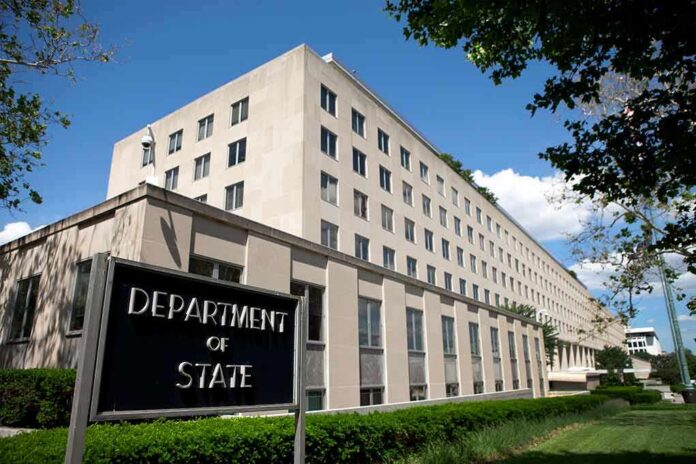
The State Department announced on Monday that it has revoked more than 175,000 visas since President Trump returned to office. Reuters reported that the department said the action targeted foreigners who violated visa terms, committed crimes, called for violence, defrauded Americans, abused the immigration system, or endangered national security. The department also said most revocations followed law enforcement encounters, with assault, driving under the influence, theft, and drug crimes leading the list.
The public message is simple: the administration says it is removing people who pose a risk, not just trimming paper files. Reuters reported that the State Department tied the crackdown to a new Continuous Vetting Center meant to catch threats faster and revoke visas when needed. A separate Reuters report in January said the department had already passed 100,000 revocations, with overstays, driving under the influence, assault, and theft listed as the main reasons then as well.
How Broad the Crackdown Has Become
The numbers show a much wider enforcement push than a single headline suggests. Reuters reported that the department cited specific cases, including a person charged with rape and sexual battery, another charged with kidnapping and human trafficking, and another facing child sexual abuse material counts. The same report said the department revoked visas from foreigners who celebrated conservative activist Charlie Kirk’s killing, including one who said he “died too late.” That puts the policy squarely in the realm of public safety and national security.
Other reports show the campaign has also reached student visas and other categories. BBC reported that the State Department canceled more than 6,000 student visas for law violations and overstays, with the overwhelming majority involving offenses like driving under the influence, burglary, and support for terrorism. TIME likewise reported that many revocations came from law enforcement encounters tied to reckless driving, sexual assault, child abuse, fraud, and embezzlement. The pattern suggests a broad clean-up of visa holders who broke the rules.
Why Critics Are Still Pressing for More Detail
Even with the administration’s strong explanation, the public record still leaves room for scrutiny. Reuters, TIME, and the Congressional Research Service all describe the totals in aggregate terms, but none provide a public case ledger for the 175,000-plus revocations. That matters because the reporting often uses broad phrases like “law enforcement encounters,” which can include arrests or database hits, not just convictions. Supporters may see that as smart enforcement. Critics will call it too open-ended.
𝐓𝐎𝐌 𝐇𝐎𝐌𝐀𝐍: 𝟏𝟕𝟓,𝟎𝟎𝟎 𝐕𝐈𝐒𝐀 𝐑𝐄𝐕𝐎𝐂𝐀𝐓𝐈𝐎𝐍𝐒 𝐀𝐑𝐄 𝐉𝐔𝐒𝐓 𝐓𝐇𝐄 𝐁𝐄𝐆𝐈𝐍𝐍𝐈𝐍𝐆 𝐎𝐅 𝐀 𝐅𝐔𝐋𝐋 𝐑𝐄𝐕𝐈𝐄𝐖
Secretary of State Marco Rubio's State Department has already revoked a record 𝟏𝟕𝟓,𝟎𝟎𝟎 𝐯𝐢𝐬𝐚𝐬 for criminal activity since President… pic.twitter.com/TlNhmJrlPI
— M.A. Rothman (@MichaelARothman) August 12, 2026
Still, the available reporting does not undercut the core claim that the State Department is targeting real risks. The department says the majority of revocations involve criminal activity, and the examples cited by Reuters and TIME are serious ones. The larger issue is transparency. Americans can support strong border and visa enforcement while also wanting clear records that show why each visa was pulled. That is especially true when the government is acting at such a massive scale.
Sources:
thegatewaypundit.com, x.com, nytimes.com, cnn.com, time.com, news.bloomberglaw.com