While Americans argue over a new Iran war, a growing West Bank crisis is quietly testing whether U.S. foreign policy can stay aligned with constitutional limits and “America First” realism.
Story Snapshot
- UN-linked reporting says more than 1,500 Palestinians were displaced in the West Bank in 2026, approaching 90% of 2025’s total early in the year.
- OCHA data attributes major displacement to settler-related attacks and access restrictions (including one Bedouin community with roughly 600 people affected) and to home demolitions tied to permit enforcement.
- Israeli security operations and movement restrictions are cited as compounding service disruptions, while violence levels remain high.
- The widening regional conflict environment is being linked to a post-Feb. 28 spike in settler-violence incidents, adding pressure to U.S. decision-making in 2026.
Displacement numbers surge as global attention shifts to bigger wars
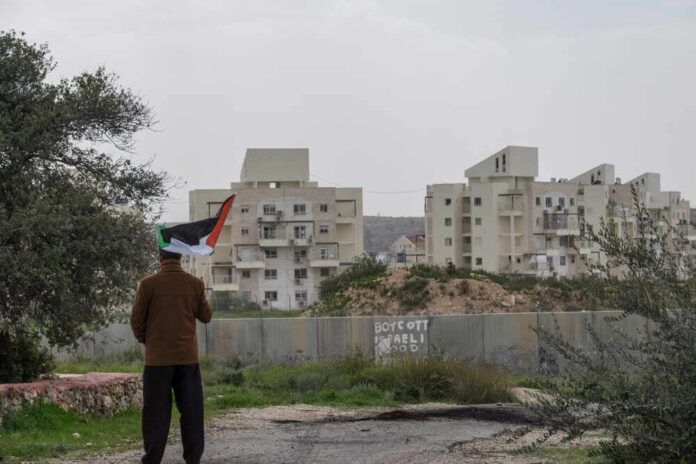
UN-referenced figures reported in early March said more than 1,500 Palestinians had been displaced in the occupied West Bank in 2026, a pace that neared 90% of the prior year’s total. OCHA tracking also reported 349 structures demolished with 533 people displaced, alongside nearly 700 displaced from nine communities due to settler attacks and access restrictions. The reporting emphasizes that children make up a large share of those displaced, increasing long-term dependency on aid.
OCHA’s West Bank updates describe a sharp January displacement episode affecting nine communities, including a single Bedouin community where roughly 600 people were reported displaced or forced out under pressure from attacks and restrictions. During late January and early February, the same UN-linked reporting described wide-ranging raids and injuries, along with demolitions and “forced self-demolitions,” which can occur when residents tear down structures under threat of penalties. These details are presented as trend data, not isolated incidents.
Security raids, demolitions, and movement barriers reshape daily life
OCHA updates described more than 130 raids during a roughly two-week window in early 2026, reporting fatalities, injuries, and dozens of structures demolished or forced to be demolished. The reporting also referenced an operation described as “Capital Shield” in areas including Qalandiya refugee camp and Kafr Aqab, tied to demolitions, movement curbs, and service disruptions. Separately, humanitarian summaries note a dense web of movement obstacles—gates, checkpoints, and restrictions—that complicate work, school, and medical access.
International rights reporting adds broader context by pointing to a permit environment in Area C—where Israel maintains full administrative control—described as approving a very small fraction of Palestinian building applications, which then feeds demolition risk for unpermitted structures. Human rights organizations and UN bodies argue settlement expansion and outpost support drive long-term displacement pressures. Those claims rely heavily on UN and NGO datasets; the available citations do not include a competing, detailed Israeli government rebuttal within this research packet.
Why this matters to U.S. conservatives watching Trump’s second-term choices
For a conservative audience exhausted by decades of nation-building, the West Bank numbers matter because they intersect with the bigger question now dividing MAGA voters: how far America should go when allies are in conflict and the region is escalating. The research references a post–Feb. 28 escalation in a wider U.S.-Israel-Iran conflict environment and links that climate to a spike in settler-violence incidents. If Washington expands involvement, constitutional war powers debates and open-ended commitments will intensify.
Policy pressure points: accountability abroad, restraint at home
UN and human-rights sources call for protection of civilians and accountability for violence and displacement drivers, while also documenting expanding restrictions and humanitarian strain. For U.S. policymakers, the immediate pressure is balancing alliance commitments with realistic limits, clear objectives, and congressional authorization where military action is at issue. The research provided does not include details on specific Trump administration directives tied to West Bank operations, so it is not possible here to attribute operational choices to Washington.
What is clear from the cited reporting is that the West Bank situation is worsening in measurable ways—displacement, demolitions, and movement restrictions—while the American political debate is increasingly focused on preventing another open-ended war. Voters who backed Trump to end “forever wars” are now watching whether U.S. policy can defend allies without sliding into regime-change logic, massive spending, or constitutional shortcuts that historically expand federal power and shrink accountability at home.
Sources:
Over 1,500 Palestinians displaced by Israel in occupied West Bank in 2026: UN
OCHA Humanitarian Situation Update #356 | West Bank
World Report 2026: Israel and Palestine
Israel’s settlement expansion drives mass displacement in West Bank: UN report
OCHA occupied Palestinian territory