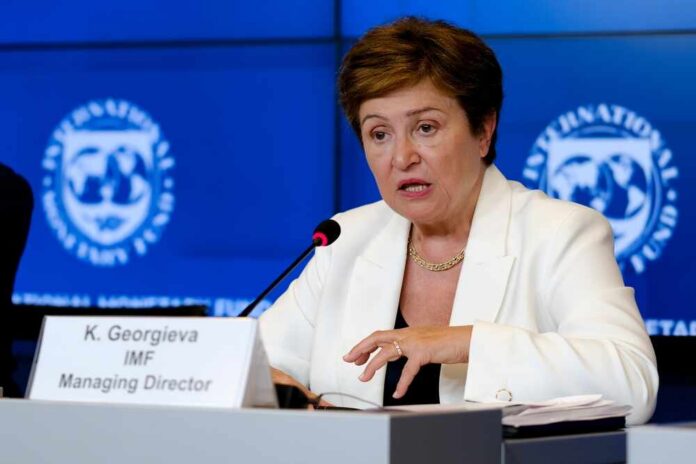
The IMF says the economic hit from the US-Iran war is already “baked in”—meaning even a ceasefire won’t quickly bring prices, supply chains, or confidence back to normal.
Quick Take
- IMF Managing Director Kristalina Georgieva warned the war’s disruption is already embedded in the global economy and can’t be undone quickly.
- The IMF cited major, ongoing energy supply losses—about 13% of global oil and 20% of global gas disrupted for roughly five weeks.
- Shortages and rationing, especially in parts of Asia, are feeding higher transportation, fertilizer, and food costs.
- The IMF is preparing to downgrade 2026 growth expectations as inflation pressures linger and recovery stretches into 2027.
“Baked In” Shock: Why Timing and Infrastructure Damage Matter
Kristalina Georgieva’s core warning is about lag and permanence: when energy flows are interrupted for weeks, the damage persists after headlines fade. The IMF has described the shock as “large,” arguing that delayed shipments and damaged infrastructure keep markets tight even if fighting pauses. Repair timelines also matter. With critical gas infrastructure potentially taking three to five years to regain full capacity, the global economy faces a drawn-out adjustment rather than a quick reset.
IMF director says shock from US-Iran War is already 'baked' into the economy https://t.co/FhqsJU8Y7V
— XauusdEtBitcoin (@XauusdEtBtc44) April 13, 2026
Energy disruptions ripple outward because oil and gas sit underneath almost everything households buy. Higher fuel costs raise shipping and commuting expenses; higher gas prices lift fertilizer costs; higher fertilizer costs pressure food prices. Georgieva also pointed to stress showing up in real time—shortages, rationing, and “sheer lack of quantities” in some places—underscoring that this is not just a market story but a living-cost story that can hit working families first and hardest.
Stagflation Risk Returns as Central Banks Face a No-Win Trade-Off
The IMF’s message fits a familiar pattern voters remember from earlier inflation spikes: supply shocks tend to slow growth while pushing prices higher. Former IMF executive director Paulo Nogueira Batista Jr. described that dynamic as “recessionary and inflationary at the same time,” a dilemma for central banks that must choose between fighting inflation aggressively or cushioning economic activity. Either way, ordinary consumers can feel squeezed—through higher prices, weaker job markets, or both.
For the United States, the IMF assessment suggests relative insulation compared with more energy-dependent regions, but not immunity. Georgieva’s public comments emphasized that inflation-control efforts in developed economies could be delayed by renewed energy and food pressures. That warning lands at a time when many Americans—right and left—already distrust rosy forecasts and resent policy whiplash that often ends with families paying more while well-connected institutions find ways to hedge or pass costs along.
Developing Nations and Energy Importers Bear the Sharpest Pain
The IMF’s distributional point is stark: the biggest risks concentrate in developing countries with limited reserves and in nations that must import energy. When supplies tighten, importers face immediate price spikes and potential physical shortages, while exporters can benefit from higher prices. Georgieva also tied the shock to humanitarian strain, warning that millions could face hunger as energy and fertilizer costs lift food prices and as remittances and trade flows get disrupted.
Asia was singled out in reporting for rationing, shortages, and financial-market volatility, which can feed back into global demand and supply chains. When factories slow or transport becomes unreliable, consumers elsewhere see fewer goods and higher prices. This is where the “baked in” framing becomes politically relevant: even leaders who want quick relief can’t legislate away broken infrastructure, delayed shipping schedules, or the time it takes to rebuild confidence in energy corridors.
What This Means for U.S. Politics: Energy Security Versus Costly Vulnerabilities
For American voters, the IMF’s warning reinforces a basic lesson that has cut across partisan lines: energy security is national security, and scarcity functions like a tax on household income. Conservatives who spent years arguing for reliable domestic production will see the logic in reducing exposure to overseas choke points. Liberals skeptical of fossil fuels may still recognize the near-term reality that sudden supply losses hit the poorest hardest—through higher utility bills and grocery costs.
With Washington already viewed by many as unresponsive and self-protective, the IMF’s outlook raises a credibility test for policymakers of both parties: targeted help for vulnerable families without turning temporary shocks into permanent spending expansions. The IMF expects prolonged strain, and Americans should prepare for policy debates that pit inflation control, aid, and energy strategy against each other through at least 2027.
Sources:
No return to normal: IMF warns of lasting economic damage from Iran war
IMF warns of global shock from Iran war
IMF Iran war shock: growth, energy, food