Iran’s latest warning suggests America’s enemies can squeeze the U.S. economy by threatening not one, but two global energy choke points at the same time.
Quick Take
- Iranian Revolutionary Guard-linked messaging signaled it could target the Bab al-Mandeb Strait if the U.S. and Israel expand operations onto Iranian territory or islands.
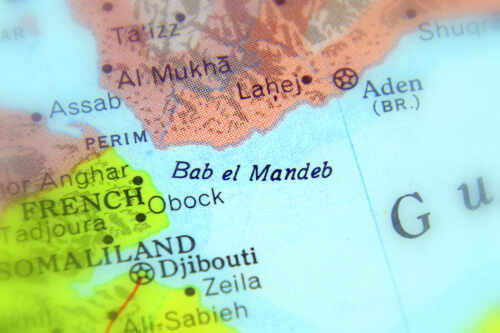
- The Bab al-Mandeb—“Gate of Tears”—is a narrow passage linking the Red Sea to the Gulf of Aden and remains critical for trade and energy shipments between Asia and Europe.
- Analysts describe the threat as a proxy strategy, relying on Iran-aligned Houthis in Yemen rather than direct Iranian control of the waterway.
- With Hormuz already under pressure, a second chokepoint risk raises the odds of higher oil prices, shipping delays, and renewed inflation fears for U.S. households.
Iran Signals a Second Pressure Point Beyond Hormuz
Iranian warnings reported this week point to a contingency plan: if U.S. and Israeli actions escalate into a ground move against Iranian territory or strategic islands, Tehran could broaden the confrontation to the Bab al-Mandeb Strait. IRGC-sourced statements carried by Iranian state-linked outlets framing the idea as “opening other fronts” to raise costs for U.S. forces. The message lands as the Strait of Hormuz remains the primary flashpoint for global oil flows.
For American consumers, the economic significance is straightforward even if the geography is far away. Hormuz is widely described as a critical route for oil exports, and disruptions there have historically translated into price spikes. The new element is the implied expansion from a single chokepoint to a two-front maritime squeeze—one directly influenced by Iran near Hormuz, and another vulnerable corridor where Iran’s partners can harass shipping without Tehran needing to openly deploy its own forces.
Why the “Gate of Tears” Matters to Gas Prices and Supply Chains
Bab al-Mandeb sits at the southern mouth of the Red Sea between Yemen and the Horn of Africa, creating a narrow corridor for ships moving toward the Suez route and European markets. The strait as roughly 29 kilometers wide and handling major volumes of cargo and energy shipments. When traffic slows in this corridor, ships can face delays, higher insurance costs, and costly rerouting—pressures that can ripple into consumer prices globally.
Available figures underscore the scale: the Bab al-Mandeb is described as supporting millions of barrels of oil per day and roughly $1 trillion in cargo annually, while Hormuz alone is commonly linked to around one-fifth of global oil flows. Taken together, the two corridors are portrayed as covering about one-third of global oil movement. If that combined exposure tightens, the most immediate U.S. vulnerability is inflation through energy and transport costs.
The Proxy Angle: Houthis as a Tool Without a Direct Iranian Fleet Move
Unlike Hormuz—where Iran’s proximity and posture give it direct leverage—Bab al-Mandeb is portrayed as a proxy theater. The Iran-aligned Houthis in Yemen have demonstrated the ability to target maritime traffic using drones, missiles, and mines, creating risk even without a formal “closure.” Researchers also pointed to prior declines in vessel traffic through the strait, an indicator that even intermittent attacks can chill commerce when shipping companies choose safer routes.
This matters politically because the tactic blurs accountability. When disruption comes from a partner militia rather than a clearly marked Iranian naval action, escalation decisions become harder, messaging becomes murkier, and deterrence can be less clean. For voters already convinced that Washington’s national-security bureaucracy moves slowly and expensively, the proxy model fuels the belief that U.S. power is being baited into costly responses while everyday Americans pay at the pump.
What the Threat Means for U.S. Strategy Under GOP Control
With Republicans holding Congress and President Trump in a second term, the political pressure is likely to center on protecting trade routes without triggering a wider war. It ties the Bab al-Mandeb threat to conditions Iran set around “boots on the ground” or expanded operations against Iranian territory and islands. That framing implies Tehran is trying to deter escalation by threatening economic pain—an approach that targets U.S. living costs more than U.S. territory.
‘Gate of Tears’ at risk: Iran threatens major new global chokepoint if US moves on Hormuz https://t.co/2n3HMKkIol #FoxNews paper tiger. They have nothing left but big mouths.
— Tarheelboy (@Tarheelboy9712) April 13, 2026
What remains unclear is how close Iran is to attempting a sustained disruption at Bab al-Mandeb versus using rhetorical deterrence to influence U.S. and Israeli decision-making. The pattern described—leveraging chokepoints and proxies—highlights a recurring vulnerability: the U.S. economy can be punished indirectly when global shipping lanes become bargaining chips.
Sources:
Bab al-Mandeb: How the ‘Gate of Tears’ may emerge as Iran’s second choke point after Hormuz