A candlelit crowd in free Taiwan is remembering a communist massacre that Beijing still censors, highlighting exactly what is at stake when authoritarian regimes rewrite history.
Story Snapshot
- Thousands in Taipei hold the only large-scale Tiananmen vigil in the Chinese-speaking world, while Beijing bans remembrance.
- Organizers and speakers describe the 1989 Tiananmen crackdown as a brutal communist massacre against pro-democracy students.[1][3]
- The vigil underscores a growing divide between free societies that defend memory and communist regimes that erase it.[3][5]
- For American conservatives, the event is a stark reminder of why defending free speech, historical truth, and constitutional liberties at home matters.
Taipei Keeps the Flame of Tiananmen Memory Alive
Around 3,000 people gathered in Taipei’s Liberty Square for an annual candlelight vigil marking the 1989 Tiananmen Square crackdown, openly calling it a massacre and a brutal assault on a student-led push for democracy.[1][3] Organizers described the 1989 events as a “brutal crackdown by Chinese authorities” on pro-democracy protesters, language that directly contradicts Beijing’s long-standing effort to downplay and sanitize the history.[1] Participants held candles, observed silence, and listened to speeches honoring those killed.
Video reports from the scene show speeches, exhibitions, and a “democracy market” surrounding the vigil, all focused on defending freedom and remembering the students and citizens shot by Chinese troops in 1989.[2][4] Taiwan has become one of the only Chinese-speaking places where such a large public commemoration is still possible, after authorities in Hong Kong banned its long-running annual vigil and removed public memorials like the Pillar of Shame statue.[3][6] That shift has effectively made Taipei the central hub of open Tiananmen remembrance in the region.[3][6]
Communist Erasure Versus Free-Society Remembrance
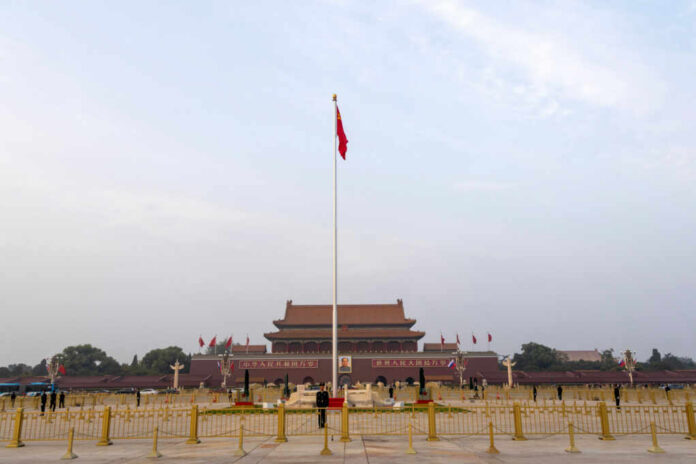
Historical accounts from major references describe the Tiananmen events as a series of nationwide protests for democratic and economic reforms, ending when the Chinese Communist Party sent in the army, with troops firing on civilians and protesters on June 3–4, 1989. Scholars and eyewitness records indicate that hundreds, possibly thousands, were killed in Beijing, even though the exact death toll remains unknown because of extensive state secrecy.[3] In the years since, Chinese authorities have scrubbed textbooks, censored media, and banned public mourning to prevent citizens from even mentioning June 4.
By contrast, Taiwan’s vigils openly describe Tiananmen as a massacre and frame it as part of a global struggle for democracy against communist repression.[1][3][5] In previous years Taiwan has even unveiled a replica of the famous Pillar of Shame statue, explicitly commemorating “those who died while fighting for China’s democracy.”[3] Organizers say their mission is to “keep the memory of the deadly crackdown alive” and to urge Beijing to admit wrongdoing, something communist leaders have refused for more than three decades.[3] For conservatives, this stark contrast highlights how fragile truth becomes when government power goes unchecked.
Why This Matters to American Conservatives
The Tiananmen vigils resonate deeply with Americans who value constitutional protections for free speech, assembly, and the right to criticize government without fear of tanks and live ammunition. In Beijing in 1989, students camped out in a central square calling for reform and were met with military force; in Taipei today, citizens gather in another central square to condemn that violence and defend open debate.[2][3][6] That simple comparison underlines why a written Constitution, strong limits on government, and a culture of dissent are non-negotiable pillars of American life.
For a conservative audience already wary of censorship, speech codes, and efforts to “sanitize” history in the United States, the Tiananmen story is a warning, not a distant relic. When the state decides which memories are allowed, it is always the opponents of centralized power, religious believers, and advocates of individual liberty who are silenced first. Taiwan’s willingness to host these vigils, even under pressure from a neighboring communist superpower, shows how free societies should respond: by speaking more clearly, remembering more honestly, and refusing to let authoritarian narratives win.
Sources:
[1] YouTube – LIVE: Tiananmen Square anniversary vigil in Taiwan
[2] Web – Taipei vigil draws around 3,000 to mark Tiananmen Square massacre
[3] Web – Taipei vigil, president mark Tiananmen Square massacre
[4] Web – Taiwan Unveils Pillar of Shame Replica, Hosting Only Tiananmen …
[5] Web – 2025 Tiananmen Square Massacre Candlelight Vigil