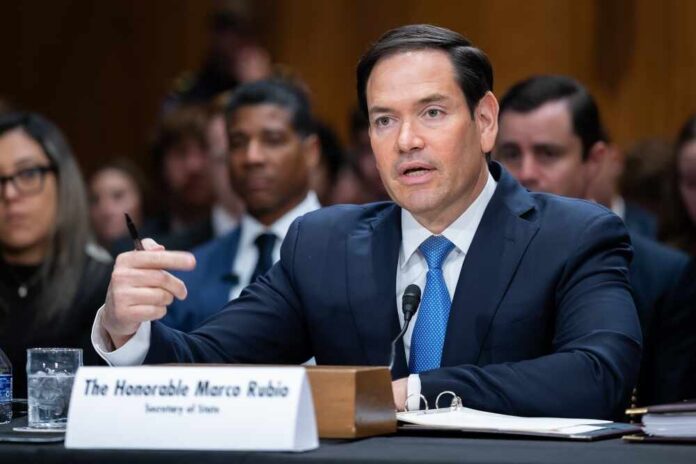
Washington’s terror designation push against Brazil’s PCC and Comando Vermelho puts global narco-networks on notice—and puts House Democrats on defense.
Story Highlights
- Trump administration and Senator Marco Rubio advance terror labels for Brazil’s PCC and Comando Vermelho to choke off financing and safe haven [6][2].
- Brazilian officials and critics warn the move could strain relations and argue the legal bar for “terrorism” is not met under Brazil’s statute [1].
- House Democrats demand proof and decry “weaponization,” signaling a political fight at home [5].
- Designations would trigger banking, sanctions, and law-enforcement consequences that extend far beyond Brazil [2][3].
What The Terror Label Does And Why The Administration Is Using It
The United States Department of State states that terrorist designations are a core tool to curtail support for groups engaged in terror-related activity, disrupting financing, logistics, and international legitimacy [6]. The Trump administration and Senator Marco Rubio are advancing this tool against Brazil’s Primeiro Comando da Capital and Comando Vermelho, arguing these gangs operate as narco-terrorists whose cross-border violence and trafficking enable instability that ultimately harms American communities and fuels the migrant and fentanyl crises [6][2]. Americas-focused analyses outline sweeping banking and compliance effects once designations take hold [2].
Americas Quarterly reports that applying the terror label to the Brazilian groups would trigger immediate consequences for banks, companies, and counterparties that touch their money or front operations, tightening due diligence and closing financial channels the gangs use to launder proceeds and purchase weapons [2]. A companion policy brief from a regional business council underscores similar knock-on effects in trade, payment processing, and corporate risk screenings, which would force middlemen out of the shadows or out of business altogether [3]. These sanctions-style pressures mirror tools already used on cartels elsewhere [2][3].
Brazil’s Pushback And The Legal Threshold Debate
Brazilian officials and commentators cite Brazil’s Anti-Terrorism Law, which defines terrorism as acts intended to provoke “social or generalized terror,” to argue that typical gang violence and narcotics dealing may not meet a terrorism threshold without explicit coercive or political intent [1]. That legal framing fuels Brasília’s resistance and shapes diplomatic talks, as leaders seek to avoid the reputational and economic damage a terror label could inflict on Brazil’s financial system and legitimate commerce tied to areas where these gangs operate [1]. The dispute centers on intent, not the brutality itself [1].
This transnational argument echoes a wider regional trend. Americas Quarterly notes that the United States has increasingly relied on terrorism designations for Latin American organized-crime actors, expanding a tool once reserved for ideologically driven groups to cartels and mega-gangs that destabilize societies through extreme violence and corruption [2]. That pattern, covered by policy trackers and regional outlets, shows why the Brazil move was foreseeable: Washington is aligning counter-cartel strategy with counterterror finance architecture to close gaps criminals exploit across borders and currencies [2][3].
Domestic Politics: House Democrats Object As Conservatives Press For Results
At home, Representative Jim McGovern and other House Democrats accuse the administration of overusing and “weaponizing” the Foreign Terrorist Organization framework and demand public evidence before any designation proceeds [5]. Their statement frames the policy as a political stunt, not a security necessity, and warns of diplomatic fallout with a major South American partner [5]. The objections reveal a familiar split: conservatives prioritize hard-edged tools to protect Americans from cartel-driven violence, while progressives fear overreach and international friction [5].
Thank you, Secretary Marco Rubio, for standing with Brazil against organized crime and terrorism.
The fight against PCC and Comando Vermelho is essential for the security of our people and the stability of our region.
— Magno Mesquita (@FlvioMesquitaRJ) May 29, 2026
For conservatives, the rationale ties directly to border security, community safety, and the rule of law. The State Department’s own guidance says terror designations are designed to curtail support networks—exactly the oxygen these gangs need to move drugs, guns, and people across borders [6]. If designations force banks and intermediaries to walk away, the cost of doing criminal business rises, cooperation with United States partners sharpens, and communities on both sides of the equator gain leverage against groups that have terrorized neighborhoods for decades [2][6].
What Changes If The Designations Stick
Analysts say terror labels for Primeiro Comando da Capital and Comando Vermelho would harden compliance protocols across international finance, push global correspondent banks to exit high-risk relationships, and empower law enforcement information sharing between the United States and Brazil under a common legal framework targeting material support [2][3]. Companies with exposure in logistics, ports, or cash-intensive sectors would face intensified scrutiny, accelerating a separation between licit and illicit supply chains that gangs currently blur to hide profits and influence [2][3].
Limitations remain. Brazil’s narrower terrorism definition and political sensitivities could complicate joint prosecutions or extraditions if Brasília resists equating gang activity with terror intent under its domestic law [1]. That tension does not negate the United States designation’s bite in financial and immigration channels, but it may require careful diplomacy and case-by-case cooperation to convert pressure into arrests, seizures, and dismantlement. Even critics, however, acknowledge the designations would reverberate through compliance and risk markets quickly [1][2].
Bottom Line For Readers
The administration’s move applies proven counterterror finance tools to narco-gangs that profit from chaos, corruption, and violence reaching our streets. The objections from House Democrats and Brazilian officials underscore a real legal debate, but the public safety stakes are immediate: cut the money, constrict the networks, and restore accountability to lawless corridors that feed illegal immigration, drug overdoses, and violent crime. Readers should expect a sharper United States-Brazil security dialogue and near-term compliance ripples as banks adjust [1][2][5][6].
Sources:
[1] Web – Trump and Rubio Finally Go After Brazil’s Narco-Terrorists. House Dems …
[2] Web – Brazil Scrambles to Block U.S. Terror Label for Its Gangs
[3] Web – Brazil’s Gangs in Trump’s Crosshairs – Americas Quarterly
[5] YouTube – Marco Rubio says US is designating 2 more gangs as …
[6] Web – Press Releases – Congressman Jim McGovern – House.gov