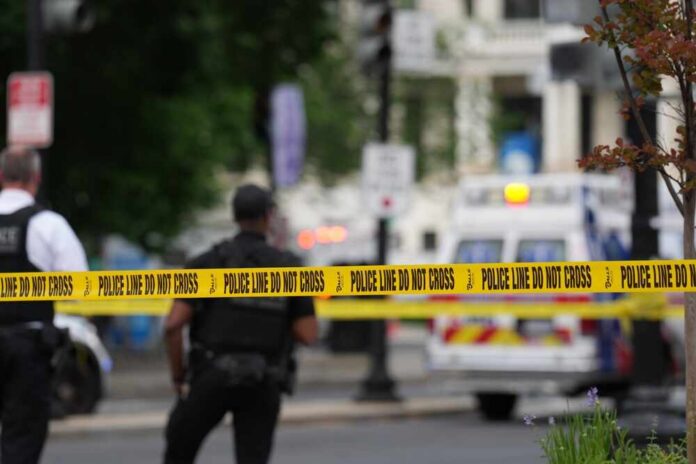
Another preventable New York City crash leaves a 13-year-old dead and a 14-year-old hurt, while confused scooter rules and weak enforcement keep streets unsafe.
Story Snapshot
- Police say an SUV hit two teens on a motorized scooter in Harlem; one died, one was injured [1].
- No arrests have been made as investigators work to determine fault [1].
- New York law limits e-scooters to 15 mph and roads of 30 mph or less [12].
- Early reports in micromobility crashes are often incomplete, and car-versus-scooter impacts are severe [19].
Police Account and Status of the Harlem Collision
New York Police Department officials reported that a sport utility vehicle struck two teens riding a motorized scooter in Harlem on Thursday night. The 13-year-old suffered a head injury and died at the hospital. The 14-year-old was treated for a leg injury and is in stable condition. Officers said the crash was a head-on impact and that the case remains under investigation. Police said no arrests have been made at this time, and they have not assigned fault yet [1].
ABC local reports and social posts state the boys were riding together when the collision happened near West 112th Street, which tracks with the police account. Those reports echo the police timeline but add little about speed, lighting, or lane position. That missing detail matters when reconstructing who had the right of way. Until investigators gather camera footage, witness statements, and vehicle data, any firm blame call would be premature based on public facts [3].
What New York Law Requires for E‑Scooters
New York Vehicle and Traffic Law sets clear rules for electric scooters. Riders must keep speeds at or below fifteen miles per hour. Riders may only operate on highways with posted limits of thirty miles per hour or less. Riders must yield to pedestrians at all times. The Department of Motor Vehicles guidance repeats these limits and bars scooter riding on sidewalks unless a local rule allows it. These standards can shape how investigators assign fault after a crash [12].
Local and advocacy summaries repeat the same core framework. They stress that scooters belong on lower-speed streets, not faster corridors. They also highlight equipment and visibility needs like working lights at night. While those sources are secondary, they align with the state code and agency guidance. If the Harlem street met the thirty miles per hour rule and lighting was proper, that context will weigh into any final findings on conduct and compliance after police review [13].
Why Early Blame Is Risky in Car‑Versus‑Scooter Crashes
Micromobility safety data shows first reports often lack key facts, such as closing speed, line of sight, and impact angle. Legal and medical reviews say scooter crashes with cars are among the most severe, with head injuries common when riders strike a vehicle’s frame. Emergency room visits tied to scooter incidents rose sharply in recent years, and fatal cases often involve a larger motor vehicle. That pattern urges caution while facts are gathered and tested [19].
Engineering studies examining scooter impacts against sport utility vehicles explain why these crashes turn deadly. When a rider hits the side frame of a taller vehicle, the head can strike first, leaving little chance to brace or roll. That force can overwhelm a helmet and cause lethal trauma. These physics help explain why a teen facing a head-on with a sport utility vehicle had so little protection, even at legal scooter speeds and with proper gear in use [20].
Accountability, Enforcement, and Common‑Sense Steps
Investigators must answer core questions. What direction did each party travel? What were the speeds? Did anyone ignore a signal or fail to yield? Was the scooter legal for that street and speed? Were lights on and visible? The answers will determine fault and charges, if any. State law and agency rules exist to protect both drivers and riders. Consistent enforcement and clear guidance, not mixed signals, can reduce tragedies like this one on city streets [12].
Families and drivers need order, not chaos. City leaders should insist on simple rules that police can enforce and the public can follow. That means posting clear speed limits, ensuring street lighting works, and prioritizing camera coverage at known danger blocks. It means education on scooter limits and safe riding for teens. It also means holding any party who broke the law accountable once facts are confirmed, whether the rider, the driver, or both under comparative fault standards [13].
What This Means for Readers
Parents deserve straight facts and steady rules. Drivers deserve clear right-of-way guidance and fair treatment. Riders deserve safe lanes and working lights. New York’s patchwork approach has delivered fear and grief. Lawmakers and city officials should stop dodging responsibility and fix the gaps the code already identifies. After the investigation ends, the public should see the evidence and the decision. Justice, deterrence, and safer streets depend on it, especially for our kids [12].
Sources:
[1] Web – NYC driver plows into two teens on a motorized scooter, killing one: …
[3] Web – Scooter crash leaves 1 dead, 1 injured in Gravesend – ABC7 New York
[12] Web – electric scooters are still illegal in bike lanes (according to DMV)
[13] Web – New York Vehicle and Traffic Law § 1282 (2025) – Operating Electric …
[19] Web – NYC E-Bike & E-Scooter Rules: ⚠️ Max speed: 15 MPH Stop at …
[20] Web – New York City E-Scooter Accidents and Insurance Issues