A concealed underground encampment along a wealthy California bike path caught fire, exposing a hidden bunker steps from upscale neighborhoods.
Story Highlights
- Fire crews found a burning subterranean encampment under the Carpinteria Creek bike path and put it out.
- The fire did not spread to nearby brush or buildings, and no one was hurt.
- City officials say the underground structure and debris were removed after the incident.
- Public Works plans backfilling and site restoration to secure the area.
Firefighters Find Burning Underground Encampment
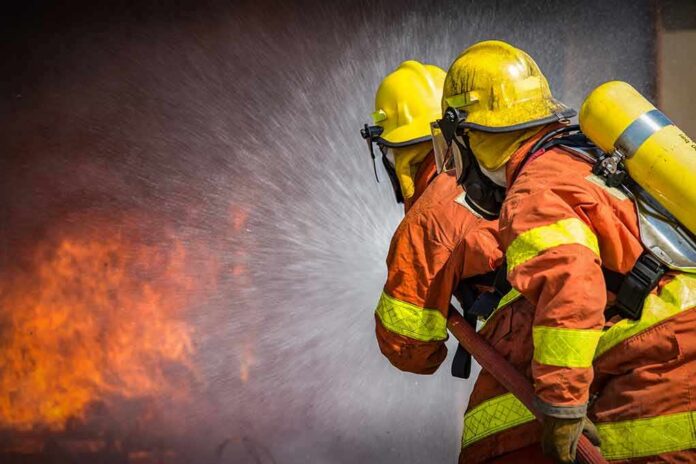
Carpinteria-Summerland fire crews responded to smoke near the 5400 and 5500 blocks of Carpinteria Avenue and found flames inside dense brush by the Carpinteria Creek bike path. Firefighters reported a “bright orange glow,” then discovered a hidden subterranean structure that was fully involved. Crews knocked the fire down and kept it from spreading to the surrounding vegetation or any buildings. Officials later confirmed the site functioned as a homeless encampment inside the underground space.
The report states that no injuries were reported. That outcome matters. Fires in overgrown corridors near homes and paths can grow fast and trap people with little warning. This time, firefighters got there fast and contained it. The incident still shows a clear risk. Concealed setups add fuel, limit entry points, and can hide propane, wiring, or other hazards. Those conditions can turn a small blaze into a deadly one if winds shift or access is blocked.
City Removes Structure, Plans Restoration and Safety Work
City Assistant Manager Ryan Kintz said crews removed the underground structure and debris after the fire. He added that the remaining work includes backfilling the depression and restoring the site. He said Public Works met with Code Compliance and the Fire Marshal to assess the area and handle permits and reporting. That suggests officials are treating the location as a safety hazard that must be secured to stop collapse, re-occupation, or another fire risk near public paths.
Backfilling closes the hole left by the removal. Restoration puts the surface back to grade and helps keep people on the path safe. It also protects nearby property from erosion or runoff after crews disturb soil. While the city did not post a date for completion, the roadmap is clear. Remove the hazard, fill the void, and document the fix. Those steps reduce repeat fires and limit taxpayer costs for constant callouts and cleanups at the same site.
Encampment Fires Are Rising and Straining Cities
Los Angeles Fire Department data show a rising number of fires labeled homeless or encampment related in recent years. One review reported 13,909 such fires in 2023, almost double 2020 levels. Another local analysis reported 16,982 by mid-December 2025, about 46 per day, showing the scale facing large cities. These figures show why even a contained fire in Carpinteria is a warning sign for corridors lined with brush, bridges, and concealed spaces near homes and schools.
Rapid growth in these fires ties up engines and medics who could be handling heart attacks, house fires, and car crashes. It also puts firefighters into tight, unstable spaces. That increases risk of injury, needle sticks, and heat stress. When underground living spaces appear near public paths, the hazard multiplies. Access is poor, visibility is low, and ventilation is limited. That is why cities move to abate underground structures fast after a fire and to harden sites against return.
What This Means for Public Safety and Local Control
This incident shows a simple truth. Hidden encampments under paths and in creek banks are not just an eyesore. They are a fire and collapse risk in places families use every day. Local leaders have a duty to keep paths clear and safe. That means firm enforcement of no-camping rules in high-fire zones, steady brush management, and quick abatement of dangerous structures. It also means clear lines between help services and public order to protect neighborhoods.
President Trump has pressed for law and order, and many communities are following through. Cities that act early avoid bigger fires, bigger bills, and tragedy. Carpinteria’s response shows parts of that playbook: contain the fire, remove the hazard, coordinate code and fire officials, and restore the land. Voters expect safe streets, safe parks, and safe trails. That starts with stopping dangerous setups before they light up, not after a spark turns into a headline.
Sources:
noozhawk.com, carpinteriaca.gov