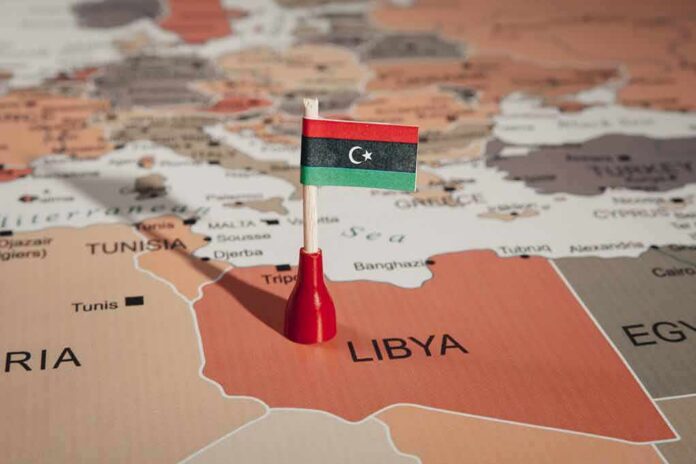
Libya’s state oil company warned it may invoke force majeure after armed oil guards shut a key pipeline, threatening tighter supplies and higher prices for American families and allies abroad.
Story Snapshot
- Libyan oil guards closed the Hamada–Zawiya pipeline, halting output at multiple sites.
- Libya’s National Oil Corporation warned it may declare force majeure if closures spread.
- Guards tied the shutdown to unpaid salaries and benefits demands, citing past ultimatums.
- Prior standoffs like this have hurt production, then eased after negotiations.
Pipeline Closure Stalls Production at Key Western Libya Sites
Libya’s National Oil Corporation said members of the Petroleum Facilities Guard shut a valve on the main Hamada–Zawiya crude pipeline. The company said production stopped at the Hamada and Tahara fields and at a nearby pumping station after the pressure shift forced shutdowns. The Zawiya refinery processes large volumes that support domestic fuel and export flows. A stoppage there can ripple into prices beyond North Africa, especially when markets are already tight.
The company also warned it may declare force majeure if the valve stays closed or if other fields face similar forced shutdowns. A force majeure notice tells buyers that deliveries cannot be guaranteed due to events outside the seller’s control. When a major supplier like Libya moves that direction, traders factor in risk, and prices can rise quickly. That risk can push up costs for gasoline, diesel, and jet fuel paid by families and small businesses.
Guards Cite Unpaid Dues, Insurance, and Prior Ultimatums
Public statements and local reporting linked the shutdown to a pay and benefits dispute within the Petroleum Facilities Guard. Guards said they sought unpaid dues, salary settlements, and health insurance on par with state oil staff. Members also warned they would stop gas at the Mellitah complex and close facilities nationwide unless salary increases and agreed rights were implemented. Earlier, guards issued deadlines for government action and threatened closures if demands were ignored.
This pattern is familiar in Libya’s fractured oil sector. Reports and energy briefs describe a repeated cycle: a grievance over pay or revenue, an ultimatum, a shutdown, and then partial restoration after talks. In February, production and gas flows resumed at other sites only after negotiations between guards and the government concluded a brief protest linked to salary payments. Each round carries costs, shakes buyer trust, and raises the chance of more supply swings.
Why It Matters for the United States, Energy Security, and Prices
Global oil prices do not stop at borders. A forced outage inside Libya can strain supplies to Europe and the Mediterranean. That demand then spills into the same pool of barrels that sets prices at American pumps. When overseas supply gets less steady, price spikes hit U.S. drivers, farmers, and trucking fleets. That is why steady production and secure shipping matter to the wallets of American families and to core national security interests.
American consumers have paid the price before when foreign instability met weak domestic policy. Past years of green mandates, blocked pipelines, and slow leasing left our energy supply more exposed to shocks abroad. When a foreign valve closes, the United States feels it. The answer is clear: strengthen U.S. production, build more pipelines, protect refining capacity, and stop policies that choke reliable energy. Energy independence is not a slogan. It is a shield against chaos and higher prices.
Risks Ahead: Force Majeure, Copycat Closures, and Market Whiplash
The biggest short-term risk is a formal force majeure that pauses some exports and prompts buyers to seek cargo elsewhere. The second risk is copycat actions at other fields if each dispute turns into a blockade. Libya’s record shows that shutdowns can expand beyond one area when pay or political disputes spread. If that happens, more barrels come off the market, and volatility grows. Markets then price fear, not only barrels, and that tax lands on consumers.
LIBYA'S OIL HALT: THREE FIELDS SHUT AS EUROPE LOSES ANOTHER CRUDE SOURCE
THE SHUTDOWN
Libya's National Oil Corporation (NOC) announced that output has been halted at three fields—Hamada, Al-Tahara, and NC5 (Station 5)—after a group from the Petroleum Facilities Guard forcibly… https://t.co/mHoMUlNfTp pic.twitter.com/zMFUfERkZK
— THE WORLD CORRESPONDENT (@TheWorldCorresp) September 15, 2026
There is one cautious bright spot. Some past stoppages in Libya ended after quick negotiations, with output resuming once salary issues were addressed. But that does not fix the core problem. A system that lets armed units halt pipelines to win payroll fights invites the next shutdown. Buyers remember the risk. That history keeps a premium on every load and makes planning harder for U.S. refiners and small businesses that depend on stable costs.
What Leaders Should Do Now
U.S. policy should push two tracks at once. First, expand American supply by clearing permits, fast-tracking pipelines, and defending refining capacity at home. That lowers exposure to foreign shocks. Second, back allies who keep energy lanes open and press partners to resolve payroll disputes without closing valves. Every day of steady supply keeps fuel affordable for working families and keeps our economy strong. Energy security is family security. It is time to act like it.
Sources:
zerohedge.com, english.aawsat.com, aa.com.tr, reuters.com, libyaobserver.ly, libyaherald.com