
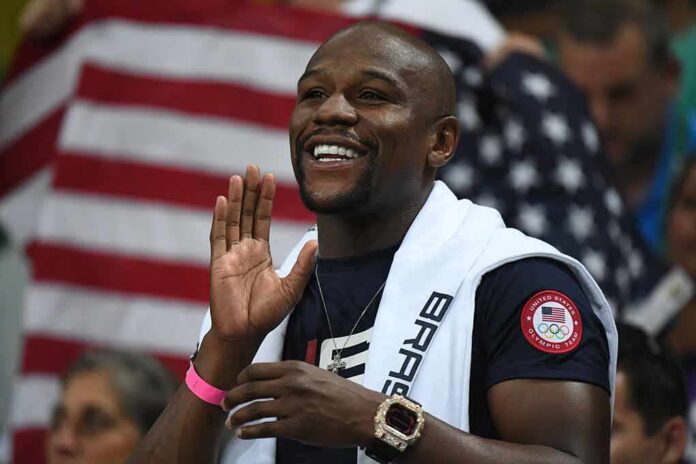
A $750,000 contract buyout helped Floyd Mayweather take control of his career and tap revenue streams that powered hundreds of millions in earnings.
Story Highlights
- Mayweather used a $750,000 buyout clause in 2006 to exit Top Rank and go independent.
- He launched Mayweather Promotions in 2007 to capture event revenue beyond a fighter’s purse.
- He said he “bet on” himself to become his own boss and share in every dollar the event made.
- Forbes linked the buyout and self-promotion model to his blockbuster pay-per-view success.
Documented Buyout Opened the Door to Independence
Adviser Al Haymon negotiated a clause that let Floyd Mayweather buy out his Top Rank deal for $750,000, which Mayweather exercised in 2006, according to reporting from a major sports outlet and business press summaries of his career arc. Forbes likewise described the 2006 opt-out payment as the key step that set up Mayweather’s next phase. That legal exit moved him from a standard promoter-controlled path into a position to call his own shots in the ring and at the negotiating table.
Mayweather described the decision in plain terms. He said he bought himself out, gambled on himself, and became his own boss. He encouraged other fighters to grow in the same way, stressing control and ownership. His framing matched what followed. He did not only seek bigger checks. He sought control of the whole pie: the site fee, the pay-per-view split, the sponsorships, the gate, and other event dollars that promoters usually keep.
Mayweather Promotions Captured the Whole Event
After leaving Top Rank, Mayweather created Mayweather Promotions in 2007, building a structure to bring revenue in-house. Business coverage tied that timeline together and explained why it mattered. When the fighter runs the show, the fighter can share in the economics that make fight nights so valuable. That meant less reliance on a fixed purse and more upside if fans tuned in and packed arenas for the biggest events he could stage.
Forbes connected the buyout to his later pay-per-view model and brand shift, showing how the “Money Mayweather” approach worked at scale. The business press noted that control over promotion, distribution, and marketing lifted his cut from each category, not just his base pay. That strategy showed up in blockbuster nights, where top-end pay-per-view buys and record gates turned one great fight into a windfall across every revenue stream tied to the event.
Why Ownership Beat the Old Boxing Deal
Boxing’s old setup often gave promoters power over matchups, schedules, and a big slice of the money. Legal and industry reviews describe how that structure can put fighters in a box while promoters control who fights whom and when, and then collect a significant share of the purse and event dollars. Mayweather’s move flipped that script by moving the revenue share toward the person in the ring who took the risk and drove the sales.
Congress took aim at the worst parts of promoter control with the Muhammad Ali Boxing Reform Act, which pushed for clearer disclosures and better protections. Industry histories note that the law helped fighters gain insight into deals and terms, making it easier to see where the money went and who got paid. That climate helped set the stage for a star to go independent and build an in-house promotion that captured more of the upside.
What the Numbers Mean—and What They Do Not
Multiple outlets reported the $750,000 buyout and the creation of Mayweather Promotions soon after. Those events are well established by mainstream reporting and Mayweather’s own statements. Coverage has also tied his later mega-events to this change in control, linking his business structure to record-setting payouts on major cards. Those facts hold even as different outlets cite different career totals and definitions of earnings.
Some reports describe approximately $750 million or more in career take, while others approach or top $1 billion. Those totals use different methods and may mix gross receipts, net income, and company revenue. The precise sum depends on how you count. But the core story is not fuzzy. A fighter used a clear buyout, built his own promotion, and turned control into outsized paydays by owning the event instead of renting his talent.
Sources:
youtube.com, sports.yahoo.com, en.as.com, forbes.com, espn.com, sportico.com, europeanbusinessmagazine.com