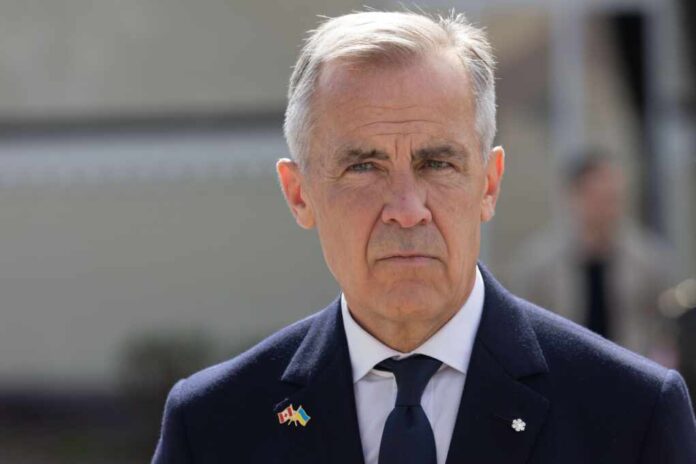
Prime Minister Mark Carney has confidently dismissed Venezuela’s massive oil reserves as posing zero threat to Canadian energy dominance, highlighting how socialist mismanagement and U.S. sanctions have devastated a competitor while cementing Canada’s role as America’s most reliable energy partner. This article explores how Canada, now supplying 4 million barrels daily to U.S. refineries, has filled the resulting supply gap, a reality that reinforces the North American energy independence championed under the Trump administration. Experts confirm Venezuela’s infrastructure is too damaged for rapid recovery, underscoring that operational capacity and reliability matter more than mere reserve quantity in the current energy market.
Story Highlights
- Carney declares Venezuelan oil poses zero threat despite their world’s largest reserves of 303 billion barrels.
- Venezuela’s production collapsed from 3.5 million to 1.1 million barrels daily due to socialist policies and sanctions.
- Canada now supplies 4 million barrels daily to U.S. refineries, filling the Venezuelan supply gap.
- Energy experts confirm Venezuela’s infrastructure is too damaged for rapid recovery.
Canadian Energy Sovereignty Under Trump Era
Prime Minister Mark Carney’s bold assessment reflects a new reality under President Trump’s energy dominance strategy. While Venezuela sits on the world’s largest proven oil reserves at approximately 303 billion barrels, decades of socialist mismanagement have rendered these resources largely inaccessible. Canada has emerged as America’s most trusted energy partner, delivering four million barrels per day across the border. This partnership represents exactly the kind of North American energy independence Trump championed throughout his campaign.
Canada still has massive oil leverage in the U.S. even if the U.S. controls Venezuela’s oil.
Canada is an oil supplier but it also has a system dependency: pipelines, refineries, reliability, scale, etc.
Venezuela isn’t as simple as a light switch. Even with U.S. control,… pic.twitter.com/km9nN2M7OX
— Thomas Peters (@Thomaspeters) January 3, 2026
Socialist Policies Destroyed Venezuelan Oil Production
Venezuela’s oil sector collapse serves as a textbook example of how leftist policies destroy economic prosperity. Production plummeted from 3.5 million barrels per day in the 1970s to just 1.1 million barrels currently. The country’s oil infrastructure has been “hollowed out by decades of nationalization, U.S. sanctions, and political collapse.” Pipelines have corroded, upgraders are broken, and the skilled workforce has fled the country. This devastation created the perfect opportunity for Canada to capture Venezuelan market share in American refineries.
Infrastructure Reality Versus Socialist Dreams
Richard Masson, energy expert at the University of Calgary, delivered a reality check to those expecting rapid Venezuelan recovery. He stated that the idea Venezuela’s oil infrastructure can be quickly rebuilt “like Texas” is “a long range from reality.” Even optimistic scenarios suggest Venezuela might add only a few hundred thousand barrels of daily output, not the million-barrel surge some anticipate. Canada remains “the only producer still able to deliver large, steady volumes of heavy crude into the American refining system.”
Market Stability Through Conservative Energy Policy
Canada’s competitive advantage demonstrates how stable governance and free-market principles create lasting economic benefits. Unlike Venezuela’s chaotic socialist experiment, Canada offers U.S. refineries predictable, consistent supply backed by reliable infrastructure and skilled workers. The immediate effect of Venezuelan political uncertainty will likely be “a tighter heavy-oil supply and more price volatility—not a surge of new barrels.” This situation reinforces why President Trump prioritizes North American energy partnerships over unstable foreign suppliers.
Carney’s confidence reflects a broader truth about energy markets: operational capacity and reliability matter more than reserve quantity alone. As Trump’s administration seeks to maximize American energy dominance, Canada’s position as the largest foreign crude supplier to the United States becomes increasingly valuable for both nations’ economic security and energy independence.
Watch the report: Venezuela’s authoritarian leaders who ran its oil industry into the ground
Sources:
- Lesson from Venezuela: Carney Must Protect Canada’s Oil Sovereignty – Energy Mix Weekender
- This Week in Canada: The US Still Needs Our Oil – The Free Press
- Venezuela reserves are no threat to Canada’s ‘low risk’ oil – AOL News