China’s quiet push into Russia’s Far East could hand Beijing a back door to the Pacific and Arctic, rewriting the regional balance overnight.
Story Highlights
- Analysts warn China could secure access to Vladivostok and the Sea of Japan through leases and special zones, not invasion.
- Historical claims tied to “unequal treaties” still frame Chinese narratives about the Russian Far East.
- Economic deals and investments give Beijing leverage as Moscow grows more dependent on China.
- Chinese map changes and nationalist rhetoric keep the issue alive while officials publicly back the status quo.
What “creeping control” of the Russian Far East looks like
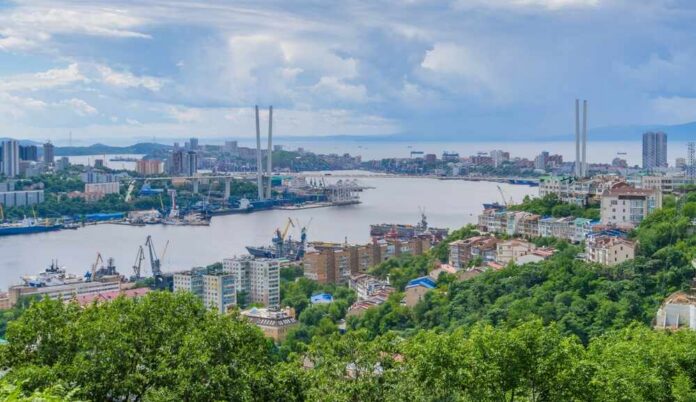
Analysts describe a pathway where China does not send troops, but gains control step by step. Long leases, special economic zones, and port access at Vladivostok could arrive first. Legal documents, logistics contracts, and joint ventures would follow. Over time, the facts on the ground shift. China’s navy gets freer paths to the Pacific. China’s firms gain priority for minerals and shipping. Sovereignty may not change at once, but control could, with Moscow in no shape to say no.
That approach mirrors China’s playbook in other regions, where influence grows before flags move. Experts note Beijing could pursue boundary revisions from a position of strength. Russia’s need for financing and markets gives China leverage to set terms. A recovering Far East port network would fit neatly into China’s wider maritime plans. This would reduce China’s exposure to chokepoints and constant monitoring that now limit Chinese fleet movements into the open Pacific.
Why historic grievances still matter to Beijing and Moscow
The debate traces to nineteenth century treaties, which moved more than one million square kilometers from Qing China to Tsarist Russia. Chinese voices still point to the Treaty of Aigun and the Convention of Peking as “unequal.” Strategists argue Beijing has never clearly renounced the claim, even as it works with Moscow today. That memory shapes maps, textbooks, and public talk. It also explains why some Chinese nationalists keep calling Vladivostok by its older Chinese name.
Public pressure does not mean official policy favors a land grab. Reporting shows Chinese nationalists often revive claims online, but experts say open annexation is unlikely. Beijing sees more benefit in economic and cultural reach than in absorbing a vast, sparsely populated, non‑Han region that could stir separatism fears. The safer path is steady influence without a formal border change, while the political partnership with Moscow holds and delivers access and supply security.
The leverage machine: money, maps, and Moscow’s needs
China’s leverage has grown as Russia’s economy pivots east. Reports track Chinese investment pledges for dozens of Far East projects after high‑level meetings in 2023. Beijing needs reliable minerals and routes. Moscow needs cash, tech, and customers. This imbalance lets China shape terms on rail, energy, ports, and trade corridors. The more Russia leans on these links, the harder it becomes for Moscow to resist deeper Chinese operational space in the Far East.
Map policy adds pressure. In 2023, Chinese authorities updated official maps to include cities such as Vladivostok under Chinese historical names and depicted a disputed border island as fully Chinese. Beijing downplayed the changes, but the message was heard in Russia and beyond. The move signaled that history remains active in China’s cartography, even as leaders call the relationship a strong partnership with “no limits” in other forums.
Strategic stakes for the United States, allies, and energy routes
If China gained routine access north of North Korea, Chinese ships would enter the Pacific with fewer checks. Japan, South Korea, and Taiwan would face wider exposure across sea lanes and undersea cables. China would also gain maritime routes toward the Arctic. This would complicate allied planning and surveillance. For Washington, that means greater demands on naval patrols and missile defense networks, and new pressure points for energy and trade flow security in Northeast Asia.
➡️ Hope never dies for Power of Siberia-2: Mongolia is anticipating progress in negotiations between Russia and China come September.👇
➡️ A deal is certainly possible, but only if China decides it is willing to accept the high level of supplier concentration a third large… pic.twitter.com/GFSJ0ZLet2— Russian Oil & Gas Monitor (@RusOilGasExpert) July 1, 2026
Allies should watch legal agreements as closely as troop movements. A long lease at Vladivostok, a customs union carve‑out, or privileged port calls can shift realities fast. Clear-eyed policy must focus on resilience: more diversified shipping lanes, stronger undersea cable protection, and faster joint drills among Japan, South Korea, and the United States. The goal is simple: deny any quiet end‑run that would let Beijing bypass established island‑chain defenses without a shot fired.
Limits and open questions
Open annexation remains unlikely, and official Chinese policy recognizes the settled border. Experts stress that Beijing can get most of what it wants without a flag change. Still, public narratives, map choices, and economic pull keep the issue alive. The question is how far Russia’s dependence will go, and how quickly agreements could morph into effective control. For now, the most credible risk is incremental: contracts today, access tomorrow, and a strategic surprise the day after.
Sources:
realcleardefense.com, youtube.com, thediplomat.com, gisreportsonline.com