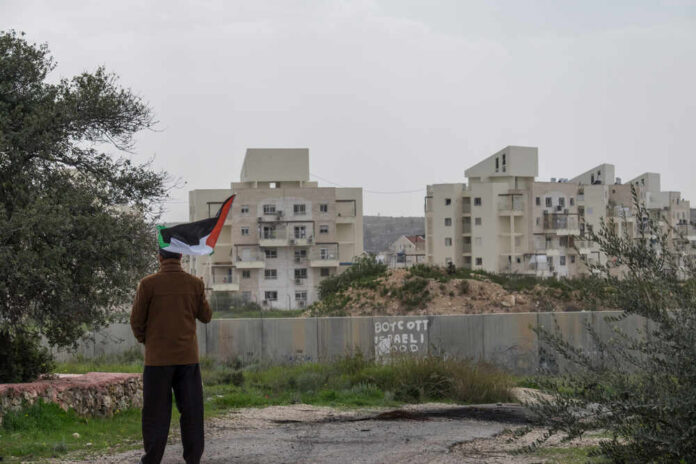
As Israel’s military tightens control over a West Bank town by sealing its entrances, Palestinians say their community is being turned into a cage rather than a safer place.
Story Snapshot
- Israel has added hundreds of new gates and barriers across the West Bank, closing key town entrances.
- The military says these closures are needed to stop attacks and protect nearby Israeli settlements.
- United Nations reports warn that broad town closures can violate international law as “collective punishment.”
- Local residents and rights groups say daily life, work, and medical care are being strangled for ordinary families.
Israeli Security Closures Hit West Bank Town Entrances
Since the Hamas-led attack on Israel on October 7, 2023, the Israeli army has sharply expanded movement restrictions in the occupied West Bank, including closing entrances to entire towns. In one reported case, the army sealed almost all roads into the town of Sinjil, leaving only a single guarded entrance and cutting normal links to nearby villages. Israel says such closures protect nearby Jewish settlements from attacks, presenting them as a necessary step to root out militants who hide among civilians.
Security officials stress that gates and checkpoints are meant to monitor movement, not to “hinder anyone,” and argue that militants embed themselves within the local population. The military describes the gates as “essential for security” and rejects claims that they are designed to constrain Palestinian lives, calling those accusations “unfounded.” These arguments mirror a long-standing Israeli position that tight control of roads, village entrances, and border areas is required to prevent shootings, bombings, and other attacks on Israeli citizens.
Barrier Network Reshapes Daily Life for Palestinian Families
Palestinian and international sources describe a very different reality on the ground, where nearly 1,000 new barriers, including metal gates at town entrances, now restrict movement and severely hinder daily life. United Nations data show hundreds of fixed obstacles and a complex gate and permit system that blocks access to about 20 percent of the West Bank, including areas marked as military “firing zones” or buffer zones. Residents report erratic gate hours, sudden closures that last for days, and roads cut off from main highways, turning normal commutes and emergency trips into exhausting ordeals.
Humanitarian reports warn that these closures are a major driver of poverty and crisis, limiting access to jobs, hospitals, schools, and markets for entire communities. In past documented cases, United Nations teams found that dozens of shops and over a hundred households suffered sharp income losses when traffic was diverted away from blocked roads and town centers. Medical studies link fixed checkpoints and roadblocks to delayed trauma care and higher risks for injured people, because ambulances cannot reach hospitals quickly or consistently. For families inside sealed towns, each gate can mean missed work, lost business, or dangerous delays in medical treatment.
Legal and Political Fight Over “Collective Punishment”
Under international law, Israel, as the occupying power, is required to allow free movement for Palestinians in the occupied territory except where specific, imperative security threats exist. The International Court of Justice has already ruled that sections of Israel’s barrier and associated gate and permit regime inside the West Bank are unlawful and violate these obligations. A United Nations fact sheet warns that broad measures such as closing entire towns after attacks “may amount to collective punishment,” which is banned under humanitarian law.
Palestinian officials and many human-rights groups argue that sealing town entrances and layering checkpoints is less about narrow security needs and more about control and annexation. A Palestinian government body estimates that 916 gates, barriers, and walls have been installed since October 7, 2023, and says these steps fragment Palestinian areas into isolated pockets. Amnesty International reports that, alongside movement restrictions, Israeli forces and settlers have demolished hundreds of structures and displaced thousands of Palestinians, reshaping land use and demographics in ways critics describe as forced removal.
Broader Pattern of Control and Rising Regional Tensions
Researchers note that the new closures fit a decades-long pattern where the Israeli army uses roadblocks, checkpoints, and town gates to divide the West Bank into small zones under tight watch. United Nations mapping from earlier years recorded more than 600 closure barriers at one point, with some later replaced by “flying checkpoints” that appear and disappear without warning. Since the Gaza war began, reports by rights groups and data projects show thousands of Israeli military incidents in the West Bank, along with curfews, home raids, and temporary outposts inside Palestinian neighborhoods.
📹 “This is part of Israel's escalation policy, which began with the siege and blockade of Palestinian cities and various governorates.”
Israeli forces raided the headquarters of the al-Tadamon Charitable Society in Nablus, in the occupied West Bank, and ordered its closure… pic.twitter.com/OaF2x9Gml8
— Paddystinian (@Paddystinian) July 2, 2026
In this climate, each sealed town entrance becomes part of a larger system that limits Palestinian movement while leaving Israeli settlers far freer to travel between communities. United States State Department reporting notes that “internal closures” have hurt employment, lowered wages, and made it harder for children to get to school in affected villages. As international pressure grows, the core dispute remains: Israel insists these closures are vital to protect lives, while Palestinians and global watchdogs say they punish entire populations and deepen an already severe humanitarian and political crisis in the West Bank.
Sources:
youtube.com, npr.org, palestine-studies.org, facebook.com, ochaopt.org, btselem.org, britannica.com, amnesty.org, acleddata.com, state.gov, un.org