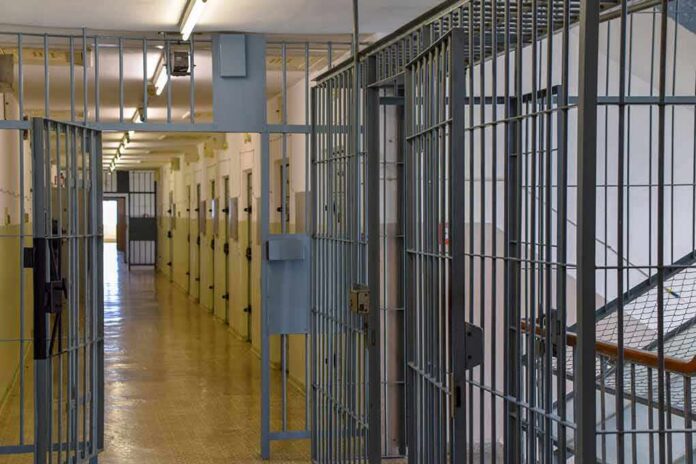
Nearly half of Germany’s prisoners are foreign nationals, a stark sign of Europe’s border and crime crisis made by policy, not chance.
Story Highlights
- Germany’s prisons now hold about 45% foreign nationals, far above their share of residents.
- Rising shares appear across several states and big cities, with some nearing 60%.
- Counts include pretrial detainees, which influences totals but does not erase the gap.
- German and European data show this overrepresentation trend has grown for years.
Confirmed Numbers From German State Data
German reporting based on all 16 state justice ministries found more than 27,000 foreign nationals in prison as of March 2026. That equals 44.8% of all inmates, including those in pretrial detention. The Neue Osnabrücker Zeitung compiled the numbers, and major outlets summarized the result. This is not a small uptick. It marks a sustained rise over recent years and sets a new high-water mark for the country’s prison system.
Federal prison statistics cited by European outlets point to the same level. Reports place the foreign national share at around 45% of all prisoners in 2025. By contrast, foreign nationals make up roughly 15% to 17% of Germany’s resident population. That gap is large by any measure and helps explain growing public concern about border policy and crime enforcement inside the European Union’s largest economy.
Why the Gap Is Real—and What It Does and Does Not Mean
Germany’s prison totals include people in pretrial detention. That choice raises the share of foreign nationals because non-citizens often have weaker ties to the country, which can affect detention decisions. Still, the overrepresentation stands even when studies look beyond a single year or category. Past German research and European surveys note a wider pattern of foreign nationals being overrepresented in prisons across many systems in Europe over time.
Definitions also matter. “Foreign national” means people who do not hold German citizenship. It does not include dual citizens, who count as German in official data. That detail can slightly understate the share of people with a migration background inside prisons. The headline result, however, still relies on official sources and a full sweep of state justice data, giving the core figure strong footing for public debate and policy review.
Hotspots in Major Cities and States
Big urban centers show the sharpest spikes. Reporting cites Hamburg and Berlin with foreign national prison shares near 60%. These cities have large migrant populations, major transit hubs, and complex gang and trafficking challenges. State-level breakdowns vary, but several German states report more than half of inmates are foreign nationals, underscoring that the trend is not only a Berlin story but a national one with local peaks that strain budgets and staff.
Prison capacity and staffing pressures rise when pretrial detention numbers increase. Courts and prosecutors must move cases faster to avoid long holds that burden taxpayers. German media and advocacy groups have argued about resources for translation, legal aid, and rehabilitation. Those debates will continue, but the basic math—more inmates with higher security and support needs—means higher costs that voters feel through taxes and services.
Lessons for America’s Borders and Public Safety
Germany’s experience offers a warning. When nations loosen border controls and delay removals, crime systems feel the load first. Police, courts, and prisons carry costs that compound over time. American conservatives have argued this for years when pushing to secure the southern border, expand detention when needed, and speed removal of criminal offenders. Germany’s data show what happens when those steps lag behind migration flows.
For the United States, the takeaway is simple: secure borders and clear enforcement protect families, taxpayers, and the rule of law. President Trump’s team has focused on faster adjudication, stronger removals for criminal non-citizens, and pressure on sanctuary policies. Germany’s numbers back the logic of that approach. Nations that fail to control entry and consequences invite crime networks to exploit the gaps, and ordinary people pay the price.
Caveats and Data Limits
Some context is fair. Prison shares do not explain cause by themselves. Economic status, age, recent arrival, and pretrial rules all shape these numbers. Different agencies count in different ways. Even so, Germany’s trend has moved in one direction: up. Official statistics and broad European studies both document the rise in foreign national shares in custody over many years, which supports policy change based on clear risks to public order.
Policy makers should also watch repeat offenses and removal outcomes. If courts convict non-citizen offenders and then release them into the community with weak follow-up, crime can cycle. Germany’s data set a marker for action: tighten border screening, speed criminal case handling, and ensure removals for those who break the law. That mix protects the public while keeping justice fair and swift.
Sources:
europeanconservative.com, brusselssignal.eu, pmc.ncbi.nlm.nih.gov, zeit.de, prisonstudies.org