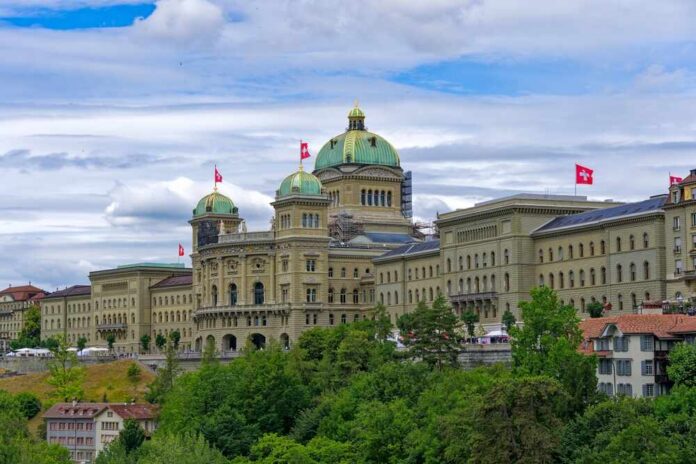
Swiss politicians are trying to undo a past green vote and bring nuclear power back, and citizens may soon get the final say.
Story Snapshot
- Swiss parliament has voted to overturn a 2018 ban on new nuclear plants, pushing the issue toward a national referendum.
- The government says new nuclear is an “insurance policy” for energy security if wind and solar fall short.
- Green parties are rushing to collect signatures to force a popular vote to keep the anti‑nuclear ban in place.
- For Americans watching Europe’s energy mess, this fight is a warning about what happens when elites gamble on unreliable power.
Swiss Leaders Move To Reverse Anti‑Nuclear Ban
Swiss lawmakers have now voted in both chambers to reverse their own 2018 ban on building new nuclear power plants, setting up a direct clash with earlier anti‑nuclear activists.[1] The lower house vote followed the upper house, which had already backed the plan, and together they cleared a government proposal that reopens the door for new reactors. That ban came out of a 2017 referendum where voters, shaken by the Fukushima accident, backed a gradual nuclear phaseout and a stop to new construction.[5]
Energy Minister Albert Rösti argued that Switzerland must keep the nuclear option open to protect long‑term energy supply and meet climate goals.[1][5] His message was simple: betting everything on wind, solar, and imports in a dangerous world is a bad idea. The Federal Council, Switzerland’s cabinet, already announced in 2024 that it wanted to lift the construction ban, citing rising electricity demand, climate targets, and geopolitical risks that threaten imports.[5] This is the same reality Americans saw when Europe’s lights dimmed after Russia’s war in Ukraine.
From Green Phaseout To Energy Reality Check
For years, Swiss elites sold the same dream many Democrats still push in Washington: shut down nuclear, lean on “green” energy, and hope it all works out.[7] In 2017, more than 58 percent of Swiss voters approved Energy Strategy 2050, a plan to phase out nuclear and ramp up renewables while banning new plants.[5][7] Existing reactors could keep running if regulators said they were safe, but no new licenses would be issued after January 2018.[4][5] At the time, green leaders celebrated and claimed the public “does not want any new nuclear plants.”[14]
That celebration did not last. Nuclear had been supplying roughly 35 to 40 percent of Swiss electricity for decades, alongside major hydropower dams.[4][5] As electrification grew, with electric cars, heat pumps, and data centers, demand climbed while the country also pledged to cut fossil fuels.[9] The government now admits it needs more steady, low‑carbon power, not just solar panels that quit at sunset and wind turbines that stop when the air is still.[5][9] It is a quiet but serious admission that the earlier phaseout policy went too far.
Energy Security, Climate Targets, And A Coming Referendum
Swiss leaders now call new nuclear capacity a possible “insurance policy for electricity supply” if renewables cannot deliver enough reliable power or if other “climate‑friendly solutions” fall short.[1] That phrase should sound familiar to American readers who watched Germany shut nuclear plants, burn more coal, and then scramble to buy expensive gas. In Switzerland, the Federal Department of Energy has drafted changes to the Nuclear Energy Act so general permits for new plants can again be granted in principle.[3][5] That would allow modern reactors or small modular reactors to be considered when needed.
Yet under Switzerland’s direct democracy system, parliament is not the final word.[1][6] Left‑wing parties and green groups have already announced plans to gather signatures to challenge the law at the ballot box.[1][6] If they collect 50,000 valid signatures within 100 days of the law’s publication, the country must hold a referendum.[1] Given how energized anti‑nuclear activists are, that hurdle will likely be met. The same political forces that drove the 2017 phaseout are preparing a new campaign to lock nuclear out again, even as the energy facts have changed.
Swiss Public Opinion Is Shifting Toward Nuclear
While green parties gear up for a fight, polling suggests the Swiss public has moved closer to common sense. A large survey in 2024 found 53 percent of respondents favored building new nuclear power plants, with 43 percent opposed.[2] Another poll for the Swiss Nuclear Forum in 2023 showed a solid majority supporting continued use of nuclear alongside renewables.[5] Those numbers are very different from the mood in 2017, when voters backed the phaseout after years of fear‑based messaging about Fukushima.[5][7]
Switzerland heading towards referendum on construction of new nuclear plants https://t.co/lPD8HmXYdm
— AnStra (@AnStra14) June 18, 2026
Experts in Switzerland warn that even if the ban is lifted, it will be hard to find companies ready to build a plant and projects would not come online before around 2050.[9] That delay is exactly why Energy Minister Rösti says the country must “start now” so it is not “too late in 20 years.”[3] His argument echoes what many conservatives say at home: if you want real energy security, you must plan far ahead, keep every reliable tool on the table, and refuse to let green ideology shut down proven technologies.
Sources:
[1] Web – Swiss heading towards referendum on new nuclear plants
[2] Web – Swiss parliament cements decision to go non-nuclear in landslide …
[3] Web – Switzerland Moves to Lift Ban on New Nuclear Power Plants
[4] Web – Legislative changes proposed to remove Swiss new reactor ban
[5] Web – Voices of Nuclear – Switzerland launches as Parliament revisits …
[6] Web – The Swiss government wants to cancel a ban on building new …
[7] Web – Swiss Upper House Backs Lifting Ban On New Nuclear Power Plant …
[9] YouTube – National Council – Thursday, 18 June 2026 08h00
[14] Web – New Swiss initiative calls for popular vote on UN nuclear weapons …